Angling guide George Burdess gives us the lowdown on some early season fishing on our rivers, which didn’t go quite to plan...
After what can only be described as a disastrous winter, I think we can all agree that we deserve a decent spring, and so far it’s been good! Yes, there’s been a few cold snaps and a bit of drizzle here and there, but it’s been warm and pleasantly sunny. Most rivers in the west of Ireland are open before March 17th, which anyone in the south/southeast is envious of.
I’m based in the Glen of Aherlow, Co. Tipperary, so technically I have been waiting until such date; however, I trekked home to Galway over St. Patrick’s weekend to see my parents before a chaotic guiding season lies before me. So I took full advantage of the weather and open rivers and told my fiancée that I’ll only be a few hours (that, in fact, was a lie). Driving down to Ahascragh to fish the Bunowen River, I was rattling like an overfilled kettle, winter months thinking of the river—the coolness in the air, the smell of freshly running water coming out from under a bridge, the sight of a rising trout… the freedom and escape from all life’s problems.
I have a couple of goals in mind this season: more streamer fishing and more single dry fly fishing. I’ve been doing a lot of dry-dropper and Euro nymphing over the past few seasons and have learned a lot, but I still have much to learn. From experience, keeping the mind sharp and the cogs turning means trying new methods. That being said, as it’s still chilly, trout are more or less glued to the bottom unless there’s a feeding window, so my set-up for the day was a dry dropper.
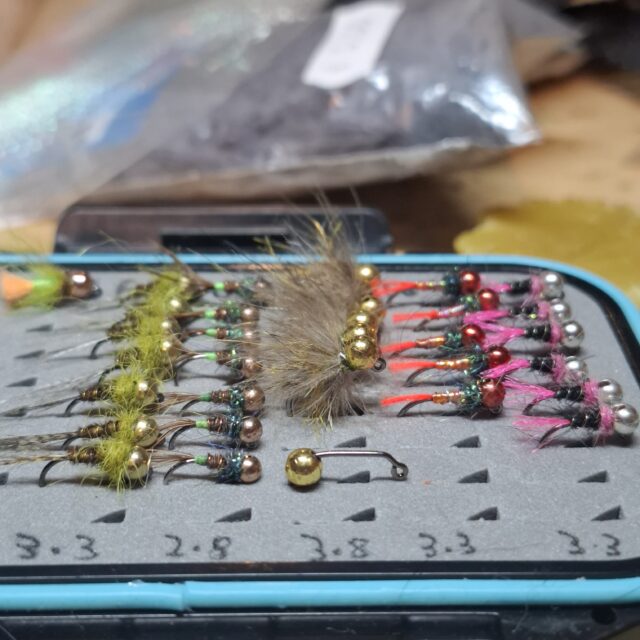
My leader set-up is rather simple: 2ft of 3X (0.18) tippet attached to the fly line with a loop-to-loop connection. I then tie on 3ft of 5X (0.14) tippet; this is where I tie on my dry dropper fly, and on the bend of the hook I attach 3ft of 7X (0.10), followed by a weighted nymph. I like to ensure the tippet attached to the nymph is long enough so I can reach deep pockets and the bottom of the river. If I find that the nymph is getting too caught up in weeds or the bottom too much, then I’ll cut 6 inches off at a time until I find that perfect middle ground. Now everyone is different, and rod lengths will determine your leader set-up, as well as your casting ability, which leads to my next point: rod and line.
The rod I’m going to use for my own personal fishing this season is an Abu Garcia 8ft 5–6wt, which I bought at a yard sale in America some time ago. I haven’t used it since, so this year I’m putting away the 9’6″ Sage I use for most of my fishing and will surely use this rod (unless streamer fishing). The line, well, it’s a cheap pink Temu fly line I acquired from Dan O’Neill. It seems to match my casting, as well as the rod, quite well, so hopefully it won’t spook unsuspecting trout.
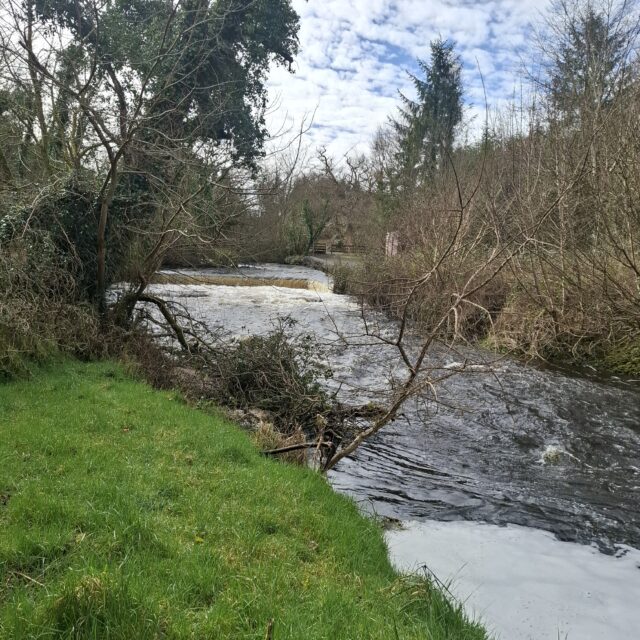
Now that the rod is set up and I’m also suited up, I hit the river. The section of the Bunowen in Ahascragh town is funny—you have maybe two months to fish it before it becomes weeded up and impossible to cast a line—but the river levels were just perfect. It’s a mix of slack water with fast bends and a new(ish) fish pass further upriver, so there are plenty of opportunities to catch. I worked every bend and inch going up to the fish pass, and not a thing. I tried various nymph sizes to hit the bottom, even a small streamer, but to no avail. Slightly stumped, I made my way back to the car to try another spot on the Bunowen that was recommended to me.
When I turned up and began walking the river, it had this fishy feel—the feeling that you knew this was a good spot. Plenty of fast-moving water with lots of bends… but nothing. Not even a knock or sight of a rising trout… so onto the next spot.
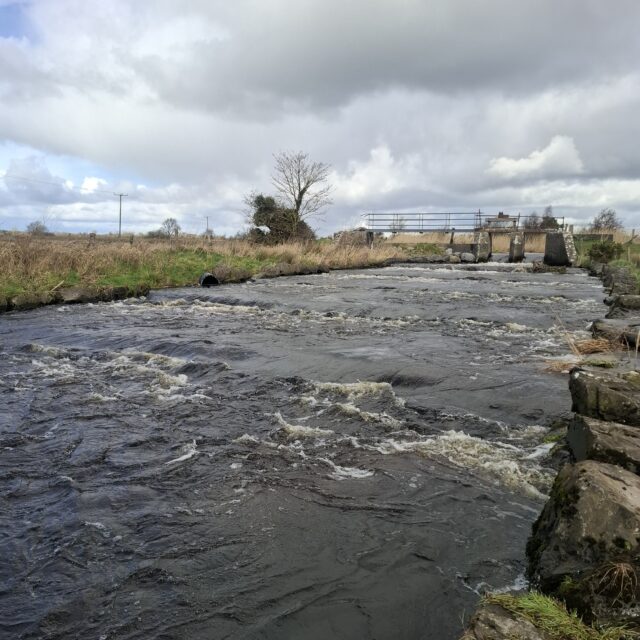
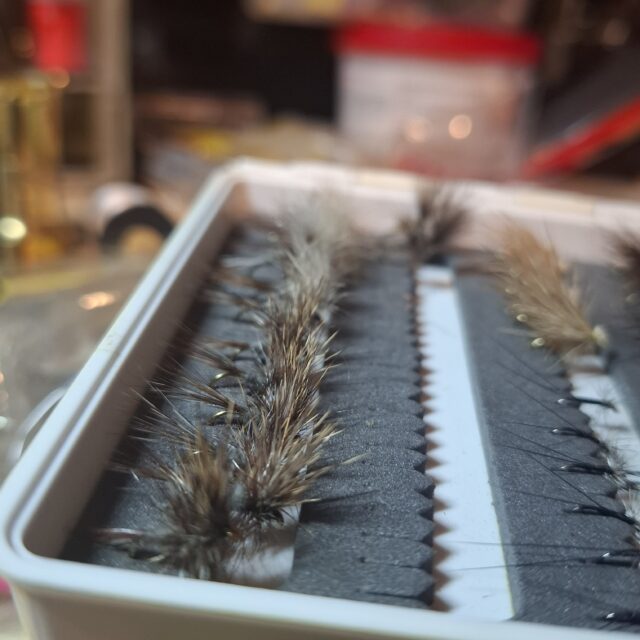
I’m not entirely sure what this river is called; my boat partner and I have passed this river a handful of times and spoken about fishing it. I do believe it is a tributary to the River Suck. This river was very narrow, ranging from 5ft to 9ft, but at most 8ft, mixing between fast and moderate flow, which was ideal for my 8ft fly rod. I had to shorten the tippet attached to the nymph to about 2ft, and I had on a copper pheasant tail nymph with orange dubbing on the collar. At this stage, it was evening, there was a small hatch of large dark olives, and I began seeing trout rise—this was very promising.
I covered every rising trout, and on one particular cast I let the fly linger a little bit longer on the dangle. I suddenly felt a bump and a pull—finally, a brown trout! However, in that split second of striking and feeling the trout pull, I lost it. There was a big sigh and some internal screaming. Was I disappointed? Absolutely! But it was still nice to feel a trout take my fly, especially in a spot I would never have thought there’d be trout.
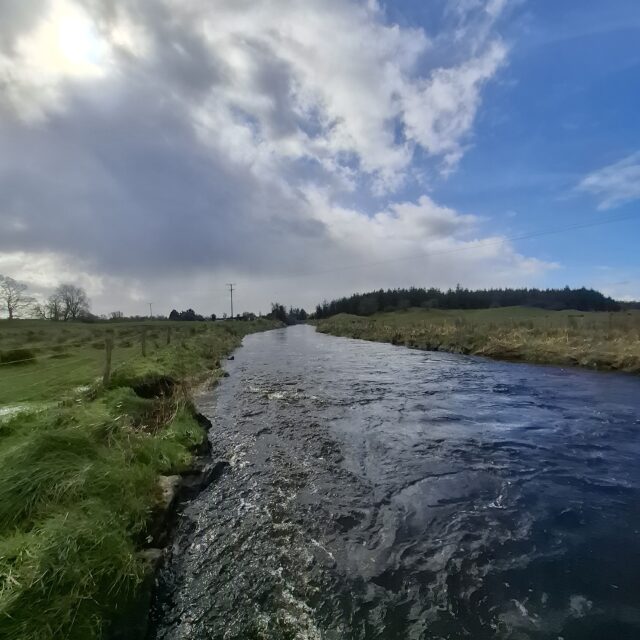
I wrapped it up there and decided to hit one more spot on the way home. Quite frankly, I should have just gone home right then, because at spot number four it turned disastrous… flies getting strung around electric wire fencing, losing multiple flies, tangles, getting a fly caught in my chest pack—and this was all in the space of 25 minutes. So at that point, I called it a day.
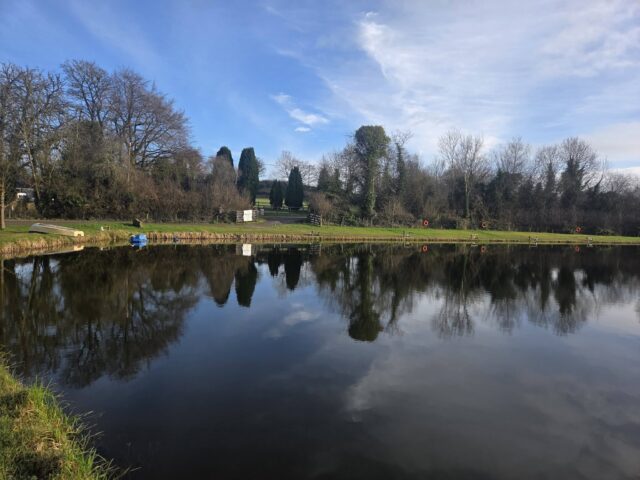
Fast forward a week later, and having spent three hours on a warm Saturday casting with Dan O’Neill for my APGAI Ireland exam, I needed to hit the river. So I tried some new spots near my own house in Tipperary, one of which was a beautiful scenic stretch that looked like something from Nat Geo. There was a heavy hatch of large dark olives, grey sedges (to my surprise), and duns, so it was rather alarming, having walked and observed the river for 25 minutes, that nothing was rising, nothing was moving, and the water was gin clear—so clear I could see the bottom and not even a sprat!
So I got into my jeep and drove further upriver to a spot I’ve had luck before. The river levels were perfect, the hatch was magnificent, as was the evening. This time I got into the river and fished it properly, as this section was faster flowing and more to my liking. I fished it hard, covering every tree and rock, and nothing… not even a rising trout. Disappointed is an understatement.
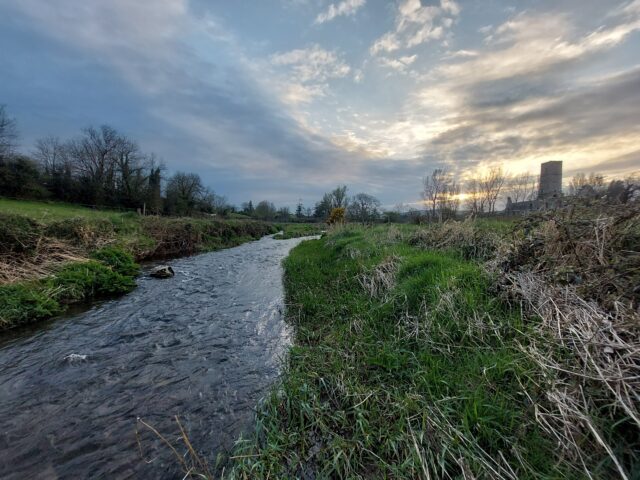
It’s made me question if there are even any trout in the system—but where are they? Have they been washed away with the sheer volume of water we’ve had over the winter? Is there still cold water coming off the mountains, causing them to remain inactive? Or have I just lost my river mojo?
But seriously… where are the trout??
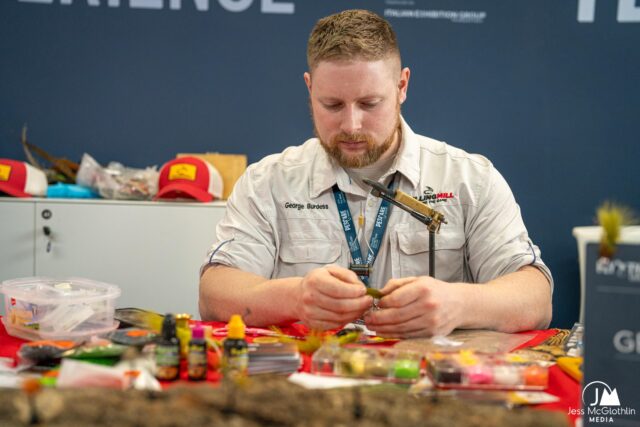
For guiding in the southeast of Ireland or general enquiries, catch me on Instagram @thatallroundedflyguy, Facebook (George Burdess), or email [email protected]
Tight lines for 2026!!! 🎣

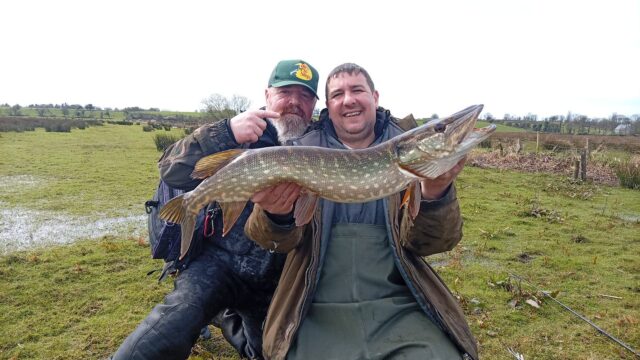
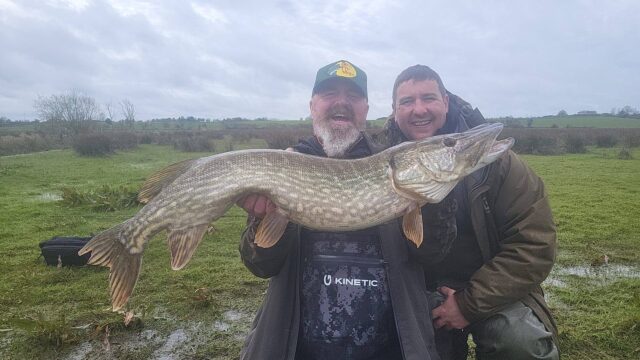




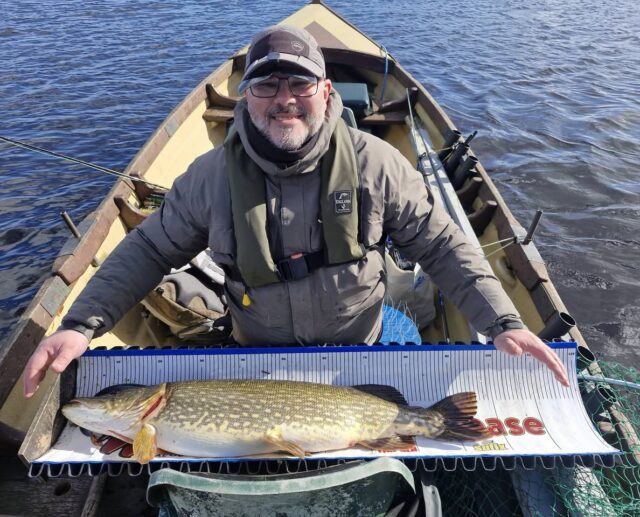


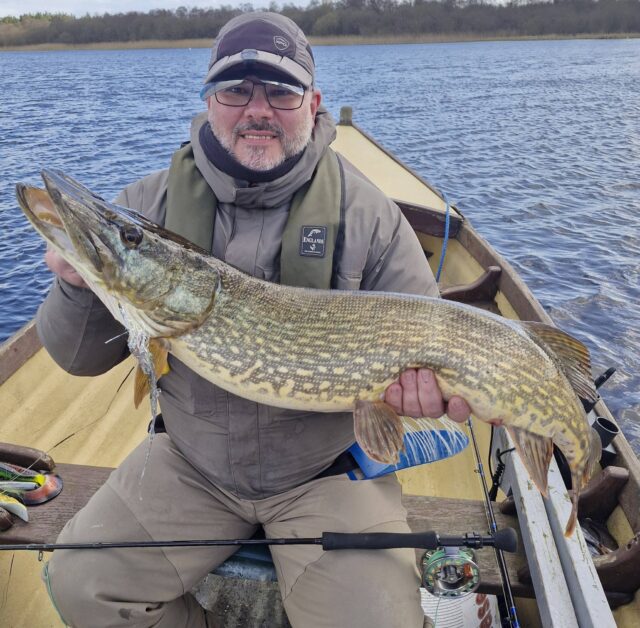
 The best fish just short of 100cm and super pike for Miro on the fly. I pushed out the boat into calm bay just after lunch, and in about 2-3 ft of water, I saw a disturbance and a cloud of silt. Miro said it was a Beaver (they have Beavers in Czechia). I seen & I said yes, Justin Beaver…. A few casts and Miro had some battle with his Beaver pike.