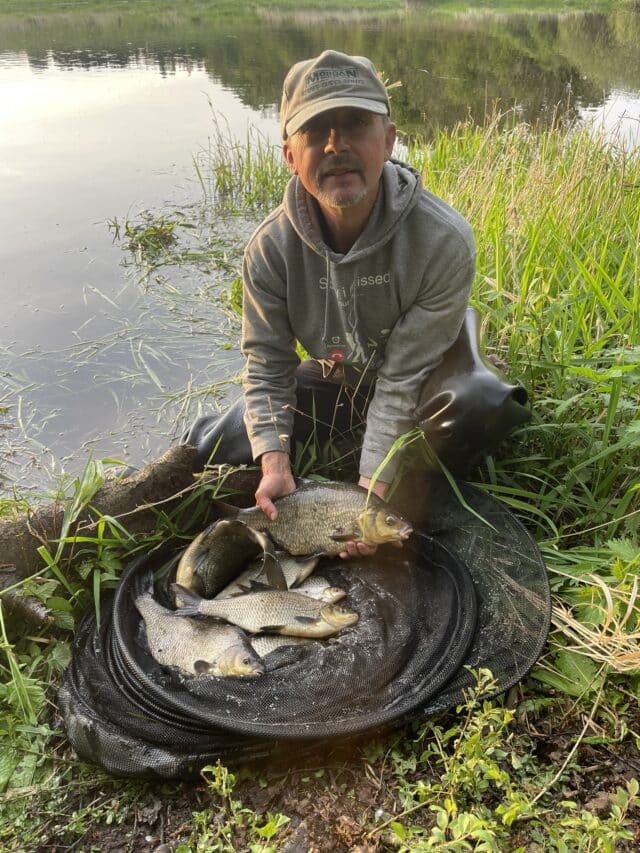
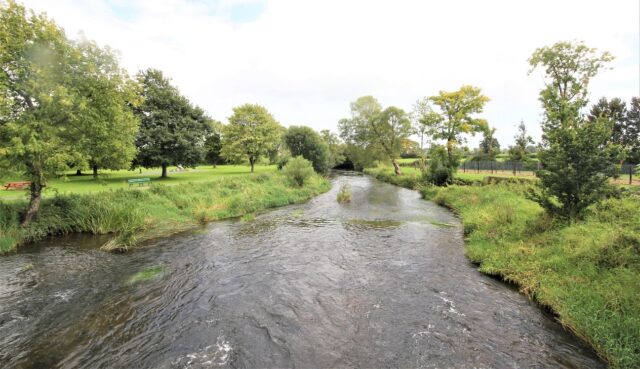
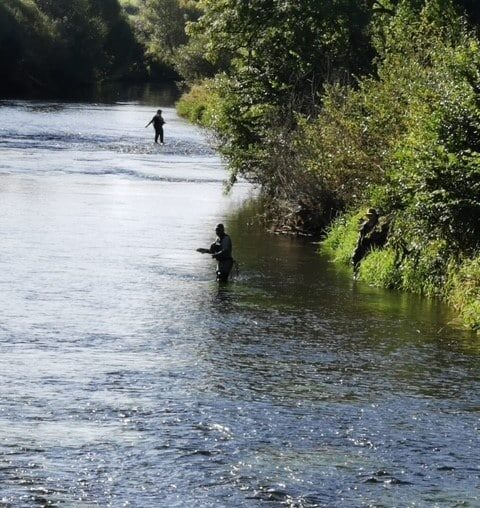
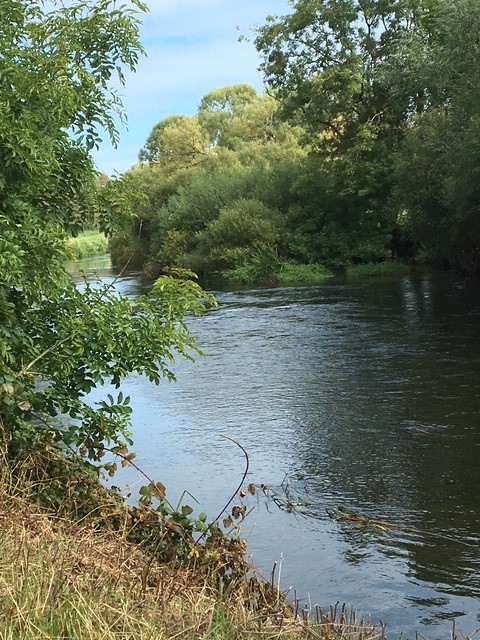
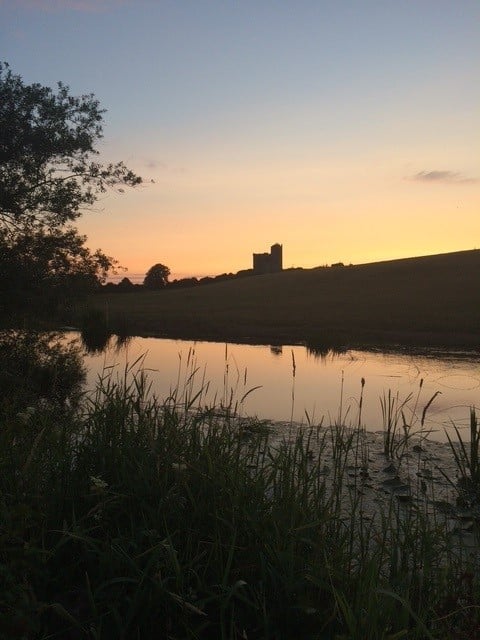
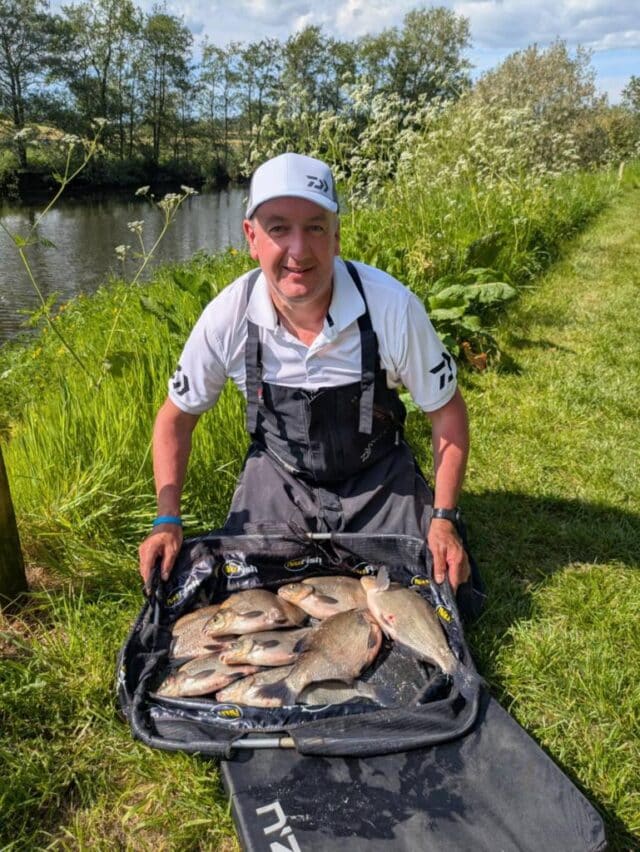
The Second qualifier for Ireland’s FeederKing 2025 was held on the River Blackwater near Dungannon on Sunday, May 18th. Twenty-three anglers fished in bright and warm conditions with skimmers making up most of the weights
The match was won by Andy Chapman with a weight of just under 9kg. Andy put in a brilliant performance to catch 13 Skimmers in the middle of his section and also claimed a golden ticket for the final.
In second overall was Daiwa’s Philip Jackson who caught 9 Skimmers for a 6kg plus weight from peg number 7. Third was Richard Wilk who also caught a bream and a few skimmers with a weight of just over 3 kg.
Sun and skimmers
1 of 4
GOLDEN TICKET WINNERS
ZONE A Phillip Jackson 6.250kg
ZONE B Mark Alcock 2.700kg
ZONE C Andy Chapman 8.850kg
SECTIONS
A Phillip Hartin/Phillip Jackson
B Nick Seddon/Mark Alcock
C Neil Mazurick/Andy Chapman
A special thanks to Johnny Mckinley and Phillip Jackson for helping out with the venue and pegging for today’s qualifier
The third qualifier will be held on the River Erne on Saturday, May 31st and places are still available.
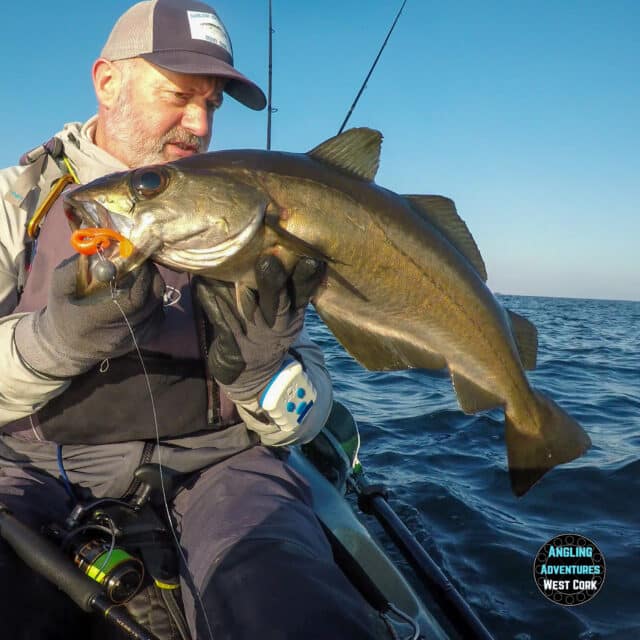
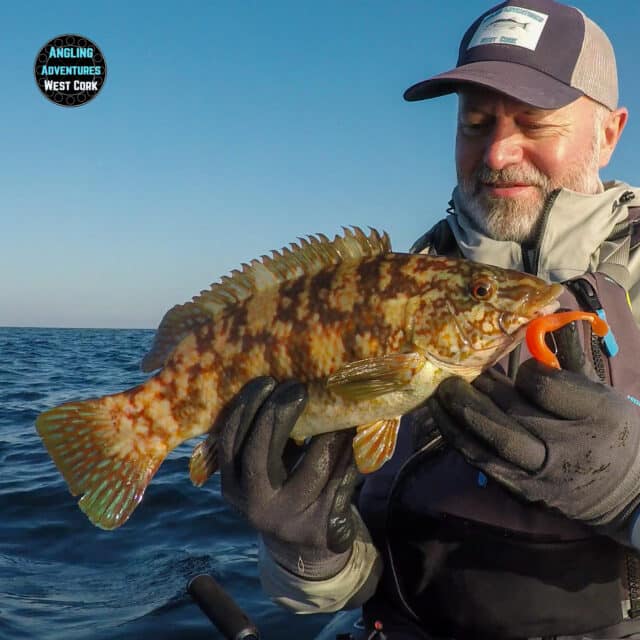
Delighted to finally get my first solo kayak fishing trip of the year done. For my own comfort I timed the trip around the cooler evening temperatures rather than the sun blasted middle of the day that would have suited the tides better!
I knew the conditions would be a bit off but wanted to get started and in the end the fishing turned out to be quite good, with plenty of large Sand Eels around for the fish to chase and feed on!
Lure for the day was a custom colour kindly made for me by @pirate_lures a Corsair Bait Fish paddle tail in bright orange 🍊
I’ve posted a rough highlights edit to YouTube here
Go fishing…
Contact me now to arrange your 2025 Guided Trip or Workshop –- Mullet, Pollock, Bass, Wrasse, Fly or Lure, Kayak or Shore, plus Junior Coarse Fishing.– david.aawc@gmail.com
David has been lure then fly fishing since the mid noughties with some of the best guides and anglers in Ireland and abroad.
Kayak fishing by lure & fly now takes him and his guiding guests beyond the shore to target Pollock, Bass or Wrasse with the chance of other species such as Codling, Coalfish, Mackerel or Garfish.
Shore fishing at night is also a very special experience.
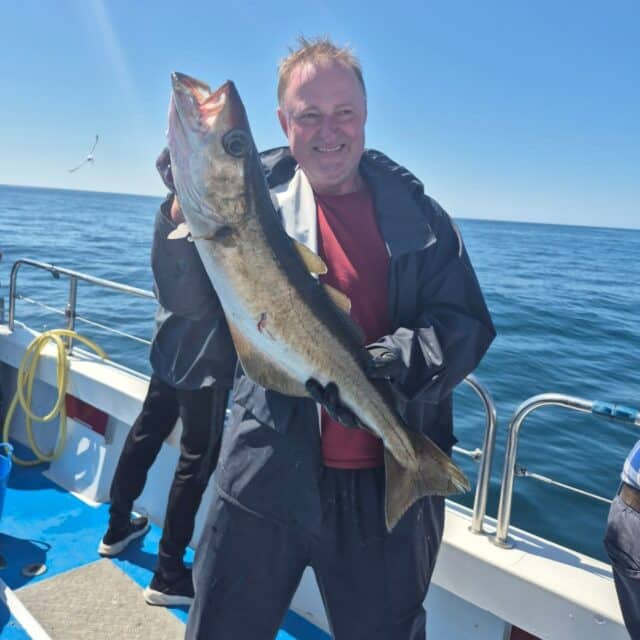
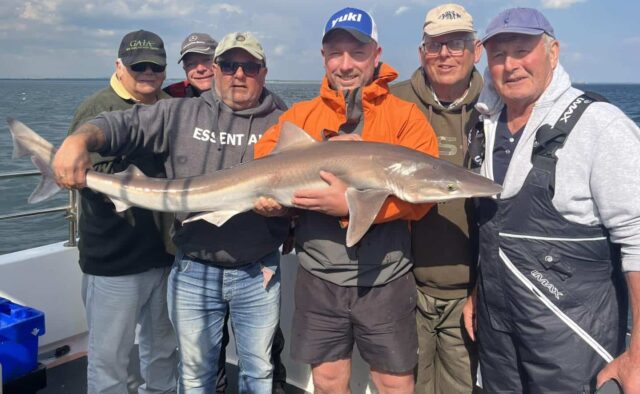
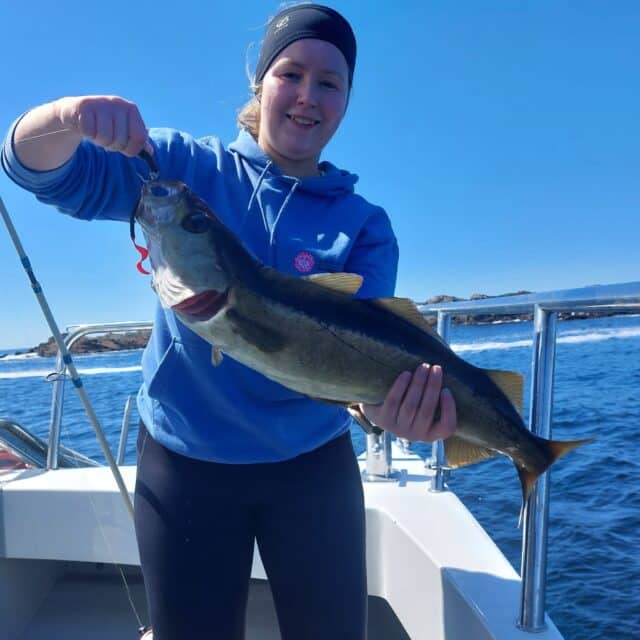
What a glorious weekend that was. They say that fish is only a bonus with weather like that, but we got the bonus too, nice fishing for pollock, coalie and some other bits and pieces. There was a nice bit of mackerel showing up now as well.
33′ Interceptor. 300HP Caterpillar Skipper: Keith Clarke/ Michael McGettigan / Declan McGettigan Licence: 961 Base: Mullaghmore, Killybegs Operational area: Donegal Bay. Within 30 miles of land.
Authorised Bluefin tuna boat 2025
Notes: General fishing and sightseeing, including trips to Inishmurray Island.
You can now charter the MV Fiona Tee along with the Skipper Keith Clarke for practically any purpose. Whether it’s simply exploring the coast line or a spot of sea angling, The MV Fiona Tee is the perfect vessel for your trip.
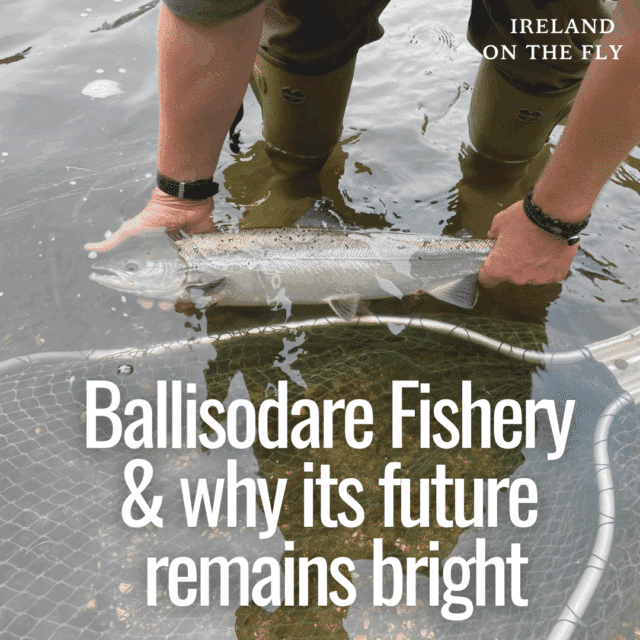
Ballisodare Salmon Fishery is a name that’s probably familiar to you from the salmon fish kill last summer that hit the headlines but after the deaths of one thousand plus salmon, why did it happen and how can we ensure it doesn’t happen again?
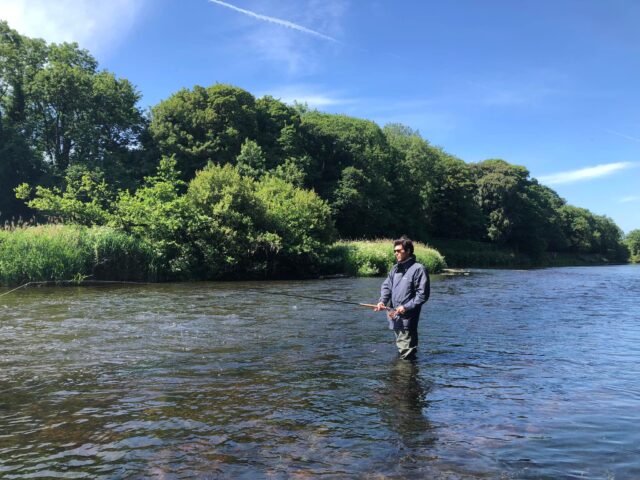
Despite the events of last year, the fishery is determined to showcase what it does have – namely great fly fishing water in Sligo throughout the entire season.
Gerry Merrick, chairman of the Ballisodare Fishery joins Tom & Daire on this week’s show to talk about the fishery, the fish kill of last year and why there can be a silver lining to it all.
Plus, Tom has an update on the mayfly from Corrib and the lads bring you news of salmon fishery closures this week due to warm water temperatures.
Fortunes have improved over the last while for those venturing out on the system. Several fresh fish have been picked up below Lismore, most in double figures and while river levels are low, it has not deterred some as activity has also increased in these areas.
Go fishing…
Guided fishing, clubs, private fisheries etc
Blackwater Salmon Fishery
Blackwater Salmon Fishery has 3 beats downstream of the weir and 2 upstream of the weir. Blackwater Salmon Fishery offers fishing on approximately 5 miles of the river Blackwater. The fishing is spread throughout the middle section of the river to offer good sport throughout the fishing season. Due to the location of the beats, fishing can still usually be offered in low or high water. Contact Glenda Powell: Lismore, Co Waterford, Email:info@blackwatersalmonfishery.com Mobile: +353 (0) 872351260 Telephone: +353 (0) 5853929 Web: www.blackwatersalmonfishery.com
Blackwater Valley Fishery
Salmon, Sea trout and Brown trout fishing on prime fishing beats River Blackwater Co. Cork and Co. Waterford Ireland.
Fortwilliam Fishery offers two miles of double bank salmon and trout fishing over five beats on the river Blackwater.
Our salmon include – Springers, May Salmon, Grilse, Back End Salmon, and in Summer sea trout.
Our beats provide a wide variety of water, suitable for both beginners and the more experienced fishermen.
Fortwilliam Fishery, Glencairn, Lismore, Co. Waterford, Ireland Web: www.fortwilliamfishing.ieEmail: fishing@fortwilliamireland.com Tel: (00353) 87 8292077 or 058 75299
Blackwater Salmon and Trout Fishery
Blackwater Salmon and Trout Fishery control a number of beats of the Munster Blackwater.
Careysville Fishery offers some of the best salmon fly fishing in Ireland and includes 26 named pools. It is considered by many to be one of premier beats for salmon fishing in Ireland. Wading is excellent and among the numerous streams, pools and glides there is a great variety of fly fishing to suit both complete novice and challenge the most competent of fly casters.
At Lismore Castle & Golf Course Fishery, we offer nearly two miles of two inter-linked beats, the Castle Beat & the Golf Course Beat.
The legendary Castle Beat consistently ranks as one of the top Salmon beats on the River Blackwater, for the number of Atlantic Salmon caught per rod. The Golf Course Beat offers about 1.5 miles of fishable water through meandering majestic countryside. The Golf Course beat offers a number of bewildering pools suitable for unmatched spinning and bait fishing.
We provide Day Tickets for some prime Salmon fishing in Mallow Co. Cork. We have excellent fly water, shrimping worming and spinning also. We also have very competitive Day rates and we have very recently upgraded our fishing.
Tickets available from “The Bridge House” and “Vincent Downes Menswear” Mallow.
Located on the Munster Blackwater in the south of Ireland. Situated mid river between the towns of Fermoy and Mallow. A productive left bank beat in stunning surroundings.
For bookings contact Conor Arnold: +353 87 755 4682
For details on availability and conditions of fishing for salmon and trout on the Longueville House waters please contact them at Contact : Longueville House Hotel, William O’Callaghan Address : Mallow, Co. Cork. Telephone : 00 353 22 47156 Email:info@longuevillehouse.ie Website: www.longuevillehouse.ie
Dave Warburton and Tim Bradshaw made their annual trip to Ireland again in April and May. This was their fifth such trip. Tim travels from Boston, USA whilst Dave comes all the way from Aberdeen, Scotland. The pair have been lifelong friends, originally growing up as next door neighbours in Sheffield, England. They stay at Lake View Cottage on Town Lake, Killeshandra and do most of their fishing either at Town Lake or at Killykeen.
This season, the fishing was a bit patchy, some of the banker pegs did not deliver! Water levels were extremely low on arrival but sharply rose over one meter during the first week – it rained every day! The second week was much more stable, and levels began to drop.
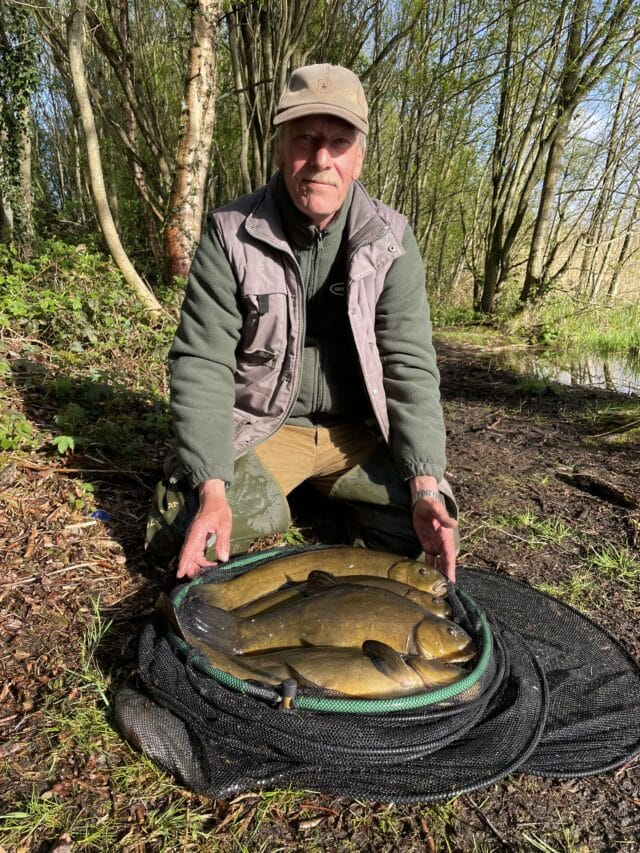
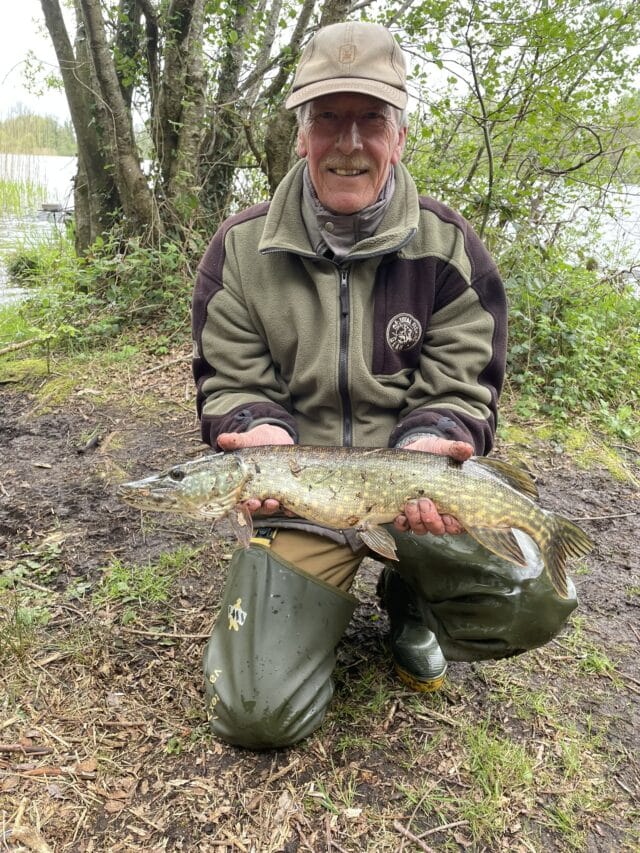
The pair still had some very good fishing: getting twenty one tench, all between 5 and 6lb, six pike (all caught on match tackle), loads of roach and a few hybrids. Tim had 50lbs of hybrids one day, but the highlight was Dave catching 100lb of bream.
Dave with some super tench
They were all young fish with the biggest being 3lb and all in very good condition – this bodes great for the future and expels the myth that the Bream have gone. Ironically, the peg that Dave fished looked barren for several hours and it would have been very easy to pack up and say that there were no fish there.
Tim with bream and hybrids
The Sheffield duo believe that Ireland and Killeshandra is the perfect place to meet up every year and catch up. Great Fishing, good accommodation close to the centre, within walking distance of the Lough Bawn Hotel which has brilliant staff, top notch food and drink.
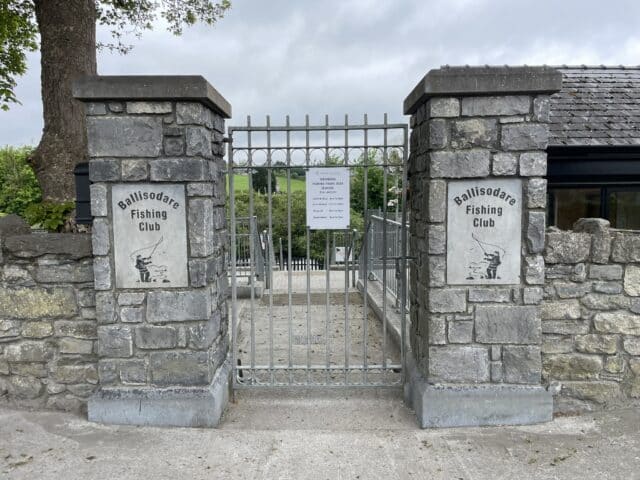
Gerry Merrick reports from the Ballisodare Salmon Fishery…
Biodiversity Day at Ballisodare Fishery 16th May 2025
Ballisodare Fishery has been closed for the past week due to high water temperatures.
The Club took advantage of the weather and hosted a Biodiversity day at the Falls on Friday 16th May 2025 as part of National Biodiversity Week. Local schools, in Ballisodare, Collooney and Summerhill College, Sligo attended sessions during the day, and an afternoon session was open to the public. The Club is particularly conscious of the environment and water quality especially since the fish kill of last summer.
Workshops were carried out by Mark O’Connor of Field Studies Ireland, Lisa Cronin of Sligo ATU and Ruth Hanniffy, Biodiversity Office of Sligo Co. Co., assisted by ATU placement students, Aaron Seldon and Conall Bonner and Beth Brown, PH student ATU.
Witnessing the engagement of the children from the various schools was hugely encouraging. Their inquisitive minds and their interest in the environment were truly inspirational.
The following extract from St. John’s N.S. in Ballisodare website summarises the experience.
“Today we were so lucky to invited down to the Ballisodare Falls by Ballisodare Fishing Club, to explore the biodiversity of the area. We had some very interesting leaders in Mark from Field Studies Ireland & from the ATU Ben, Beth, Connall and Aaron.
The children collected and examined species from the land and from the water. We were in two groups and explored these areas separately. The children collected all kinds of life from the ground, snails, woodlice, worms & centipedes. They learned that if you hold centipedes for too long, they will wee on you!!! They also learned that woodlice originally came from the sea and are a crustacean. They are the same family as crabs, lobsters and prawns. If you cooked a woodlouse it would turn pink!
When exploring creatures from the water the children examined minnows, salmon, shrimp & cray fish. They compiled a tally of the amount of creatures they saw. It was all very interesting. We very much look forward to visiting the Falls again soon.
A hugely successful day that will hopefully become an annual event !
Skipper John Fleming reports that mackerel have been caught in good numbers lately, the settled conditions probably helping keep the shoals together. Hopefully a good sign for the season ahead. Pollack and coalfish have been the main species caught, with some really good fish among them. Another hopeful sign for a good summer!
1 of 5
Go fishing…
To book fishing with John aboard the Brazen Hussy II, give him a call on 087 7571320
A regular day is between 9am- 6pm from either Rossaveal, Spiddal or Galway depending on species being sought after. Fishing on the inshore reefs for pollock, cod, ling, wrasse, conger eel and mackerel can be reached in 10 minutes from departure, while our offshore reef marks are within 45 minutes of departure. Our ground fishing for tope, spurdog, ray, bullhuss, turbot, plaice and the giant common skate can all be reached within the hour which ensures the most amount of time is spent fishing.
The shark season usually starts at the end of June and runs into late October, this is the ultimate angling adrenaline rush with these hard fighting blue and porbeagle sharks all being tagged and released safely.
Package deals available
Anglers on the Clare Dragoon have enjoyed lovely sea conditions, and some great fishing over the past couple of weeks. Skipper Luke Aston reports that mackerel catches have been improving, with good numbers around Loop Head. Offshore reefs have been fishing really steadily, with good numbers of coalfish and pollack, as well as a nice mix of other species, including some fine ballan wrasse.
1 of 7
The odd spell of breezy weather has seen the refuge of the estuary come into play, although not half as much as would be usual, with the good weather mostly allowing the crew to enjoy the offshore fishing. Although the ray have yet to put in an appearance, there were some nice huss, and a fine male tope for one group.
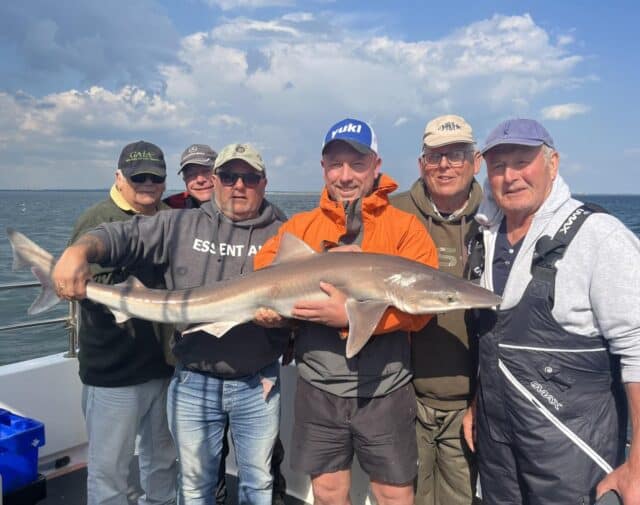
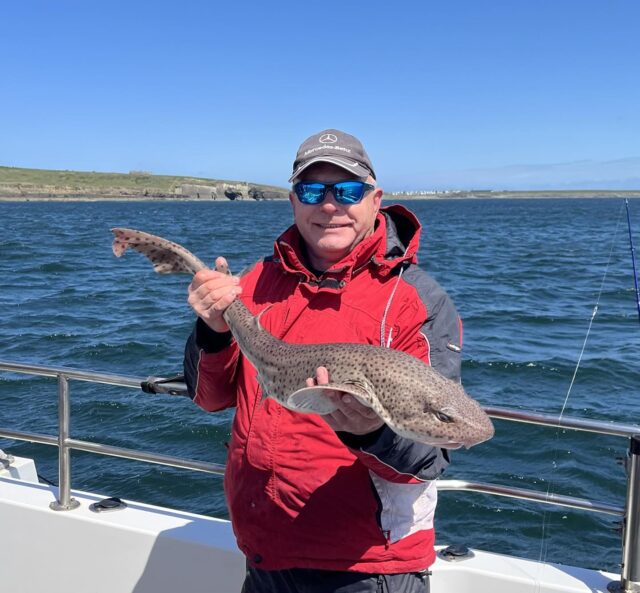
Tope
Bull huss
Go fishing…
Clare Dragoon
Clare Dragoon is a LOCHIN 366 powered by 650HP engine, skippered by Luke Aston and operating out of Carrigaholt Co. Clare…
I have some offers up on my web site www.fishandstay.com and if anybody is interested in putting a trip together please do get in touch. Also I Twitter from the boat on @fishandstay and try to update my face book page www.facebook.com/CarrigaholtSeaAngling fairly often!To experience some of the best deep sea fishing available in Ireland contact Luke. Telephone: +353 65 9058209 or +353 87 6367544 Email:lukeaston@eircom.netWeb:www.fishandstay.com
This lovely piece of writing about the River Suir in Tipperary and the names of the fishing pools in the Golden area was contributed by Robert O’Keeffe of the Cashel, Golden and Tipperary Anglers Association.
The River Suir around Golden has always been an important trout and salmon fishery and there are a number of weirs on the water that date back, at least, to the 16th century and some that probably date back to the early days of Athassel Abbey. The river has played a vital role in the life of the community, both in terms of as providing a food source and, in latter times, as providing sport through angling.
The fishing fraternity have always been a community within a community, a small band of (mostly) men who seek the slow dropping peace that comes from fishing the river. Fishing, by its nature, is a relatively sedate pastime, one that encourages the angler to slow down and take the time to be in the now. The angler tends to have time to take stock, observe their surroundings and to become attuned to the rhythms and patterns of nature.
It is perhaps understandable, that, where most people see the river as a relatively featureless body, the angling community tend to know its contours, features and its moods on a more visceral level. The fishing community can meet and discuss the river in terms of natural features, and it would not be unusual to hear a conversation between two fishermen in Touhy’s Bar, talking animatedly about, “Meeting a fish under the sally branch that sticks out into the stream, at the top of English’s”. The intimate nature of a shared geography makes perfect sense to both, but would, no doubt, be incomprehensible to the listener.
The Cashel, Golden, Tipperary Anglers Association is one of the oldest clubs in the parish, founded in 1935. Its original officers were Maurice O’Connor, John St Cashel and Christopher Hogan, Athassel, Golden. Today, the club has around 140 members, drawn from all walks of life.
Besides the transitory natural features like trees and weed beds, that change each year with winter floods, there are, passed down through the generations, names that refer to the various unchanging natural and built features of the river. The pools and weirs along the river loom large in the lives of the fishing club and their names are taken from a variety of sources. Some take their names from the colour and texture of the water, others from historical figures or features associated with them; while others take their names from the families who owned the lands at various times in the past hundred years. These names have been passed down through the generations of fishermen and are largely unknown and unrecorded in the wider community. Some names have fallen out of common usage, while others are long forgotten. As older members have died out in recent times, there are fewer and fewer people who remember these names. This article seeks to record this information for future generations.
Taking the lands below Castlelake House as the boundary point of the parish, we first come to the Swimming Hole which stands in front of Ballinahinch Castle, and which was used for swimming lessons for the children of the area. Next, on the boundaries of the parish, we come to Keorish or McKeorish Hole, named after the one of the previous owners of the Bawn and Castle at Castlelake or Ballytarsny as it was previously known. The name Castlelake itself dates back to the early 18th century and refers to a clergyman, Matthew Leake, who lived here.
Below Keoirish hole, is Kennedy’s Flats, a long straight, slow and deep stretch of river that empties out into the Black Pool on John English’s land. At the bottom of this stretch, there was previously an island called Keating’s Island, which was drained and filled in many years ago. Here the river breaks into three and the larger of the two islands, grazed in summer by cattle who cross the river, is Kelly’s Island, which was also known as Duck Island.
Just below where the strands of the river meet again, is Kelly’s Slip and the small grove of trees that stand beside it are Kelly’s Wood.
Just below this, the remains of a bridge can be seen with the anchoring points still in place on both sides of the river. An old, raised roadway runs through this field which would have meant the flood plain could be travelled in the winter floods. This feature is known as the High Wall and there are two schools of thought as to its use. Some argue that this was the original road between Dundrum and Cashel, while others posit it may be an old estate road. Eddie Dalton says that Arthur Young in his book “A Tour of Ireland”, speaks of taking a tour of the Mantlehill estate in the 1770s with Lady Clanwilliam and they crossed the river, most likely at this point. Canon O’Dwyer, reminiscing in the 1980s, remembered the bridge being washed away in the 1920s. Dennis O’Donnell recalls this part of the river being known as the Wooden Bridge and says that the timber pylons from the bridge could still be seen there until comparatively recent times.
The pool that marks the boundary between Michael Fogarty’s and Eamonn Carr’s land was named Moran’s Wood, in reference to a wooded area that stretched along this spot, on the opposite bank, in times past.
A few hundred metres below this, in Larry Moloney’s land, the river again runs into a deep pool that is known as the Black Pool. Old maps mark an Osiery (willow plantation) at the other side of the river in the 1840s.
Just below this lies the Rock Well on Padraig O’Dwyers land. This well was the main source of clean drinking water for the people of Mantlehill and was in use until running water was finally provided to the townland in the 1950s. Denis O’Donnell recalls that this point of the river was always known to fishermen as The Farmyard. In this stretch, covered by water except in the most extreme drought conditions, is the remains of the Head Weir. This weir was used to divert water into the Mill Stream which runs from here to Golden Village and which was used to drive the mill wheel there.
Around the corner from the Mill Stream a small pool known as the Little Pig’s Hole. This then washes down into the deep dark waters of the Pig’s Hole. The river just below the Pig’s Hole, gets shallower again and branches around a small island known as Tea Island.
The river then picks up speed and races down towards one of the old crossing points of the river at Byrne’s Ford.
One of the best-known spots on the river is the Moat where the River Multeen meets the Suir. This has been a strategically important point of the river for thousands of years. It is a natural salmon pool, holding fish as they make their way up both rivers to spawn. The Moat probably refers to the archaeological feature on the edge of the river where the bench now sits. Across from it, on the Mantlehill side, the high esker holds the remains of two Iron Age hilltop forts. The Moat is a popular swimming spot for locals. The pool in front of the Moat is known as Moran’s Pool.
Older sources recall that this may been the site of Maol Cheannaigh, where the progenitor of the McCarthy’s defeated the men of Ossory and Ormond in 1043.
The Moat flows out in the quicker waters that fishermen would refer to as being Under the Well, referring to Chadwick’s Well.
Further down the river, on the Castlepark side, we find the site of the Boathouse. Dennis O’Donnell remembers that the foundations of the boathouse could be seen here and that there were skiff type boats used here that could be poled up and down the river.
As the river glides on towards Golden, we come to Murray’s Hole. This was another popular bathing spot. Patrick O’Brien remembers a diving platform built here, the foundations of which lie buried under the bank. The name derives from Poll Muridh, which translates as the Leper’s Hole. This refers to a medieval leper colony which stood at this spot. The townsland here is Monkscell and there was, until the 1930s, the remains of 12 cells inside a high wall, which were probably used to house the lepers.
The right-hand bank from here to Golden is known as Castlepark, from the original Castlepark House, which was later renamed Mantlehill House and owned by the Scully family. One of the more unusual surviving names from this time, associated with the Scully family, is the Ha-Ha. A Ha-Ha is an architectural feature which has a deep ditch, with a wall on its inside side and a slope upwards on the other side. They were used to form a fenceless boundary to a garden, a way of keeping animals out without interrupting the view.
In the village, on the Castlepark bank, beside where Lawrence’s house is now, was a feature known locally as The Bars. These were a series of girders which offered a precarious crossing of the drain that traversed this field.
As we leave the village, the stretch of water that runs down from here, on the village side of the river, is known as the Lacken and it has always been a popular spot for trout angling. Below this is Hannah Mary’s weir, the first of several weirs that dot the river between here and Ballycarron. Not far below Hannah Mary’s about forty yards back from the bank is the site of Cooke’s Well, which Eddie Dalton remembers drawing water from as a child. A stream flows from the well into the river.
About a half mile from here the river slows down and runs into the Rock Pool which had always been a prolific salmon fishery. Sadly, salmon numbers have been dwindling at an alarming rate for the last thirty years and the salmon teeters on the brink of extinction. The pool empties out here, thundering over Moloughney’s or Cahill’s weir. About a hundred metres below the weir, we come to the Well, a spring well that was used until modern times for drinking water. Below the well the water levels out into the Elm Tree Pool.
The river then flows gently past Athassel Abbey. The abbey translated as Ath Iseal means the low ford. The fording point in the river here is easily waded and would have been a natural crossing point for the community attached to the abbey. The remains of the moat, built by the monks, who diverted the river around the Abbey and who practiced fish farming at the site, can still be plainly seen. Somewhere in this locality another weir was recorded. An article by A.E.J. Went records that ,
‘Adjacent to the abbey of Athassel there were a number of fishing weirs at the time of the Civil Survey. In the parish of Relickmurry there were two weirs, one in the townland of Athassel Abbey being “commonly called the black weir “. The exact whereabouts of these weirs is again unknown but there are a series of fords below the abbey which would have been suitable for the erection of eel weirs and there is today a mill dam somewhat upstream. On 20th June 1634 indentures were entered into by James, Earl of Ormond and others on one hand and Doctor Gerald Fenall for a lease for 31 years, dating from the death of Ellen Countess Dowager of Ormond of “the weir commonly called the Black weir.’
Below the Abbey is a small pool that was once known as the Mo Tree Pool but this name has fallen out of modern usage. The far bank of the river, across from Athassel is known as the Suir Road by the angling community.
Below the abbey the river runs into a deep pool, locally known as the Priest’s Pool. This pool flows out into Russell’s Slip, a traditional access point to the river.
We next encounter Jackman’s Weir, a spectacular site with water thundering ceaselessly through. This weir is the property of the Jackman family and they have lovingly tended it for the best part of a hundred years. The bench here must surely rank as one of the most peaceful places in the parish and is a fine spot to watch the world go by.
Siobhan O’Keeffe crosses Jackman’s Weir
Below the weir, the water glides down through the valley at Quinlan’s Slip and this is a very important and prolific habitat for wild brown trout. The river then powers through the picturesque rapids at what was known in recent years as the Swissman’s Weir. This refers to Kurt and Enid Stamm whose house hung on the hill above the weir. Its purpose-built sauna and goats with bells, lending an alpine touch to the river while they lived there.
Next along the river is O’Malley’s weir which nestles below the impressive remains of O’Malley’s Castle or Suircastle. This castle is a four-storey tower house, possibly dating to the fifteenth century. Its proprietor in 1640 was “John Cantwell of Mocarky Esquire, Irish papist” . It was also later the site of the home of Baron Massey who built a mansion there which has since been demolished, with few traces remaining.
The rapid waters slow after this and empty into the Bishop’s Pool, which then flows into a tree lined run that continues down towards Ballycarron. Just before the bridge at Ballycarron, we find the Windmill Hole, taking its name from the remains of the windmill that stands on the riverbank and that marks a very early effort at harnessing wind energy to pump water.
Our club waters end just below Ballycarron Bridge. The bridge itself is an impressive edifice and had to be rebuilt after being blown up during the Civil War in Autumn 1922. A replacement timber bridge was also destroyed in March 1923.
The information in this article was kindly provided by the following people, who generously shared their time and their huge knowledge and provided us a unique window to our historical, living landscape.
1. Denis O’Donnell
2. Patrick (Pakie) O’Brien
3. Michael Doyle
4. Eddie Fitzgerald
5. Willie Boles (Senior)
6. Ciarán and Christy Ryan (Preston)
7. Eddie Dalton






 Fiona Tee