Home Blog Page 161

Pike Master Ireland fished north, south, east and west

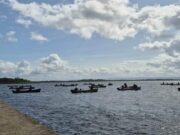
Twenty one teams from all corners of the island of Ireland fished Pike Master Ireland on Sunday, October 27. This competition is unique, because instead of taking place on one competition venue, it is held on numerous venues anywhere in Ireland, with anglers recording their fish in real time on a the FishDonkey app, downloaded in advance.

The weather conditions were atrocious on the day in some parts of the island, very wet and very windy, but part of the beauty of this competition is that, in the event that the weather becomes too windy to fish on one of our larger loughs, angler’s can have a plan B prepared and switch to a smaller, safer venue on the morning of the event.

The terrible conditions on the day did not encourage the pike to feed hard on the day, but some of the teams did have some really good fishing during the competition.

Pike Master pike

After checking and rechecking all the photos and videos uploaded on the FishDonkey app, the organisers were able to announce the winners of Pike Master Ireland 2024:

  • First place – Team Palkozjia 521cm
  • Second Place  Reelax_Predator_Fishing 500cm
  • Third Place – Carlow Predator Angler 380cm
  • Longest Pike – Reelax_Predator_Fishing 111cm

Well done to all who took part. Hopefully the weather will improve in 2025 and more boats can take part.

All Ireland Youth fish Lough Gowna

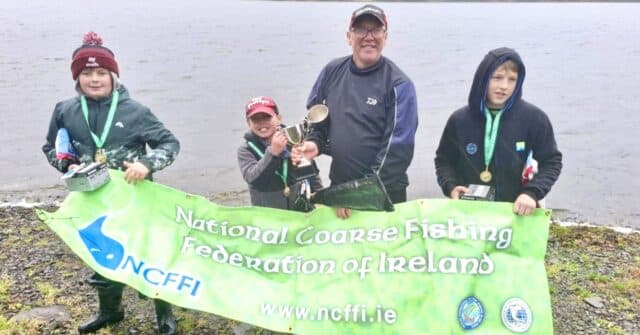
Eleven young anglers from across the provinces turned out on a wet October Saturday for the All Ireland Youth Feeder Championships held on Lough Gowna in Co. Cavan. The fishing was not great, with roach the prevalent species and just a few small hybrids showing, but it was a good day’s competition enjoyed by everyone.

A bonus 1.5kg bream secured the 3-hour match for this year’s Under 15 champion Markas Cmuckas who finished with 1.700kg. In second place was Tiernan O’Brien with 0.275g and 3rd Sam Navickas with 0.225kg.

Sarunas Zenkovas won the match to take the title for the Under 25’s with 9 fish for 1.475kg. In second place also with 9 fish for 1.100kg was Demainte Kar and 3rd Brian Clark with 8 fish for 800g.

Congratulations to the winners who received winners trophies, tackle prizes and medals. Well done to everyone who took part who also took home terminal tackle items for their efforts. Thank you to Brenton Sweeney for running the event and for the assistance received on the bank. An ideal opportunity to observe our Team Ireland Feeder anglers of the future.

GOWNA coarse angling centre


Tactical battle decides VDE Baggers Winter League leg

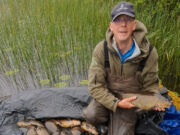
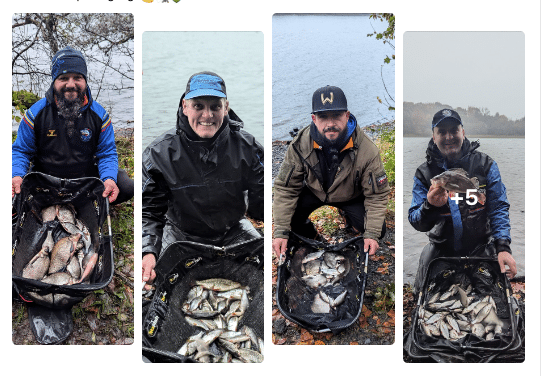
The VDE Baggers regular competition haunt, the Newry Canal has been out of sorts of late, so they decided to head for a new venue for the third round of their winter league. It was a decision that paid off, with roach, skimmers and hybrids all feeding avidly. It turned out to be a tightly contested match, as the variety of species on the go gave anglers opportunities to try different tactics, and the top three all came from separate sections, showing that the fish were well spread out.

Some chunky fish in this bag

Artur Bojczewski opted to fish the feeder, targeting the skimmers, and that proved to be a good decision as he landed the winning bag of 5.45kg.

Plenty of small stuff here

Aaron Nabc Hutchman, who opted for pole tactics, had plenty of small roach, winning him second place with a bag of  5.34kg.

A nice mix in this bag

Grzegorz Bojczewski came in third, with 4.75kg of skimmers on the tip. See full report on the VDE Baggers Facebook page.

Bank Holiday Lie-in for Limerick Pike Anglers

The Limerick County Pike Anglers Association decided to stay close to home for the latest round of their winter league, giving them all a rare lie-in over the Bank Holiday weekend. It was a decision that paid off, with plenty of fish on the move, keeping the anglers active.

The lead changed hands a few times over the day as each fish landed moved things around on the leaderboard, but at the close of the event it was some familiar faces that emerged from the pack, as Tommy Williams took the win with 32lb 6oz, less than a pound ahead of Sam Brown with 31lb 7oz. Heavies fish on the day went to Paul Maloney with a pike of 8lb 1oz. See the full report on the LCPAA Facebook page.

Howth SAC earn their Spurs in Wicklow

Kit Dunne of Wicklow Boat Charters had a group from Howth SAC out with him over the weekend for a club competition, and they picked a great weekend for it, hitting the water just as the spurdogs were active and feeding hard. That resulted in a day of mayhem, with nearly 500 fish brought to the boat.

The eventual winner, David Farrelly, had almost 100 spurs for himself! There were plenty of other species too, including a few nice huss and a tope, and anglers were able to add some new species to their cards before the end of the year.

Pollack still feeding well in Clare

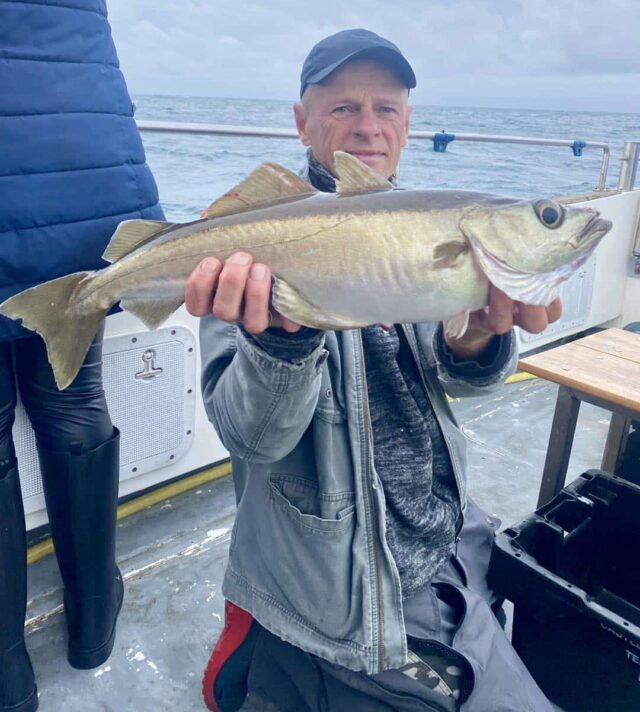
The days may be getting shorter, the weather may be getting worse, and the opportunities for getting out fewer, but water temperatures are still relatively warm, and when anglers do get out, they can be pleasantly surprised by how good the fishing is.

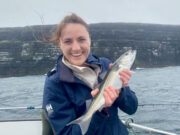
Skipper Sean Maguire had a group of Latvian anglers out at the weekend, and they found plenty of pollack feeding well, probably fattening up ahead of winter. Each reef tried produced fish, and keeping moving and trying new ground produced the best results. And the topping was Izabela’s delicious homemade cake which went very well with a cup of tea!


Go Fishing

Isle of Aran

Fishing Adventures on Séan Maguire’s Isle of Aran, a Lochin 33   charterboat which operates 15 miles from Kilbaha, Carrigaholt, and Kilrush.

Whether you want to go to the Atlantic Ocean for a large selection of species, including different types of shark, or fish the estuary for ray conger tope etc, Fishing Adventures will cater for whatever fishing you desire.
Telephone: +353 (0) 877508758 or +353 (0) 894431182
Email: [email protected] Web: www.fishingadventures.ie

Oaklands Winter Matches start November 3, places available

Oaklands

Oakland’s Winter Matches will start Sunday, 3rd November.

All matches will be run as Open Matches with an optional league for anyone who’s interested.

There are 8 matches and your top 6 results count at €50 for overall pool

Daily pools are the same as usual €30 (€20 members).

Contact Adrian Browne at Oaklands if you are interested.

Dates

November 3rd
November 17th

December 1st
December 15th

January 12th
January 26th

February 9th

March 9th

Go fishing…

Oaklands Fishery

Address Marsh Meadow New Ross Wexford Ireland Phone: +353 51 445348 Mobile Phone: +353 87 6988979 Mobile Phone: +353 87 781 1042 Website: oaklandslake.com

Ray Linton wins first round of Munster CAC Winter League

Munster CAC members

Munster Coarse Anglers kicked off their Winter League in Portuma at the weekend. Kevin Leahy reports…

Well after last week’s cancellation due the Red and Yellow weather warnings we finally got things started. This year’s League started on the Town and stickup sections at Portumna.

Not the prettiest but we managed to squeeze in just about...
Not the prettiest but we managed to squeeze in just about…

Only 8 made it to the match today others having other commitments over the Bank Holiday weekend, however the numbers will increase over the next couple of matches to make it the biggest number of anglers we have had for a few years. Let’s hope the fish keep feeding.

1st in section and 2nd overall Kevin

As you can see from the results it was a bit patchy and bites were at a premium. The fish however, were of a good stamp, mostly hybrids and roach and a single bream making a appearances.

Overall

1st Ray 15 lb 15oz
2nd Kevin 15lb 4oz
3rd Pawel 14lb 12oz

Morgan who managed to get a few on the Whip in the last hour of the match

Back on schedule next week we are going to give the Town section another go.

Go fishing…

Anyone who would like to fish the Munster Coarse Anglers Winter League can contact us by commenting on our Facebook page

Winter League rules
Winter League rules

Join the club…

logoMunster Coarse Angling Club are affiliated to the National Coarse Fishing Federation of Ireland, NCFFI the National Governing body for coarse and predator fishing and casting. www.ncffi.ie

The River Whispers 10: Flyfishing Setup

Dan O’Neill is back with the 10th instalment of his River Whispers series. There’s a lot in this weeks edition, so we’ve split it into 2 articles. Read a comprehensive run down from Dan on how to set up for flyfishing, with some great information here for beginners and improvers, followed by an interview with international angler David O’Donovan below, and all about lure fishing for perch, including an interview with Marcin Kantor here.


“The pessimist complains about the wind, the optimist expects it to change, the realist adjusts the sails”

This week we follow on from choosing our rod and onto fly lines and leaders, what are all these lines!!! One of this week’s experts is Dave O Donovan, Dave has represented Ireland numerous times and is an exceptional angler.

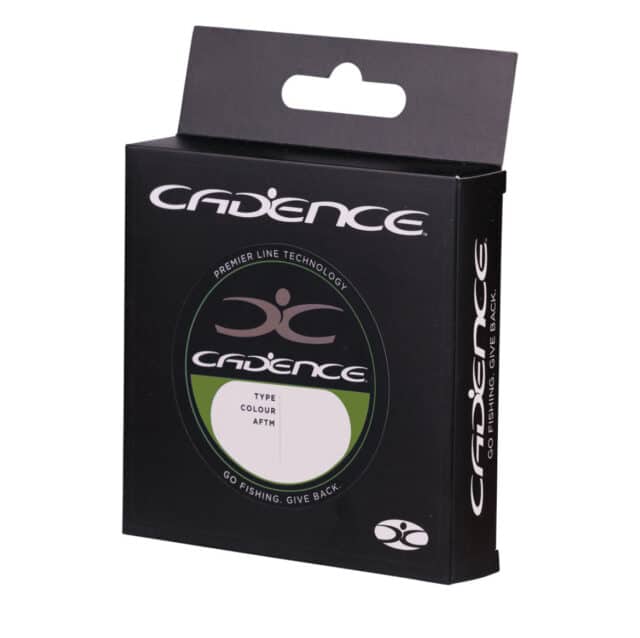
Last week we looked at choosing a rod and reel set up. Now we need to take a look at lines and leaders. Firstly, let’s take a look at fly lines and where do we start!!I recently went to a tackle shop and there was a wall of fly lines, I thought “if I was a beginner where would I start”. Last week we picked a 9ft 5wt rod as our “vanilla”. With a fly line we will be looking for a 5wt line to match. So that will take you to one of the subsections of the monster wall of lines. Now do we want a double taper or a weight forward. First of all, what is a taper? A taper is the shape of the fly line, the taper of the fly line is the gradual increases or decreases in diameter to put it simply. Longer line tapers give gradual turnover which is ideal for dry fly or delicate presentations. If we were using a short taper, it gives more aggressive turnover for larger flies for example streamers or cumbersome indicators when nymphing. Is there a “vanilla” fly line, we are looking for a general-purpose taper such as the cadence csm fly lines. So, I’m not going to go to deep into this as it’s aimed at beginners. There are weight forward fly lines (Wf-5) or double taper fly lines (DT-5) the bits in the bracket are what you will see on a fly line box. So, if we are looking for a weight forward fly line for our 5wt rod we will be looking for (Wf-5), if we are looking for a double taper line then on the box should read (DT-5). A weight forward line (WF) has a head / belly / running line and is between 90-100ft.A double taper fly line has a taper at both ends meaning you can reverse the fly line. It has a head / long level body / head. Some say it’s easier to cast where as some say it’s more difficult. Before I move on too much further let’s hit on sinking lines/poly leaders and midge tip.

Full sinking line: The entire line sinks, you will see something on the box that says (Di3, Di5, Di7) so the number after “Di” is how many inches per second the line sinks or sink rate. So, if we were looking for a slow sink rate, we would get a (Wf5, Di3) and so on as you look for a faster sink rate or different line weight. You may see “ips” which is inches per second.

Using a poly leader: A polyleader can be bought in a packet in various lengths a polyleader attaches to your floating line and the polyleader sinks. I use them for streamers sometimes when I’m switching from indicator fishing to streamers, it’s great to just attach a polyleader and away I go, they also use the Di system. So, we might ask for a 10ft polyleader in Di3.At times you may see “ips” which is inches per second in this case we would look for a 10ft polyleader, ips 3.

Intermediate line: Sometimes called midge tip an intermediate line is basically a sinking line with a sink rate of less than 3 inches per second. I use these for swinging wets sometimes or on a trout lake for different techniques when i need to be sub surface. It works well for streamers in lower water conditions also.

Sink tip lines: Float to sink (Float / sink 6) or (Wf-5 float – sink 6) so here we have a floating line with an integrated sink tip (no joining knot between the floating line and sinking line). Different companies use different branding but this will give you an idea of what to look for on the box. There is then an intermediate to sink tip which means it’s an intermediate line with a 6-10ft sink tip.

What does integrated sink tip mean? When we use a polyleader on our floating line we will of course have a loop-to-loop connection where our polyleader meets our floating line. An integrated sink tip means that the floating part and polyleader is flush, there is no loop-to-loop connection. This means we can draw in the line as far as we like without the knot bumping through the rod tip and guides, it also will pull out freely if the fish lunges. However, if we get this line, we are stuck with the sink tip and whatever sink rate it is. It has some advantages and disadvantages.


Spey lines: When people hear the word Spey they think of big two-handed rods and a beautiful Scottish river, what a picture that paints. The single-handed rod can perform Spey casts and there is a single-handed Spey line especially for the job. What’s the difference? Long story short when we Spey cast, we form a D-loop behind us then we perform a forward cast to create our Spey cast. So, the D-loop loads the rod. The taper has been designed to allow for the weight to be in the right place when our d-loop forms. This is just a very simple way of explaining it there are of course deeper more technical things but let’s keep it simple for now. The breakdown of a Spey line is Front taper – Body – Rear taper – Handling section – Running line.

What does it all boil down to for me? I would recommend as a beginner to get a floating line then add a polyleader if you are going to be streamer fishing or want to get those wets down a bit in the water. I use Cadence csm fly lines as their price point and quality is unmatched. If you like streamers and wets then you can aim for a more specialized line for that application once you figure that out, something like the integrated sink tip or full sinking line. I have seen people spending hundreds on fly lines and end up settling on one application meaning the other lines don’t get used. A floating line will allow versatility when starting out.


The above is a very basic view of lines and again aimed at beginners as choosing a line can be daunting and result in many many lines that may not suit your application.

You will most likely start with a floating line which means we are looking for a Wf-5 for our 5wt rod. You can also use a DT-5 if you wish but I have found that the people I teach starting out seem to prefer the Wf lines to start with. I would try to avoid a “specialized” taper and go for a general-purpose taper like the Cadence csm fly line range use in their lines. Don’t forget if we need to get down with streamers or wet flies etc we can get a polyleader and attach to our floating line. As beginners we don’t need 5 or 6 lines let’s wait until we have fully established what application we prefer and we can hone in the more specialized equipment if we feel the need to.


Leaders

Ok yes, I said it, leaders. Where do we start. Generally, if you ask for a tapered leader, you get a tapered leader. A leader is made up of a butt section-mid section and tippet section.

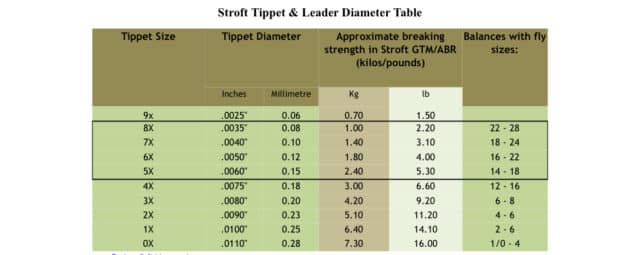
Are there different types and what is the “x” about on the packet?. I’m not going to get deep into leaders I’m just going to give you some tips and guidelines as to what to look for as a beginner. So, a leader can be anything from 6ft right up to 20ft and beyond it depends. Leaders can be at times personal preference beyond a certain point. I use a 10ft leader generally.Now,on the leaders you will see a number followed by an “x”.I use stroft mostly as i like it and have used it for many years. When dry fly fishing i will use a 7x or 8x leader. So 7x is .10 diameter or 3 pound,8x is .08 diameter and 2.2 pound. Companies vary quite a lot in diameter to breaking strain so it’s only a matter of checking online or asking in the tackle shop. So, if you’re looking for a .08 diameter tippet section on your leader you are looking for a 10ft 8x leader.

What is an aggressive leader and why would I need one? An aggressive leader would have a longer butt section which carries more energy from the fly line and transfers it into the shorter mid – section which pushes on to the tippet section. We would use this to turn over larger flies or perhaps casting into a headwind. I sometimes use it when I’m fishing 3 wet flies. If you buy some cheap line in a couple of different diameters and practice at home adding different sections in. Have a longer butt section making the mid-section smaller and so on. When practising my casting I’m not going to spend money on a tapered leader to destroy it, I use my own tapers tied from spools. I generally start with 3ft butt section,3ft mid and 3ft tippet. Have some casts and experiment with the lengths a bit, try to make it more aggressive by having a 4ft butt section,3ft mid-section and 2ft tippet section. A longer butt section will absorb and transfer more energy, having a longer butt section keeps more energy in the leader for longer. Play around with it and have some fun.

TIP: Use some very bright wool on the end of your leader so you can watch how the leader would turnover a fly.

What is a progressive leader and why would I need one? A progressive leader is used for more delicate presentations and situations. It consists of a shorter butt section which gives a gradual turnover. The shorter butt section holds less energy which means less energy gets into our mid-section and on to our tippet section, this gives us the gradual delicate turnover, it’s ideal for dry fly fishing and really gives a perfect landing once you get used to it. I use progressive leaders when fishing size 22 or 24 dries.

There is far more to leaders than mentioned and the explanations are aimed at beginners.

Set up so far

  • 5wt rod
  • 5wt reel
  • WF-5 Line
  • 10ft di3 polyleader
  • Tapered leader (progressive for dries) (aggressive for teams of wets,indicators,headwind/breeze, cumbersome flies).

Interview

This week’s expert is David O Donovan from Cork. David has represented Ireland many times and anyone who knows him knows that when it comes to wet flies, he is something special. I was delighted that David agreed to answer some questions for us. Let’s see what he had to say?

Dave O’Donovan in his natural habitat
  1. Tell us a little bit about wet fly fishing.

Wet fly fishing is probably how most Munster fly fishermen learned to fish.

When thigh waders were even considered a luxury, it was imperative that you could cast a team of flies across the river and ensure that these flies remain drifting in a natural state as they flow downstream. Lifting and rising the rod a few inches would bring life into the fly and would entice takes from feeding trout.

Casting mostly across and letting your team of normally three flies swing down with the current insures all the water is being covered with takes coming at any time.

  1. Can you tell us a little bit about some wet fly patterns or is there a universal pattern to start us off on our journey?

This can be very seasonal but in general I like to have a winged fly on my top dropper ie Green Wells Glory, Quills. Sedges, or Olives. My middle fly I put spiders i.e. Greenwell’s, black and silver, partridges of different colors etc. My tail fly will be a fly with body dubbing, this will add weight to the fly when it’s wet. Hares’ ears, March browns, sedges and a pheasant tail with a small bead or a few turns of lead in the body will always work.

  1. When choosing a spot to wet fly fish what do you look for, what is considered ideal water?

Fish are everywhere. Wet fly fishing gives the opportunity to cover all areas especially areas that are too deep to wade. Best places are glides. This is the water below fast running water. Fish don’t lie as deep in this type of water and feed closer to the surface when there is a hatch. The wind can be your friend as it can drown natural flies making them easy targets for feeding fish.

  1. What way should we set up for wet fly fishing, leader length, tippet diameter?

For a beginner a floating line is fine. It makes picking up the line to recast much easier. With practice you can move to a midge tip or slow sinker to help get those flies under the water.

Four-pound tippet is fine, I use Drennan. I don’t taper my cast it’s just 7 ft to first fly 5 ft more to middle dropper and again 5ft to point fly. Droppers are about 5 inches made with a three-turn water knot.


  1. What would be your one beginner tip?

Learning to cast a team of three flies takes time. Start with just two. Let the water tension load the rod when beginning your cast. Don’t over false cast!!! Try to get into the habit of casting in no more than three casts. Lift aim and cast. Keep your flies wet and in the water.


Tight lines

Dave O’Donovan


Go fishing…

Trout Fishing Ireland

Address Thomastown Kilkenny Ireland Mobile Phone: +353857652751 Website: Trout Fishing Ireland

The River Whispers 10: Perch

“The pessimist complains about the wind, the optimist expects it to change, the realist adjusts the sails”

Dan O’Neill is back with the 10th instalment of his River Whispers series. There’s a lot in this weeks edition, so we’ve split it into 2 articles. Read about perch below, and fly lines and leaders here.


Our other expert this week is Marcin Kantor who helps us with some questions we may have when beginning our lure fishing journey for Perch. Marcin is a master when it comes to lures and has been worldwide on his fishing adventures.

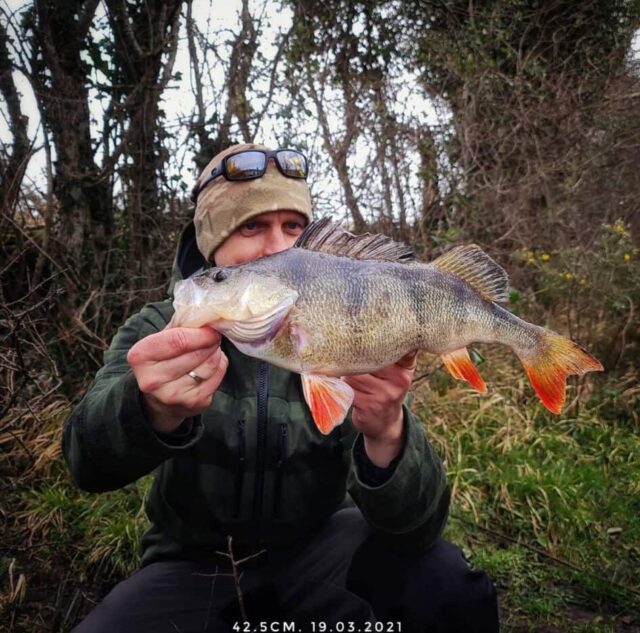
What a wonderful species, I remember being memorized by their spiney dorsal and black stripes. I watched Bernard Venables or Mr. Crabtree on a passion for angling fish for them and inform bob and Chris that it was a “swagger” of perch not a shoal. The word swagger suits this wonderful fish. Many a summers evening i spent with my Dad catching perch. My Dad was lucky enough to catch two fish on the R.Barrow that went to 4lbs 6oz and 3lbs 6oz.The fish were both returned and of course i returned but never met them again.

Methods for catching the perch, what do we need?

The perch is a very inquisitive fish and come to check out most baits or disturbances in their area. I prefer to float fish for perch using a variety of baits from maggots to sardines. Once you find a swagger of perch it can be superb fun. Worms work very well for perch but I would suggest using a big hook as perch will devour worms and we don’t want to deep hook this wonderful fish or “our buddies” as Anthony calls them. It’s really important we are delicate and responsible when handling and unhooking fish, for as we get better, we will catch more fish so let’s make sure we treat them with respect and ensure they live to fight another day. Lures are a huge part of perch fishing also and can produce a great day’s fishing for our budding anglers and indeed ourselves. I decided to talk to Marcin Kantor about lure fishing and he has some great advice for us as you will read below.

Float fishing for perch: My set up for perch is a Cadence 12ft 1pound test curve rod with a 4000 sized reel loaded with 8-pound monofilament line. I like to use a 12 ft rod as when float fishing i fish close to the edge so I can stand back a bit and just drop my float over the edge into deep holes or just off some weed beds or lilies. Also, when I want to get out a bit further it makes casting a bit easier.8-pound line some may say it’s a bit heavy but the area i fish can be a bit snaggy and I don’t want to break off in weeds every other cast so a little bit of backbone in my line is a must. I also use a fluorocarbon hook link which is 6 pounds, I like to fish a lighter hook link so if I use 6-pound mainline I would end up with a 4-pound hook link which would be a little light for the snaggy areas.

What’s a hook link? So, last week we spoke about our setting up of the float. We had our float,leadshots then on down to our hook. Now we want to add a hook link. We put the float on and our lead shots but instead of tying a hook to the mainline we tie a perfection loop. So, we have our float,leadshots and a perfection loop. We then get a thinner diameter line about 18-20 inches long tie a perfection loop on one end and then join it to our mainline by loop-to-loop connection, add our hook and we have now created a hook link.

Lure fishing for perch. I have done some lure fishing for perch with Anthony and enjoyed learning tips and tricks on the way. I decided to bring in another expert this week to help us out with picking equipment and helping us choose what we need. Marcin Kantor many of you will know, I was lucky enough to meet Marcin some years ago and always enjoyed learning from him. I was delighted when Marcin agreed to answer some questions for us…

perch

If targeting perch what rod length, casting weight and action would be most suitable for us to start with?

Lure fishing is not too dissimilar from fly fishing in that you can have as many rods as you want, and you’ll find not only perfectly reasonable but also convincing reasons to justify having all of them. But if I was to choose one perch rod for someone starting with perch, a 7’0-7’6 rod, casting 1-7g lures. While the action of a rod is a very individual thing, my strong preference is for Extra-Fast action (Fast at minimum). The blank will be very forgiving at that rod strength anyway, while the Extra Fast action will deliver most feedback from the lure, bottom and bites. And important – the tip. This is not a place and time to delve into differences between Tubular (or Hollow) tips and Solid tips, so just note that perch rods tend to come with either and i would go a Tubular tip to start with (tends to be marked with T at the end of the rod’s code) and park Solid tips for now (marked with S).

That rod will allow you to target perch across a lot of venues from canals, to rivers and lakes, but here is a quick breakdown in case you’d like to get a rod more suited to your particular venues:

  • Canal & Small Rivers Fishing where short and accurate casts will aid your results – 6’6′-7’6, 1-7g;
  • Lakes & the likes of Barrow, Shannon, Suck where you need more reach and weight – 7’6-8′, 2-10g;
  • Boat fishing, where shorter rods are much easier to use and you tend to fish deeper and often battle a wind – 6’6-7 ft, 3-15g

What would be the most suitable reel for us and should what line should we consider loading onto it?

Modern rods in the above casting weights will weight next to nothing (mine weighs in at 65g), so you want a light enough reel to balance the setup well. 1,000-2,000 class will be perfect.

As to the line, opt for a braid. It will give you a far better feedback and reaction time than mono or fluoro. There are many excellent braids on the market, and you will be fine going with most of them. Choose an 8-strand braid, which will be thinner and smoother than a 4-strand braid. Leave the 12 & 13 strand braids on the shelf for now, and use the cost difference to get yourself a couple of lures instead. As to the strength of braid – go for 8-10lbs, and don’t look at the diameter written on the spool. Different manufacturers measure their diameter differently, and you will find yourself totally misled when trying to compare different brands using the diameter. Just go with the strength.

Although you will be using braid, it’s common practice to add 2-3ft of fluoro to the end of your line, to deliver more abrasion resistance, a bit of stiffness to prevent tangles and to make the last bit of the line less visible to the fish. Use fluoro of about 8lbs. Google and a bit of practice before your session will get you joining braid with fluoro in no time.

There are many rigs and set ups for lure fishing, what would be the best one for us to start with?

One could (and have) written books on the subject, but to keep it as simple as possible – for 80% of my soft lure fishing I use the Cheburaskha Rig. So just go with that and work from there to refine your rigs. The benefits are a lot of flexibility in the rig and relatively weedless if used with an offset hook. You can also change the weights quickly to get it just right for the depth and water flow you’re fishing. You will need to get yourself some Cheburashka sinkers (in weights matching your rod), and off-set hooks (in sizes 1, 2, 4 & 6 to start with).

What lures would be most suitable for a day’s perch fishing, is there a go-to lure that you use?

Ouh… How to squeeze it all in a couple of lines of advice… OK, let’s cut to the chase and get you started. This colder time of the year, opt for soft lures. Go with 40-70mm lures; if in doubt, go with something on the smaller side, rather than the opposite. You will find quadrillions of great lures out there, so just a few general pointers. Get yourself a crayfish, a paddle tail and a curl tail type of lure. Perch will go for a lot of color variations, but the all-time favorite is motor oil. After that, don’t concentrate too much on the color variations, instead get yourself something dark (like dark blue), something natural, and something with a bit of color (yellow, pink). That’s it!

Speak to us about your rod set up?

Canal fishing: Favorite Black Swan, 7’2, 0.8-6g, Extra Fast coupled with Shimano Vanford 1000 reel and 8lb 8-Strand Favorite Braid.

River / Lake fishing: Favorite Black Swan, 7’11, 2-10g, fast coupled with the same reel and braid.

Boat Fishing: Favorite Skyline, 7’0, 4-16g, Extra Fast, coupled with Shimano Vanquish 2,500 reel and 10lb Westin W10 13-strand braid.

While these setups are absolute dream to fish, they are premium rods. For some absolutely fantastic rods, at a great value (~€80) I highly recommend the Favorite X1 range, which has been very popular in Ireland recently, or at the next price bracket (~€130) the brand-new Favorite Totem range, just released in October 2024.

How do you choose a lure when you get to a fishing venue, what do you take into consideration?

Firstly, I stick to soft lures this time of the year and work them rather slowly. With years of experience, I tend to start with lures that caught me thousands of perch, so I’ll reach first for one of the following: Keitech Mad Wag Mini 2.5’’; Lucky John Tioga 2.4’’ or 2.9’’; Crazy Fish Nimble 1.6’’ or 2’’; Crazy Fish Crayfish 3’’. I start with dark colors like Motor Oil and if it doesn’t work, I try bright or natural ones.

However, 9 times out of 10, if you’re not catching perch, you should move and look for them, instead of going through a lot of lures in one location. They tend to be obliging and it’s usually the case of putting the miles and casts in. I tend to reach out for different colors mainly when I find fish but after catching a few the bites dry up. A different color or a lure can very much get you a flurry of activity again.

How do you work your lure?

Very important question! During the colder months especially, perch will be closer to the bottom and not chasing lures very actively. This means you will work your lure in that bottom area and slow enough. Two good lure retrieves are

1) One turn of the reel handle, 1-2 second pause. The lure touches the bottom (observe your tip!) and you repeat the process.

2) Two quick and short rod tip jerks up. Let the lure fall to the bottom. 1-2 turns of the reel handle to tighten the line while making two quick jerks up again and so on.

And one tip that will get you more bites – always fish as light weight as possible in the given situation, to be able to stay in contact with the bottom. When canal fishing, I hardly ever go over 2gr Cheb head. The lighter weight will have significantly more impact on the bites than say different lure color or thinner line!

What advice would you give to someone beginning to lure fish?

Just go out there and enjoy yourself. It is very satisfying, when you need to go and find the fish first, and once you do and catch a few, you’ll enjoy it, I promise. They are such a beautiful fish, and per The Perch fishers: “The Biggest Fish of All”.

Tight Lines,

Marcin Kantor.
Go fishing…

Trout Fishing Ireland

Address Thomastown Kilkenny Ireland Mobile Phone: +353857652751 Website: Trout Fishing Ireland