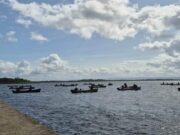
he Monasterevin & Daingean Match Anglers latest qualifier was held under challenging conditions, with exceptionally warm weather and bright sunshine creating difficult circumstances for both anglers and organisers alike. Despite careful planning and preparation, there were a few hiccups on the day, including the intense heat, wayward boats, and anglers occupying pegs on arrival at the venue… But, despite these challenges, the canal produced a respectable day’s fishing and rewarded those who adapted well to the conditions.
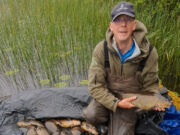
Leading the field was Sensas angler Colin Oliver, who delivered an excellent performance by focusing his efforts on two productive lines. Fishing primarily with dead red maggots as hookbait, Colin built a quality mixed net consisting mainly of skimmers, supplemented with a couple of tench and additional smaller fish. His final weight of 15lb secured a comfortable victory.
Behind him, the competition remained close. Radu Romeo of M&D Match Anglers assembled a solid mixed catch of skimmers and tench to claim second place with 8lb 7oz. Third place went to Callum Rickard, also representing M&D Match Anglers, who finished just behind on 7lb 14oz.
Despite the difficult weather conditions and a few logistical obstacles throughout the day, the event still produced competitive fishing and demonstrated the resilience and adaptability of all involved.
Results: 1st – Colin Oliver (Sensas) – 15lb 2nd – Radu Romeo (M&D Match Anglers) – 8lb 7oz 3rd – Callum Rickard (M&D Match Anglers) – 7lb 14oz
Angling guide and instructor Dan O’Neill gives us one of his regular fly fishing updates:
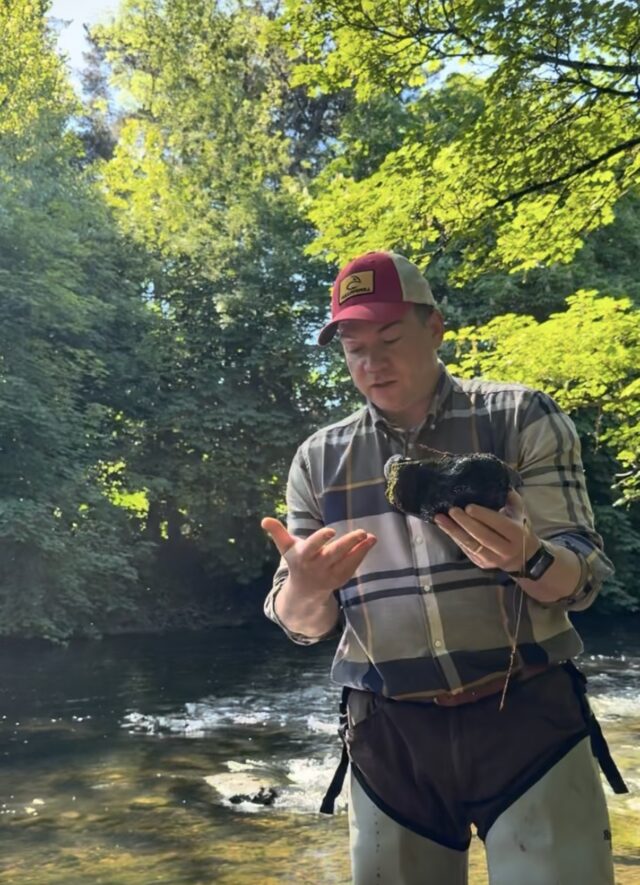
Writing this, the temps are set to be hot at 30 degrees today. I have been on the river over the past few days, guiding mostly. It’s been either early in the morning or late afternoon coolness under the forest canopy in the evenings that was something that pushed me through the warm days, which I am not suited to. Fly-wise, there have been a few mayflies about with some sedges bomb diving near the vegetation and the river’s edge. I turned over some rocks, and it was full of all sorts of little nymphs and creatures.
It was definitely smaller nymphs, dries and wets that worked best the past week. I was using a very simple size 22 nymph with a 2mm bead, dressed in Lt. Cahill thread, and a very subtle copper hotspot under the Coq de Leon tail. For wet flies, I was using a size 16 olive that was what I would call a buggy-looking wet fly tied by my very good friend Pat. For dry flies, I seldom look past some of Kevin Oates ‘ patterns, small, detailed dries that never fail me. There are so many different treatments on the market at the moment, and I have used quite a few. I use the Marc Petitjean CDC oil when using dries. I apply it before the fly gets near the water, then top it up as required with the Fulling Mill high-glide powder. I’ve tried many powders, and I find this one to be very good. It’s almost a sandy texture, which really gets down into the hackle and does the job it was designed to do quite well.
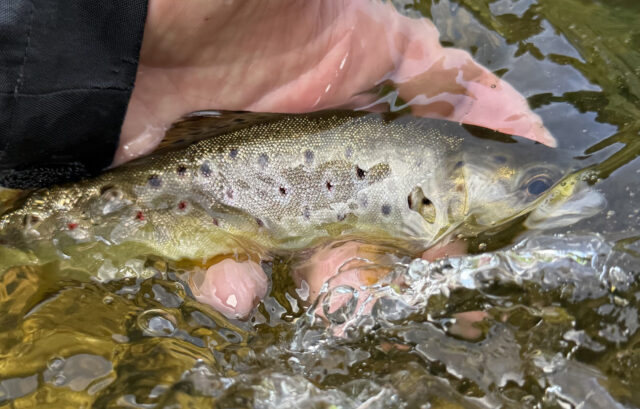
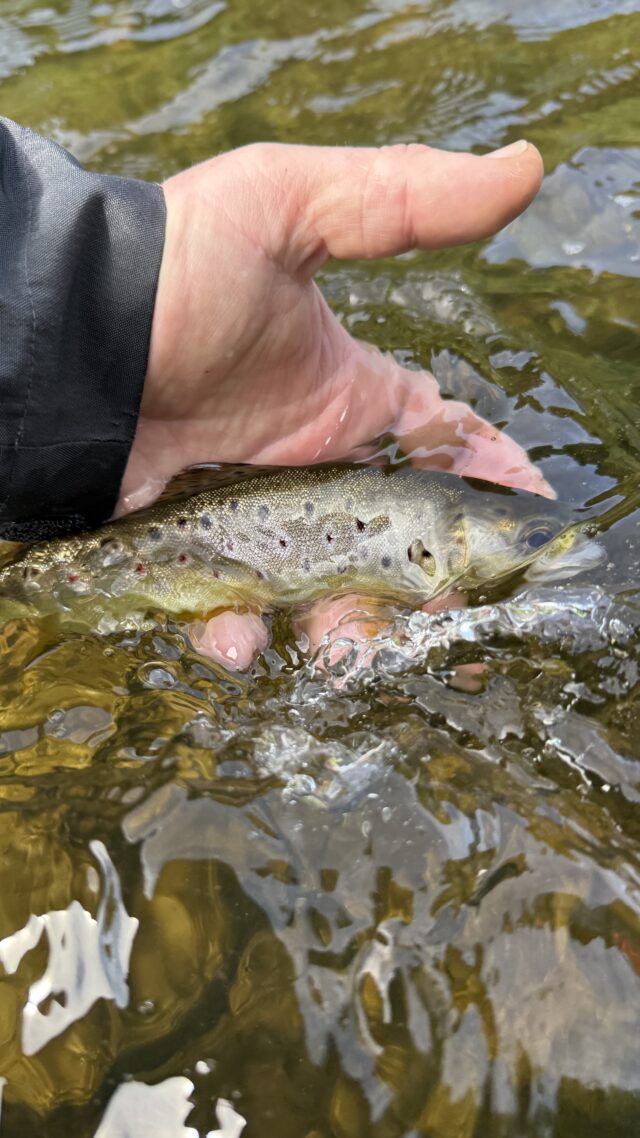
Keep them in the water if taking a quick picture
Tutorials
I recorded 6 tutorial videos over the weekend, which are available to view on my Facebook, Instagram, and TikTok pages. Very simple videos offering hints and tips for beginners or people interested in fly fishing. I will be recording again this weekend for next week’s tutorials, where we will look a little closer at our setups and approach.
I will be working with Maddy Kelly on a ladies’ open day at Southern County Fishing Resort on the 20th of June, a great chance for ladies who would like to try out fly fishing and find the best path to follow. For all inquiries, email Maddy at [email protected]
Let’s see what Matthew Cooper of Matthew Cooper flies has been up to:
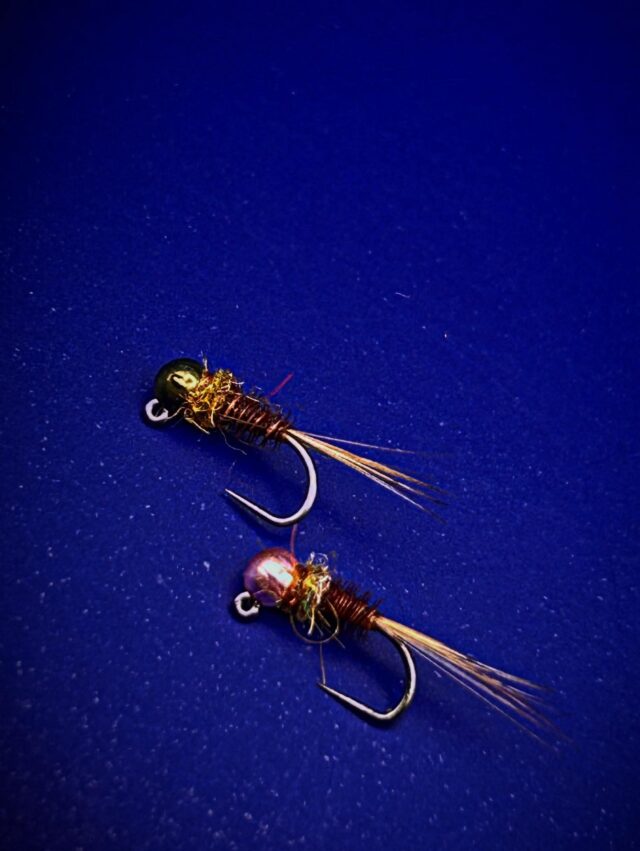
This week, instead of Matchin’ What’s Hatchin’, I’m covering one of my favourite general searching patterns. This small, beaded nymph can imitate a wide range of insects and food items trout are always feeding on, making it a great fly when you can’t quite key in on what the trout are on.
I’ll usually fish this as part of a two-fly cast. The bead helps the fly get down into the feeding zone quickly while also anchoring the dropper fly. Where I fish, I like to use a small spider pattern on the dropper. I’ll cover the nymph in this week’s post, and I’ll get a video of both flies up on my YouTube channel as well.
Materials List
Hook: Size 18–22 jig hook (barbless)
Bead: 2.5–3mm bead (ideal for the shallower water I fish)
Thread: Black 8/0
Tail: Coq de León fibres (cock hackles work fine too)
Body: Natural pheasant tail (black can be good too)
Collar: This is where you can experiment — pinks, purples, olives, or whatever takes your fancy.
For beginners, this is a great fly to fish under the bung, you’ll notice subtle takes much easier. Fishing with small nymphs like this can produce a lot of fish, but only if you can detect the takes properly. You want the fly fishing right on the bottom where the natural nymphs are concentrated, and using an adjustable bung really simplifies things, as you can change depth in seconds.
Because this fly is designed to fish close to the bottom, you’ll lose a fair few to snags, so keep it simple is. There’s no point in tying something overly fancy when these flies are meant to be fished hard and replaced often.
You’ll notice I tie these on barbless hooks. If you hit a good run of fish, you can end up hooking trout almost every cast, so being able to unhook fish quickly and safely is a big advantage. In my experience, if you play fish properly, barbless hooks don’t result in losing any noticeable number of fish, and they make catch-and-release far easier on the trout as well.
Dan has been guiding on the River Nore from the age of 14. He holds a wealth of knowledge in many different techniques. Dan provides guiding for Trout, Salmon and coarse fish.
All levels from beginner to experienced are welcome.
Available for guided trout and salmon fishing in the South East
Fly Casting Instruction
Dan is a APGAI Ireland qualified single handed fly casting instructor. All levels from beginner to experienced are welcome.
Dan also holds regular fly fishing classes on the River Nore for groups and individuals.
Well-known coarse angler Philip Jackson is hosting a new angling competition for budding young coarse anglers this August, supported by the NCFFI. See his post below for details:
New for 2026! Something for the younger match anglers. 2 days, 29th & 30th August, venue, Lough Muckno. Great support in sponsorship from Daiwa UK, Sensas Ireland, & Coarse Angling Ireland NCFFI.
I’ve felt for a while the youth angling scene is gaining a bit of momentum in Ireland and needed something new. I’d like this to be a social get together and a fun weekend, good fishing, a bit of craic, prize giving on Sunday evening with a few refreshments to send everyone home happy. Let’s make it a success, please share and get the word out there! Thank you. Booking via the QR code on the poster or follow the link.
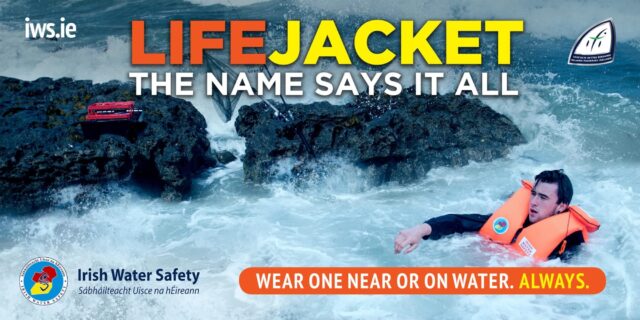
Irish Water Safety and Inland Fisheries Ireland urge anglers to stay safe on the water
With all the beautiful weather we’ve been having we are sure that lots of anglers will be heading to the waters this weekend, some for the first time this year.
As angling is a water based activity, anglers often have to deal with changing conditions and hidden dangers. Inland Fisheries Ireland is reminding anglers to exercise great care for their own safety and that of angling partners. While wearing a life jacket on a boat is mandatory Inland Fisheries Ireland would advise anglers to wear one when on or near water. Anglers are asked to follow some simple safety tips when going fishing:
Wear a life jacket
Follow advice on warning signs,permits and notices
Don’t take any risks when wading or fishing from boat, shore or bank
Check the weather forecast and tide tables before you go
Take time to observe weather, water and tide conditions while fishing
Fish with a partner/buddy or let someone know where you’re going
Take a fully charged mobile phone in a waterproof case/bag
Wear appropriate clothing and footwear
Fishing afloat? Before you go….
1. Weather
High winds combined with waves can swamp a boat or carry you off the shore.
Poor visibility can mean you might not find your way back.
Check the weather forecast before you go and if bad weather is forecast, consider postponing your fishing trip. (www.met.ie)
2. Tides and Currents
Strong tides and currents can carry you away very quickly.
Rising tides or water levels can cut you off from shore.
Check which way the tide or current is flowing and what time the tide is in or out.
3. Local knowledge
If you don’t know the area, ask someone who does where the safe and often the best places to fish are located. While you are doing so remember to ask about local currents and tides and any local dangers.
4. Have you got the right gear?
Bring the right gear with you including Personal Flotation Devices (lifejacket or buoy), even if you are fishing from shore.
Also consider if you have enough warm waterproof clothes, boots, sun protection, and of course all of your angling gear.
A marine VHF radio or mobile phone will allow you to call for help if you need it.
5. Who knows where you will be?
Tell someone where you are going, what time you will be back, what to do if you don’t turn up and who to contact.
6. Always go with someone.
If you get into trouble there will be someone there to help you or call for help.
7. Watch the conditions
Weather, daylight, water levels and currents can change quickly. Watch what is happening around you to avoid getting caught out.
8. Managing the boat
If you are using a boat make sure that
you have enough fuel,
the boat is not overloaded
if anyone feels seasick, it is best to come ashore immediately
always wear a Personal Flotation Device when on deck.
9. Stay sober
Many accidents on or near the water are caused by drinking alcohol. It will impair your judgment and reactions as well as speeding up heat loss.
In an emergency….
Onshore…
Telephone 999 or 112 and ask for Coast Guard.
Afloat…
Call Coast Guard using VHF radio on channel 16. If you have no VHF use a phone and dial 999 or 112.
This post was compiled from angling reports shared on the South Shore SAC Facebook page:T
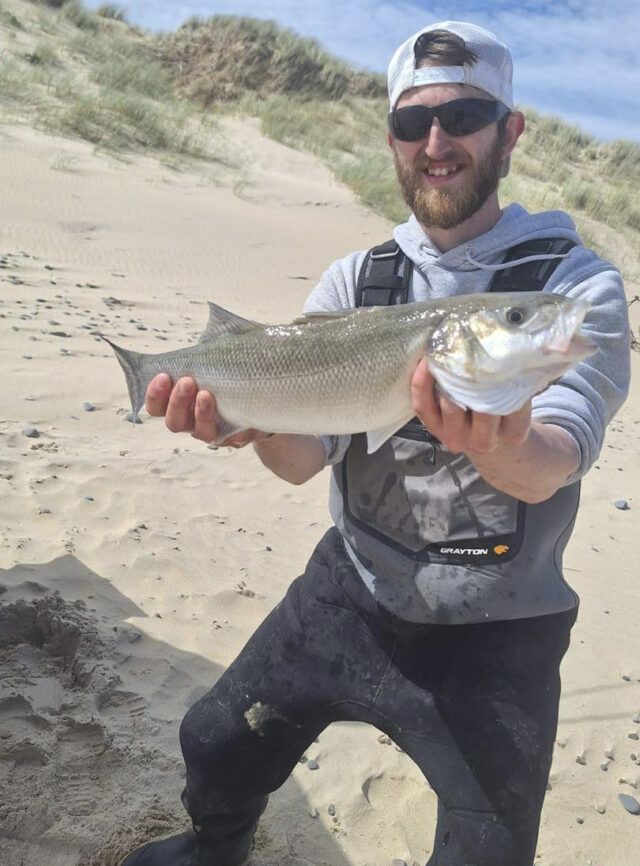
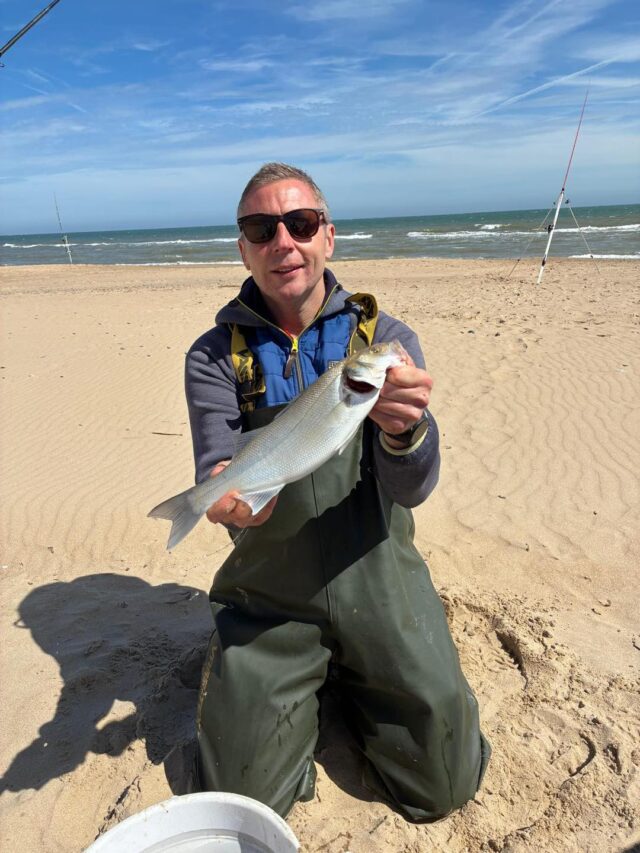
he 2026 renewal of the Mick Kearney Open was held in Kilmuckridge on a beautiful early summer’s day and once again delivered one of the highlights of the match fishing calendar. With over 60 anglers checking in, the event attracted a highly competitive field that included world championship medallists and former world champions, reflecting the prestige the competition has built over the years. Organisers extended special thanks to Ross Engineering and the Kearney Family for their continued sponsorship and support.
Conditions were close to ideal for beach fishing, with high pressure, a mainly south-westerly wind, a touch of colour in the water and enough movement to create optimism despite a smaller tide. Fishing took place across three zones positioned around Ballinoulart and Morriscastle, and excitement grew early when a pleasure angler landed a quality bass before the competition began.
The match started brightly with fish appearing across the venues and anglers settling into productive areas, particularly where deeper water remained accessible as the tide eased away. Standout performances developed through patience and consistency rather than fast action. In Zone A, Alby Allan produced a remarkable late run of 13 bass to finish ahead of strong competition. Zone B was won by Thomas Keogh, who steadily built his score with a productive spell of flounders. Zone C belonged to James Ryan, whose outstanding haul of 17 fish, including six valuable dogfish, secured both the zone and the overall Mick Kearney Trophy.
The junior competition was equally competitive, with only the narrowest margins separating the leading anglers. Phillip Kennedy Ryan claimed the prestigious Saoirse Trophy following another impressive display of consistency.
The day also raised €800 for charity partner Heart Children Ireland through the raffle 👏👏👏, and concluded with presentations, stories and celebrations, marking another memorable chapter in the history of the Mick Kearney Open.
A full report and more photos can be viewed on the South Shore SACFacebook Page.
This post was compiled from angling reports shared on The VDE Baggers AC Facebook page:
The VDE Baggers fished the second round of their Spring League on the River Blackwater over the weekend, and while the sun shone, and the river looked idyllic, the fishing was far from historic, as the skimmers were in short supply, and anglers had to scratch around to make the numbers.
Top rod on the day was Aaron Hutchman with 25 fish on the pole from peg 1 to weigh 1.480kg, followed by Daniel Singleton with 1.120kg and Nick Seddon with 930g, Jack Tisdall was 4th and won C section with 840g and leads the league with 2 points.
In full summer atire…Aaron won with flying colours
A full report and more photos can be viewed on The VDE Baggers ACFacebook Page.
The Kilbride Anglers fished the Des Johnston Cup 2026 last Saturday, held in memory of much-missed friend Des, and it once again proved to be one of the highlights of the angling calendar. The event attracted an excellent turnout of 35 anglers, with many new participants joining and adding to the strong sense of community around the competition.
Conditions were generally favourable, with warm weather and good winds for wet fly and dry fly fishing, although nymph fishing proved difficult. A barbecue break at 2pm, organised by Ben, gave anglers the chance to relax and exchange stories. At that stage, however, catches had been scarce, with only one fish landed before lunch.
The afternoon session remained challenging, producing just one additional fish despite plenty of missed opportunities and tales of “the one that got away.” As always, the competition followed a catch-photo-release format.
Final results:
1st – Conor Graham (20.8-inch trout)
2nd – Denis Goulding (19-inch trout)
Many anglers stayed into the evening for the famous spent gnat rise. Calm conditions and excellent dry-fly opportunities created memorable fishing, with some outstanding catches possible only on Irish loughs such as Sheelin. The day ended with renewed appreciation for protecting this exceptional fishery for future generations.
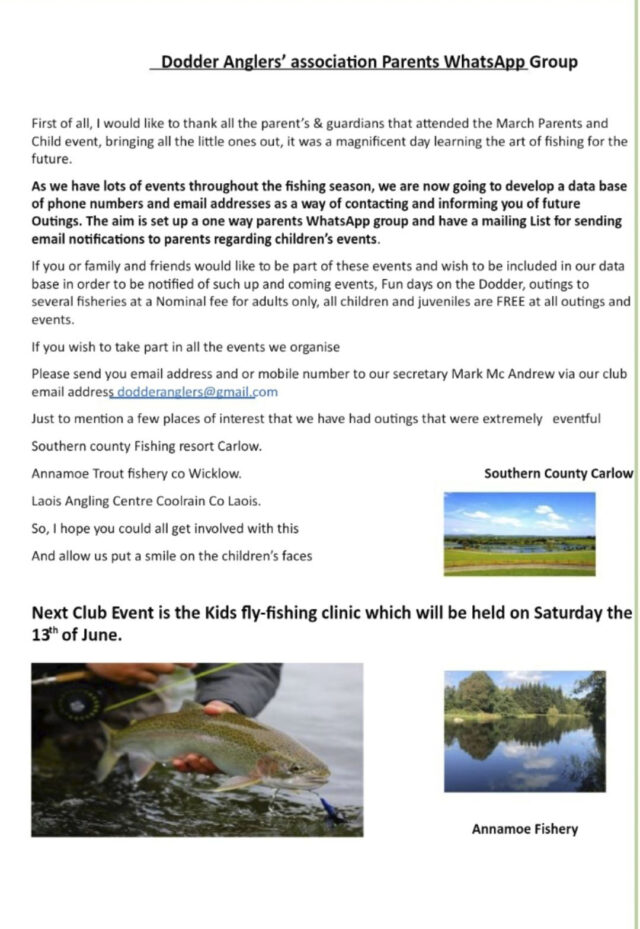
The Dodder Anglers are one of the most active angling clubs in the country, and regularly host introductory and youth days to encourage people to go fishing. They are forming a WhatsApp group to keep people informed of any upcoming events, and details are available in the graphic below:
This great report from the organisers of this year’s edition of the Nations Cup:
On Sunday, 24 May, the annual Nations Cup Ireland event took place on the beautiful waters of Lough Ree, during the hottest day of the year so far.
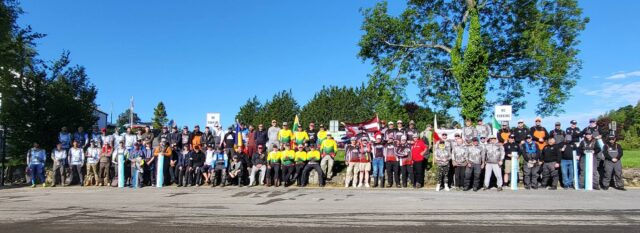
Anglers representing Ireland, Poland, Latvia, Lithuania, Romania, the UK, and Brazil competed in teams of two from boats across the lake. All participants gathered early in the morning at the slipway, where a short captains’ meeting was held before the official start at 9:00am. Fishing continued until 5:00pm.
Nations Cup
A total of 84 skilled anglers gave their best efforts, each hoping to help their nation reach the top of the leaderboard. However, the conditions proved extremely challenging. Blue skies and scorching sunshine made fishing difficult, as predator fish were largely inactive throughout the lake.
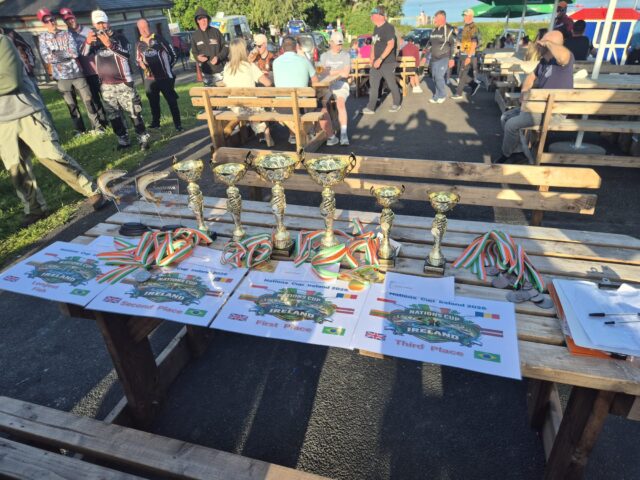
At 5:00pm, all teams returned to the slipway and retrieved their boats from the water. After photographs and catch-and-release videos were checked, the final leaderboard was revealed at the Lough Ree Inn. Special thanks go to the venue for accommodating such a large group on a busy Sunday.
Individual Team Results
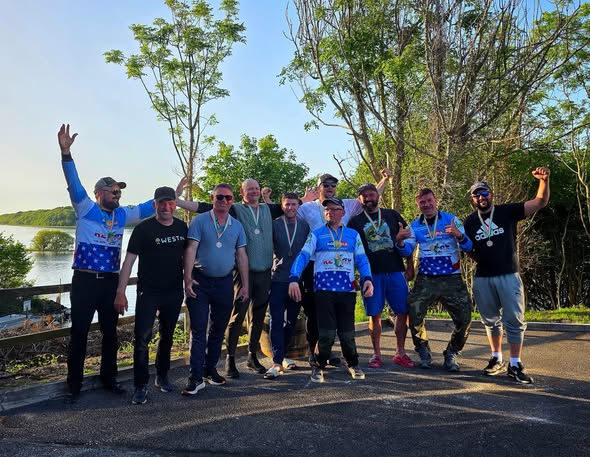
1st Place – Jacek Gorny – Wioleta Hejna
2nd Place – Daniel Nesbitt – Stephen Gibbons
3rd Place – Olegas Orlovas – Mindaugas Naujokas
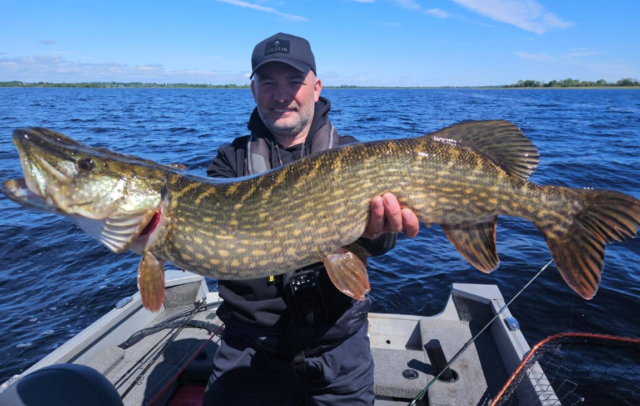
Longest Fish Award – Maciej Dukacz – Nikodem Bienkowski
Top 3 boats
1 of 3
First place
Nations Cup Ireland 2026 – Nation Results
1st Place – Poland – 13 penalty points
2nd Place – Ireland – 13 penalty points
3rd Place – Romania – 22 penalty points
4th Place – Latvia – 23 penalty points
5th Place – Lithuania – 25 penalty points
6th Place – United Kingdom – 29 penalty points
7th Place – Brazil – 39 penalty points
According to the competition rules, in the case of a tie between two nations, the longest fish determined the winner – giving Poland the top honour for 2026.
Poland finish in first place
Well done to all involved in this year’s edition – well done to the winners of the team & individual – well done to Poland for winning the 2026 edition, and well done to the runner-up nations!!
Thank you for your patience and support over the years.
Special mention to The Lough Ree Inn for accommodating us for the Prize Giving.
Next on the list will be Lough Derg Perch Bonanza follow Perch Master Ireland for more info!
Special thanks to all team captains; without them, this event wouldn’t happen



 T
T



 Let’s make it a success, please share and get the word out there! Thank you.