

Angling guide and instructor Dan O’Neill gives us one of his regular fly fishing updates:
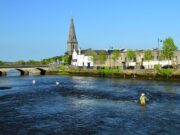
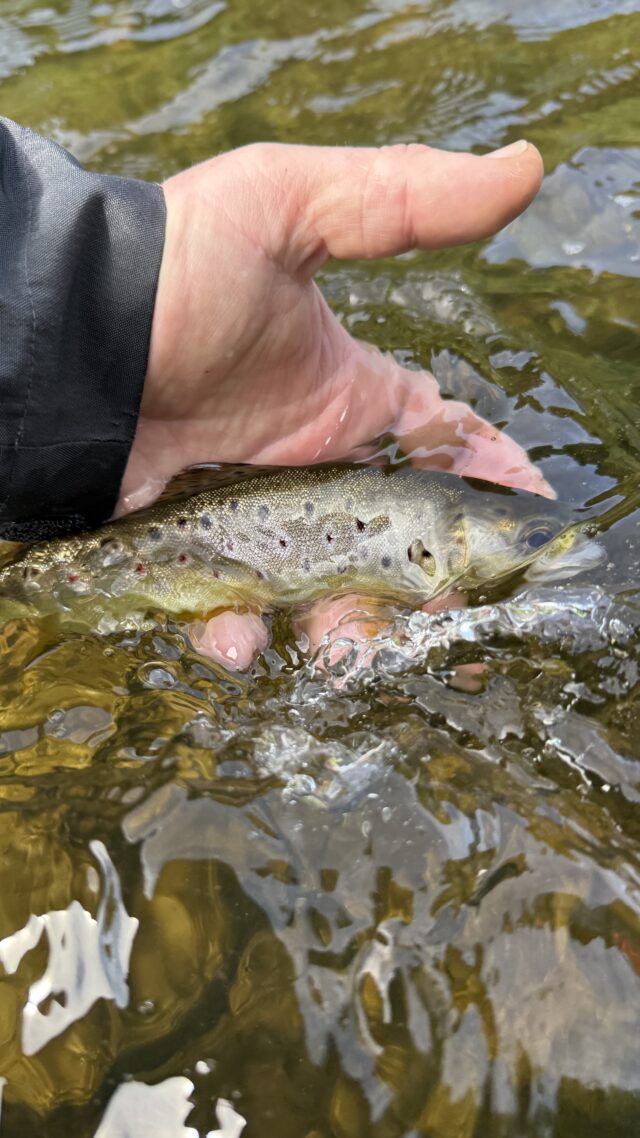
Writing this, the temps are set to be hot at 30 degrees today. I have been on the river over the past few days, guiding mostly. It’s been either early in the morning or late afternoon coolness under the forest canopy in the evenings that was something that pushed me through the warm days, which I am not suited to. Fly-wise, there have been a few mayflies about with some sedges bomb diving near the vegetation and the river’s edge. I turned over some rocks, and it was full of all sorts of little nymphs and creatures.
It was definitely smaller nymphs, dries and wets that worked best the past week. I was using a very simple size 22 nymph with a 2mm bead, dressed in Lt. Cahill thread, and a very subtle copper hotspot under the Coq de Leon tail. For wet flies, I was using a size 16 olive that was what I would call a buggy-looking wet fly tied by my very good friend Pat. For dry flies, I seldom look past some of Kevin Oates ‘ patterns, small, detailed dries that never fail me. There are so many different treatments on the market at the moment, and I have used quite a few. I use the Marc Petitjean CDC oil when using dries. I apply it before the fly gets near the water, then top it up as required with the Fulling Mill high-glide powder. I’ve tried many powders, and I find this one to be very good. It’s almost a sandy texture, which really gets down into the hackle and does the job it was designed to do quite well.
Tutorials
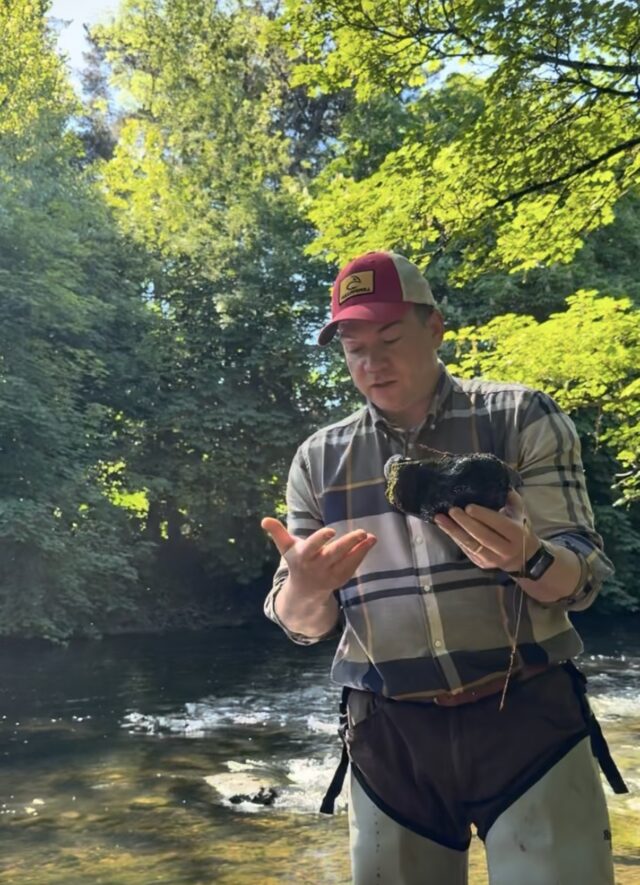
I recorded 6 tutorial videos over the weekend, which are available to view on my Facebook, Instagram, and TikTok pages. Very simple videos offering hints and tips for beginners or people interested in fly fishing. I will be recording again this weekend for next week’s tutorials, where we will look a little closer at our setups and approach.
Facebook – https://www.facebook.com/share/1RDD9oHGmX/?mibextid=wwXIfr
Instagram – https://www.instagram.com/troutfishingireland?igsh=dDFraDh5M3E3ZjVq&utm_source=qr
Tik-Tok – https://www.tiktok.com/@trout.fishing.ire?_r=1&_t=ZN-96LwEhHtv78
Upcoming events
I will be working with Maddy Kelly on a ladies’ open day at Southern County Fishing Resort on the 20th of June, a great chance for ladies who would like to try out fly fishing and find the best path to follow. For all inquiries, email Maddy at prowomenanglersireland@gmail.com
Let’s see what Matthew Cooper of Matthew Cooper flies has been up to:
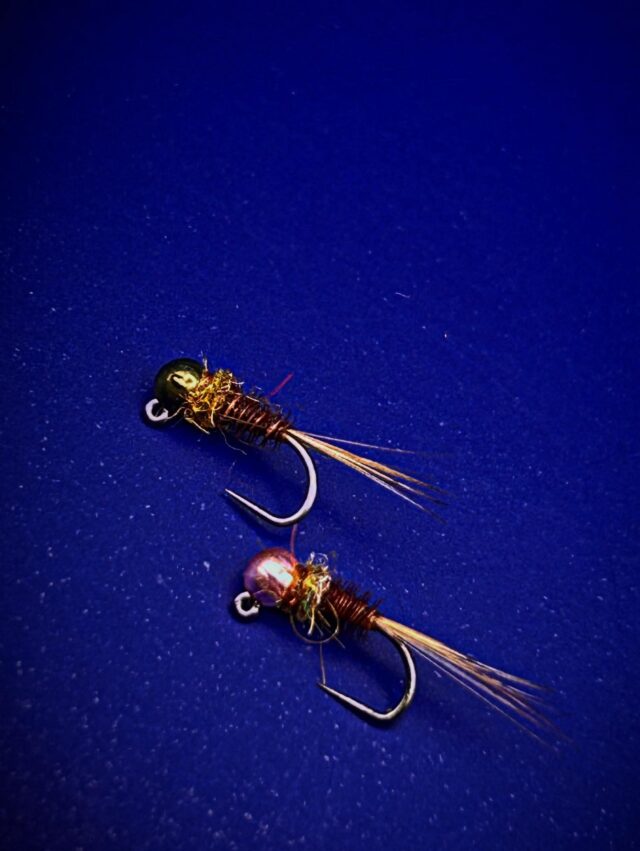
This week, instead of Matchin’ What’s Hatchin’, I’m covering one of my favourite general searching patterns. This small, beaded nymph can imitate a wide range of insects and food items trout are always feeding on, making it a great fly when you can’t quite key in on what the trout are on.
I’ll usually fish this as part of a two-fly cast. The bead helps the fly get down into the feeding zone quickly while also anchoring the dropper fly. Where I fish, I like to use a small spider pattern on the dropper. I’ll cover the nymph in this week’s post, and I’ll get a video of both flies up on my YouTube channel as well.
Materials List
- Hook: Size 18–22 jig hook (barbless)
- Bead: 2.5–3mm bead (ideal for the shallower water I fish)
- Thread: Black 8/0
- Tail: Coq de León fibres (cock hackles work fine too)
- Body: Natural pheasant tail (black can be good too)
- Collar: This is where you can experiment — pinks, purples, olives, or whatever takes your fancy.
For beginners, this is a great fly to fish under the bung, you’ll notice subtle takes much easier. Fishing with small nymphs like this can produce a lot of fish, but only if you can detect the takes properly. You want the fly fishing right on the bottom where the natural nymphs are concentrated, and using an adjustable bung really simplifies things, as you can change depth in seconds.
Because this fly is designed to fish close to the bottom, you’ll lose a fair few to snags, so keep it simple is. There’s no point in tying something overly fancy when these flies are meant to be fished hard and replaced often.
You’ll notice I tie these on barbless hooks. If you hit a good run of fish, you can end up hooking trout almost every cast, so being able to unhook fish quickly and safely is a big advantage. In my experience, if you play fish properly, barbless hooks don’t result in losing any noticeable number of fish, and they make catch-and-release far easier on the trout as well.
Matthew Cooper fly tying
YouTube – @matthewcooperflies
Facebook – https://www.facebook.com/share/1QtPXx7L5h/?mibextid=wwXIfr
Instagram – https://www.instagram.com/matthew_cooper_flies?igsh=MTVqdXR2dmcwdGh5Zw==