

Angling Guide and Casting Instructor Dan O’Neill is back for his regular off-season newsletter – The River Whispers Season 2:
Welcome back, everyone to the River Whispers. There is a new, improved layout for all your favourite tips with added consistency throughout the off-season. We will follow angling journeys and events so we can learn more together. The River Whispers zoom classes will be back underway in the next couple of weeks, so be sure to contact me to sign up. These classes are free and streamed in 4k.
So that’s a wrap for the 2025 fishing season. I was lucky enough to meet loads of great people and fish with some old friends, too. I learned a lot of new skills over the season, which we will talk about this off-season.
Storing your fishing equipment over the off-season
It’s important to store our equipment properly over the off-season, as we will, of course, be using it again and expecting it to perform to the same level. I start by wiping the rod down with a damp microfiber cloth and then thoroughly drying it with a dry microfiber cloth. For the rod eyes, I use a cotton bud to rub out any dirt or sediment that may have gathered there, drying them also if I use a damp cotton bud. For the reel seat, I use a soft brush to clean out the threads before rubbing them with a cloth that I sprayed a small bit of WD-40 on. I ensure the cork handles are totally dry before I store the rod in its cloth bag and into the tube.
As for your fly lines, I like to lay them out fully and check them for any damage before cleaning them. I use warm soapy water, and the procedure can be seen on my blog page: Blogs – Trout Fishing Ireland, where I go through the steps to cleaning a fly line and much more.
Fly reels also require a good check over, as grit and dirt can get in around the cage and other parts also. Be very careful and open the spool off the reel, visually checking for any debris. I use a cotton bud again to wipe away any dirt or old grease before regreasing the reel. When storing, make sure the drag is set mid-way, never fully tightened or loosened. Store everything in a dry place and securely, all ready for next season, which won’t be long coming around 😊
Floatant – which one
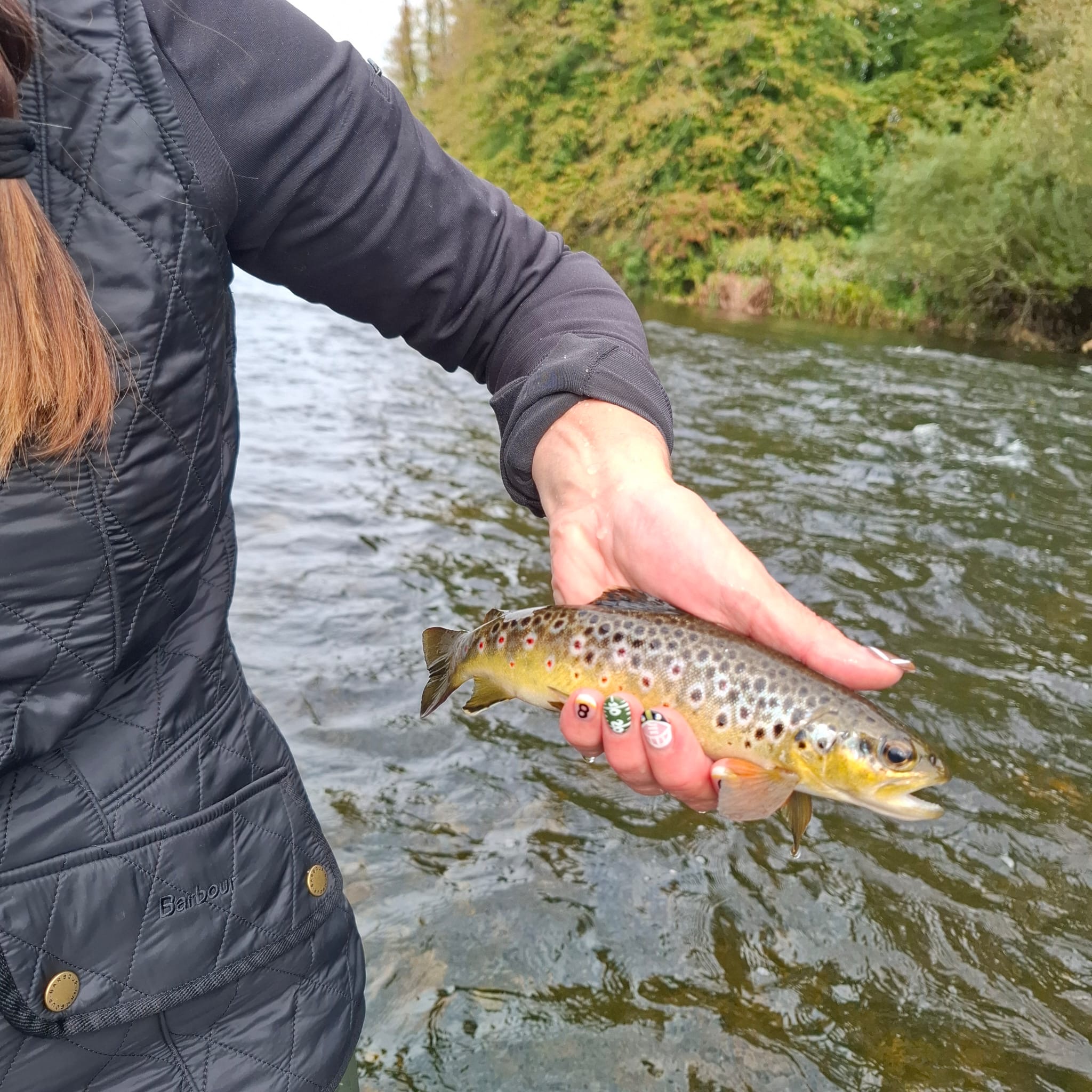
I have, over the years, tried many flotant on flies. Some have been good, some ok and some just downright not good. When some of them met the Irish sunshine as rare as it is, they would liquify in the tube, and you would get a huge amount almost flow out, which drenches the fly and is just messy. After some looking around at different brands I settled on the Fulling Mill dry sauce. It has a sticky-tacky feel, which assists when applying it as you can be accurate with application. The warmth doesn’t make it lose its texture either, which is a big plus. One application seemed to last much longer than any of the other tried brands.
Guest angler on Trout fishing in Ireland
As a Trout angler from Colorado, it was always on my list to fish for Trout in Ireland. After some research, I chose the R.Nore for my trip. Dan O’Neill’s name came up on several sites, so after contact with him, my trip was booked and fishing organised. As the trip grew closer, we had a couple of Zoom calls, and Dan showed me the type of setups and flies we would be using. Over here, we use large flies predominantly, so seeing a size 22 jig head nymph was a bit of a shock. Thankfully, Dan has young eyes, so tying was no problem for me!
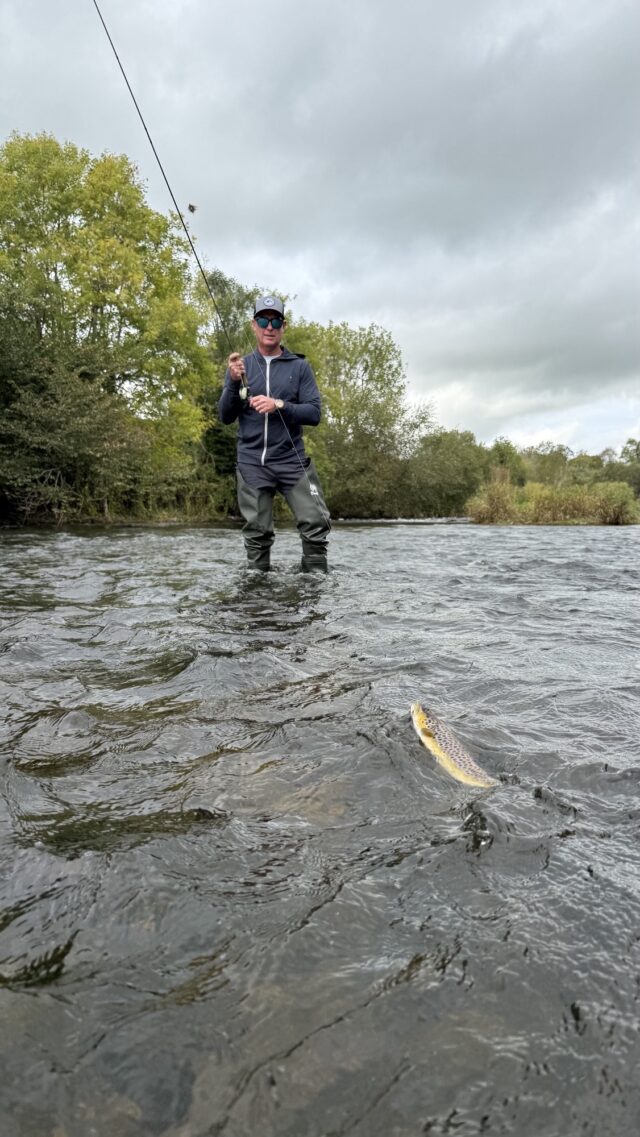
We fished in an area known as Pebble Beach, a little different from back home. We used a rod that Dan uses quite a lot. It was a little different to what I use in the US, where my rod of choice is a 9ft 6wt, so an 8ft 6in 3wt was for sure a shock to the system. We caught some lovely brown trout, which were mostly around the top of the run where I would have expected them to be. As the day moved on, we moved to the flatter water and lengthened our leaders and sized down tippet and hook size to target the more weary fish. We had a couple about 35cm which fought hard, but their acrobatics and energy sure did spook some nearby trout. Overall, I enjoyed my trip to Ireland, and the fishing was all I hoped it would be. A big thanks to Dan for taking me and giving me some of his secret patterns, which I am confident will work here in Colorado.
Tight Lines,
Leo de Signora.
Pattern of the Month for March 2025
Our patterns of the month will also be put in videos on Facebook, TikTok Tok and Instagram to explain how they are tied. Keep an eye out and follow me on my social media channels for all news and updates.
- Hook – Fulling Mill jig force black nickel size 14
- Thread – Fulling Mill pro thread brown 70D
- Bead – 3mm slotted tungsten bead
- Tail – Pheasant tail natural
- Body– Natural rabbit dubbing and brown CDC mix
- Thorax – Rabbit dubbing
- Rib – Gold
What now
Many anglers come to me at the end or near the end of the season and ask, “what will I do for the off-season”. There is quite a lot that can be done during the off-season. Improve our casting, maybe tie some flies or look at new techniques for the new season. I tend to do all the above and fly fish for pike also. Fly fishing for pike does not need to be difficult. I generally use a 9wt or 10wt for pike. I have seen people look at pike flies and say, “how the hell do you cast that”. When using a 9wt or 10wt, our lines are heavier, so it makes casting such a fly much easier. I fish canals quite a lot along the R.Barrow, so I don’t need to cast very far. The same issue arises here as it does during the trout season, people want to cast to the opposite bank, forgetting that there are many features between you and that bank that the fish are hiding in or using. It comes down to River craft yet again. Cast to features that are in your comfort range. Most of the pike I get are along the edge of the bank. I use the Fulling Mill pike traces that have a fly clip on, which makes it handy to change the fly, and there is a nice supple wire that allows my fly to work and doesn’t dictate the flies’ movements. So far, I have found smaller patterns good to start with, roach fry or perch fry. Once I get a little more competent with casting them, I would use a larger fly. I do tend to leave the tying of pike flies to the pros; the fly is designed to drain water quickly, and the movement is a unique factor in a pike fly. The pros have this down to a tee. Stuart Wylie from Fulling Mill and Tomasz Zwierzynski from Pheasant Flies tie some super flies, and the engineering and design that goes into the fly I will never match, so I will leave it to them 😊 . So the most important part of our pike adventure is looking after the pike once we catch one. Get a landing mat and work on the unhooking of the pike while it’s on the mat. Have the proper tools to unhook, making it safer and easier for both you and the pike. These creatures look like they are extremely tough and resilient, which is not the case. Take extreme care when unhooking and make sure the fish is ready to swim away and support itself once released. Many times, I see people slip the fish in, and it goes to the bottom and belly up. We really need to take care with the fish and be responsible. With a search around you will find many reasonably priced landing mats and some proper unhooking kits also. It’s a good idea to get the longer handled unhooking gear as it keeps you away from the pike’s very sharp teeth.
Zoom Classes
Many of you have registered for my free online zoom classes by contacting me on Facebook. There are still some spaces left on the Trout Fishing Ireland Zoom classes. We will also be adding review classes where we will review fishing products and see what may suit us all best. Some fly patterns I used over the season that turned out to be productive will also be shown. In the coming weeks, I will be finalising my list for the classes so to register email Troutfishingireland@outlook.com or contact me on my social media channels.
What’s upcoming
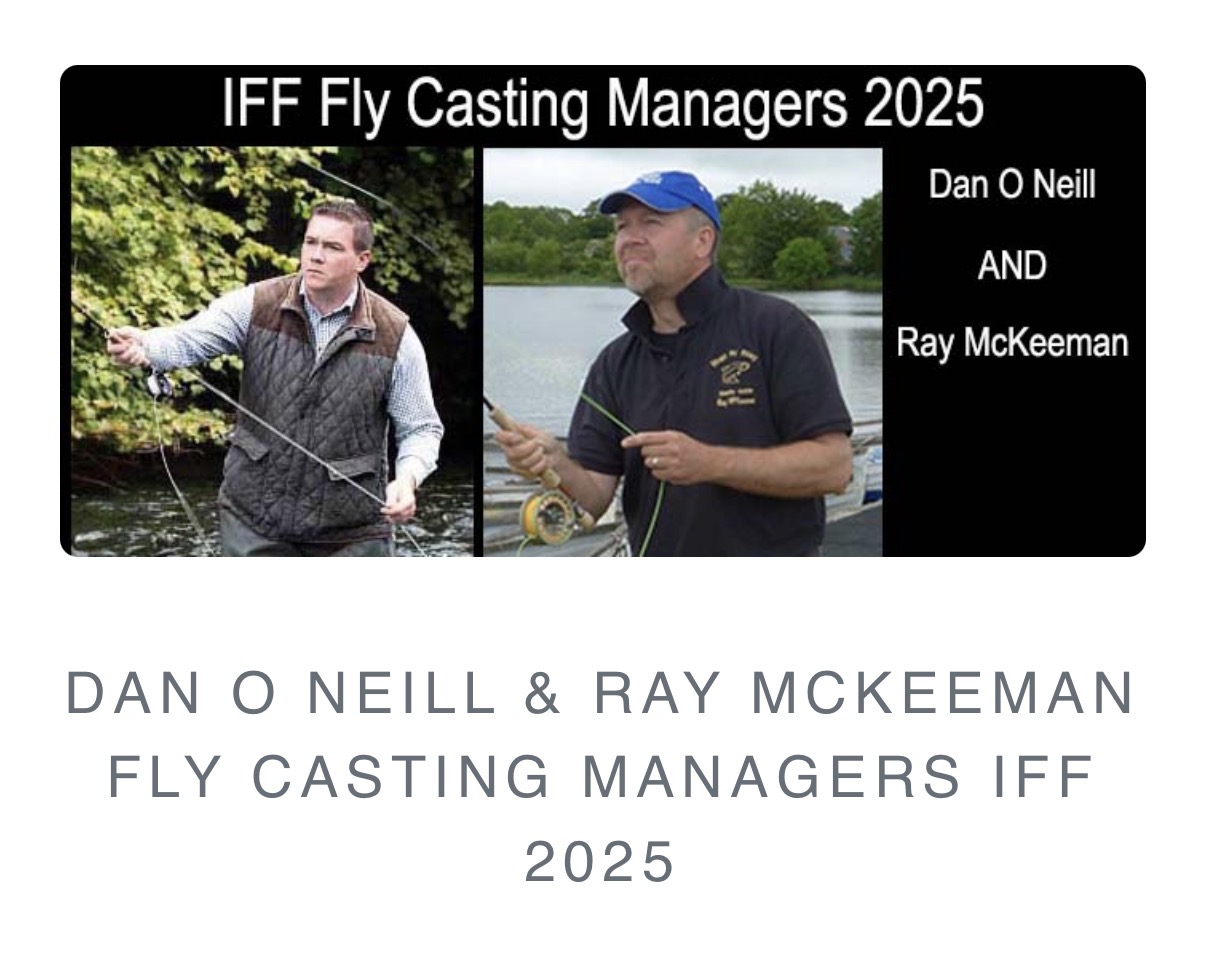
I was delighted this year to be trusted by Stevie Munn to be part of the Irish fly fair team and take on a joint role as fly casting manager with Ray McKeeman. This was a huge honour for me and an opportunity to work with some of the greats of fly fishing. The Irish fly fair this year has some new segments and a massive 108 fly tyers, as well as the world’s top fishing guides and casting instructors. These people are at this event to share their passion and knowledge with people, which can really help people of all levels to improve or gain an edge. Be sure to stop by where you will have access to demos, fly tyers row, as well as talks all from the world’s greatest in fly fishing.
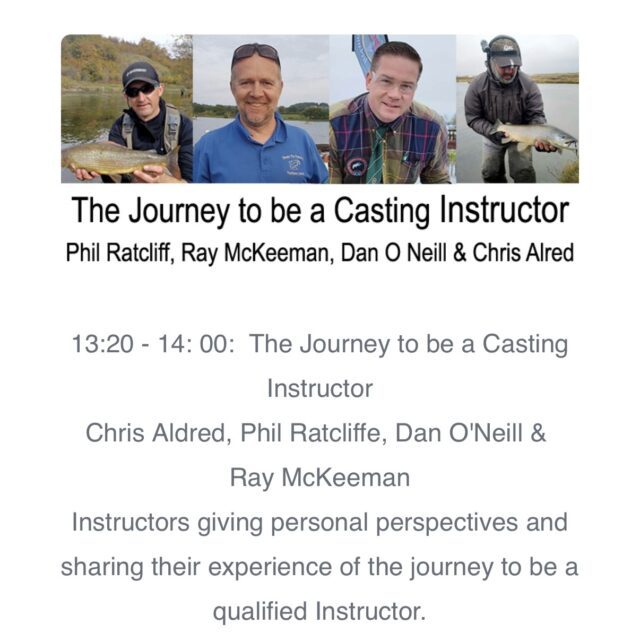
On the 1st of November, there will be a ladies’ open day in Laois Angling Centre. It will be run by Maddy Kelly and Julie Gerry. I will be there as the lead instructor to assist Maddy and Julie. This is the last ladies’ open day this year. Be sure to check it out.