
Andy Burnett gives a match angler’s commentary on the recent International Float Competition held in the Cavan Lakelands and the value these events have for local tourism:
Killeshandra and the Cavan Lakelands prove they belong among Europe’s elite coarse angling venues
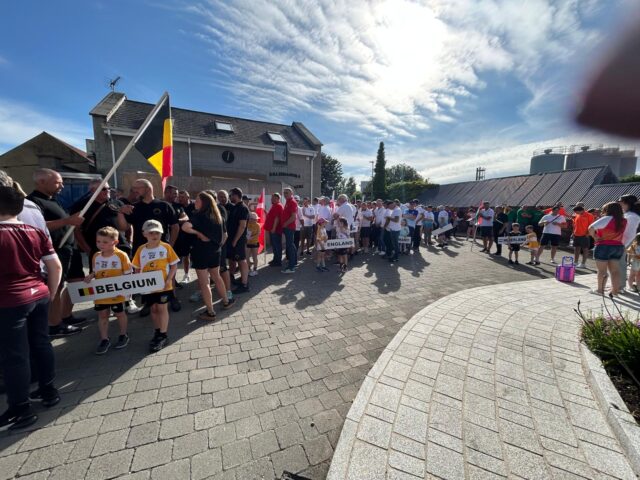
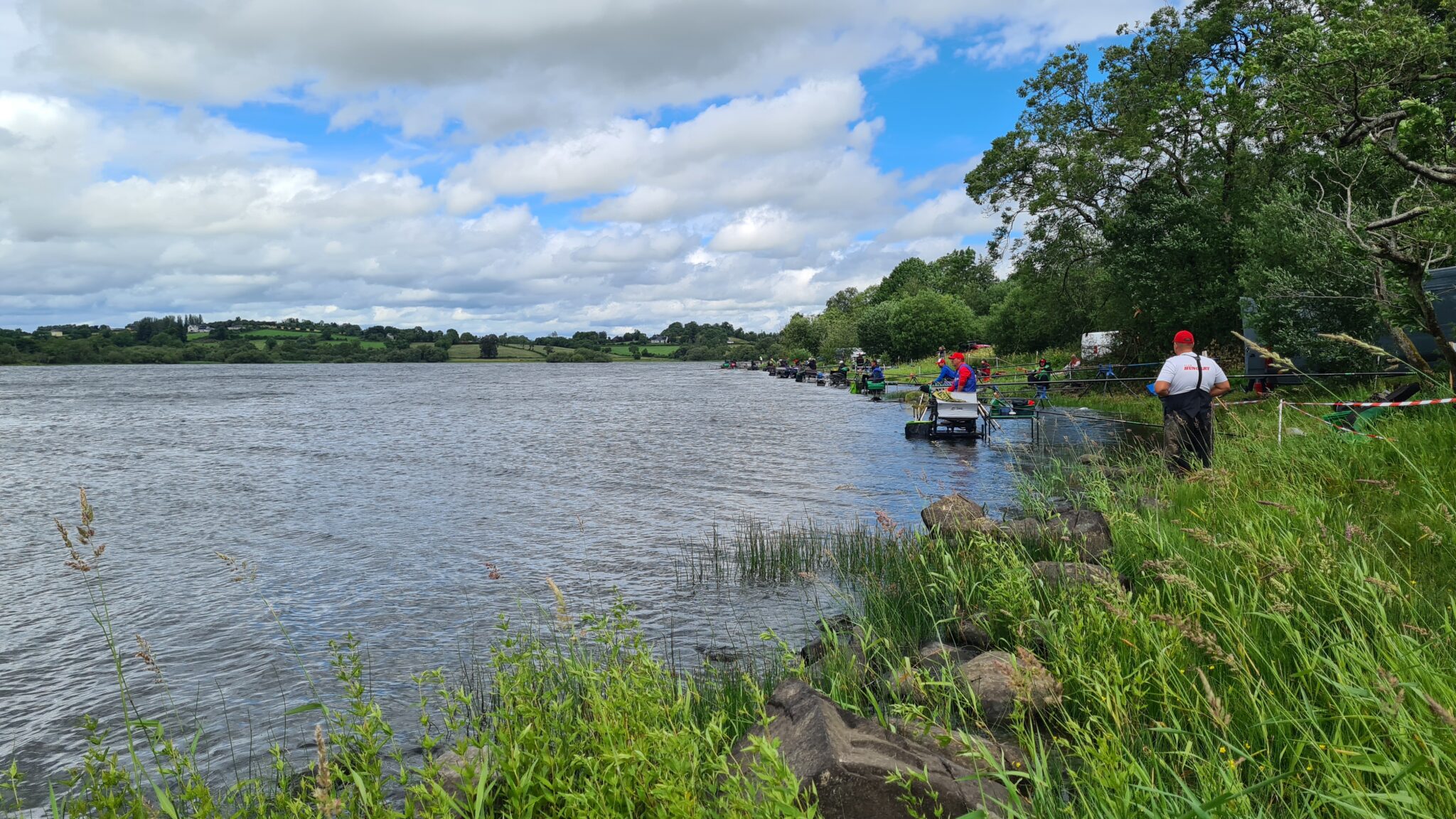
For more than a week, the quiet roads and picturesque shores surrounding Killeshandra echoed with a host of different languages as Europe’s finest coarse anglers descended on County Cavan for the 30th FIPSed European Coarse Angling Championship for Nations.
It was far more than just another international competition. Bringing together 75 of the world’s most accomplished match anglers from 15 nations, alongside coaches, officials, support teams, media representatives and families, the championship showcased not only world-class angling but also everything the Cavan Lakelands have to offer.
The region’s reputation as one of Ireland’s premier coarse fisheries is already well established, but hosting an event of this magnitude has undoubtedly elevated its profile across Europe. Thousands of photographs, videos, live streams and social media posts have been shared over the past ten days, while specialist angling media across the continent has followed every development. That exposure is impossible to buy and will continue to generate interest long after the medals have been presented.
For Killeshandra and the surrounding communities, the benefits extended far beyond the water’s edge. Hotels, guesthouses, self-catering accommodation, restaurants, cafés, pubs, supermarkets, tackle shops and service providers all experienced a welcome boost as competitors and supporters made the area their home throughout practice week and the championship itself. Events of this calibre inject significant revenue into rural communities, demonstrating once again the substantial economic value that coarse angling tourism brings to County Cavan.
A Venue Worthy of a European Championship
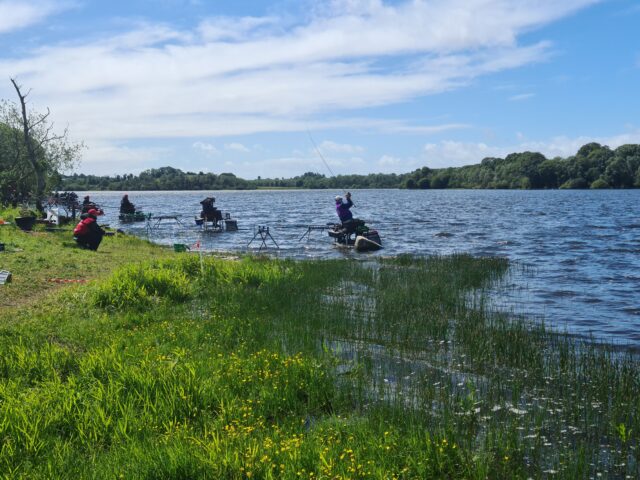
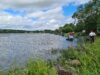
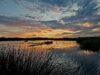
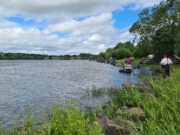
Few locations can rival the natural beauty of the Cavan Lakelands.
The rolling beauty of the countryside, framed by hundreds of interconnected lakes, provides an idyllic backdrop for international competition. Yet behind the stunning scenery lies one of Europe’s most productive mixed coarse fisheries, renowned for its prolific stocks of bream, hybrids, roach, perch and tench.
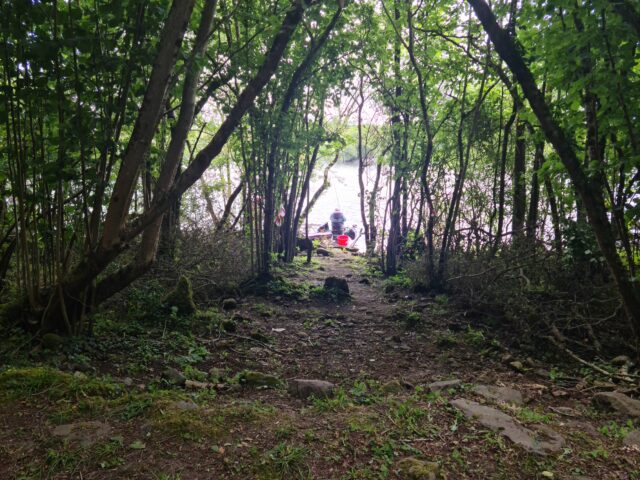
The championship venue demanded every ounce of skill the competitors possessed. Strong winds throughout the event created challenging conditions, making presentation increasingly difficult and causing fish to feed inconsistently. While some pegs produced impressive catches, others required anglers to grind out every ounce through careful feeding, immaculate presentation and constant tactical adjustments.
It was exactly the sort of championship that separates good anglers from truly great ones.
A Huge Team Effort Behind the Scenes
Hosting a European Championship is no small undertaking and an enormous amount of work had gone into preparing the venue.
The National Coarse Fishing Federation of Ireland, assisted by local clubs, volunteers and officials, ensured the championship ran with military precision. Equally impressive was the contribution of Inland Fisheries Ireland, whose staff worked tirelessly throughout practice week and both competition days.
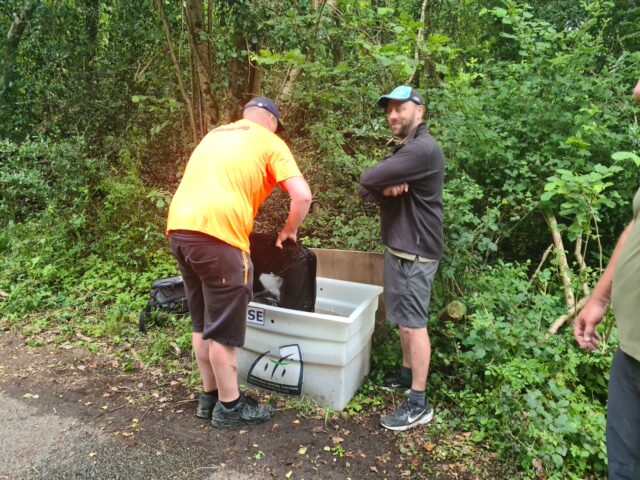
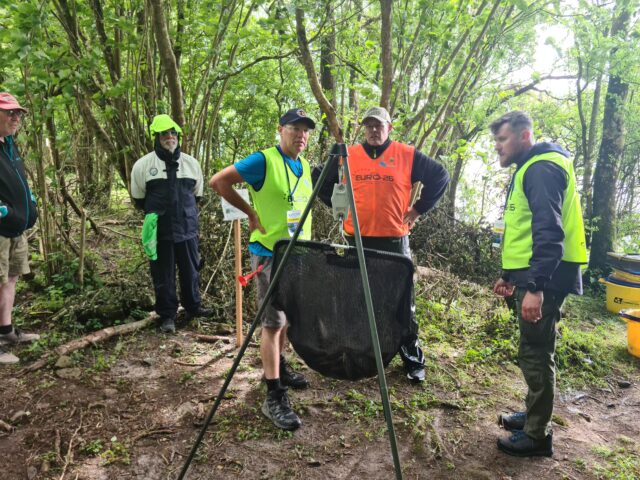
As part of IFI’s ongoing commitment to protecting Ireland’s fisheries, biosecurity measures were implemented across every competition section. Dedicated net dipping stations were established to disinfect keepnets and landing nets before anglers entered the venue, helping minimise the risk of transferring invasive aquatic species or fish diseases between waters. The smooth operation of these stations reflected the professionalism of the organising team and highlighted Ireland’s commitment to safeguarding one of its most valuable natural resources.
Italy Sets the Pace
As the opening whistle sounded on Day One, anticipation quickly gave way to intense concentration as anglers settled into what would become one of the toughest European Championships in recent memory.
Italy wasted little time showing why they remain one of international coarse angling’s dominant forces.
Producing five section victories, the Italians established an early lead that would ultimately prove decisive. Their combined total of just seven penalty points and an outstanding catch of 28.190kg gave them a commanding overnight advantage.
England occupied second place on 15 points after a solid, consistent team display, while Germany sat third on 24 points. Poland and the Netherlands completed the top five, with Ireland lying sixth after a determined opening day’s fishing.
The individual competition was equally fascinating.
Italy’s Andrea Giambrone stole the headlines with the largest catch of the entire championship, weighing an exceptional 14.910kg despite the difficult conditions. England’s Matthew Godfrey, Italy’s Luca Armiraglio and Germany’s Johannes Böhm all secured valuable section victories, while Dutch international Twan Swart also impressed with 11.200kg.
The variation in winning weights perfectly illustrated the technical difficulty of the venue and adverse weather conditions. One section required almost 15 kilograms to win, while another was taken with just over one kilogram, proving that adapting to changing conditions was every bit as important as drawing a favourable peg.
Home anglers battled gamely throughout the opening day, with Julian Kendrick producing Ireland’s strongest performance by finishing third in his section.
The Championship Hangs in the Balance
Although Italy held a significant overnight lead, no experienced international angler was prepared to write off the chasing pack.
Another day of strong winds greeted the competitors, forcing many to rethink their feeding patterns and switch methods throughout the five-hour match. The fish remained elusive, rewarding patience and punishing mistakes.
England pushed hard in pursuit of the leaders, while Germany steadily accumulated the low section placings needed to strengthen their position. France produced one of the performances of the day, climbing from ninth overnight to fifth overall.
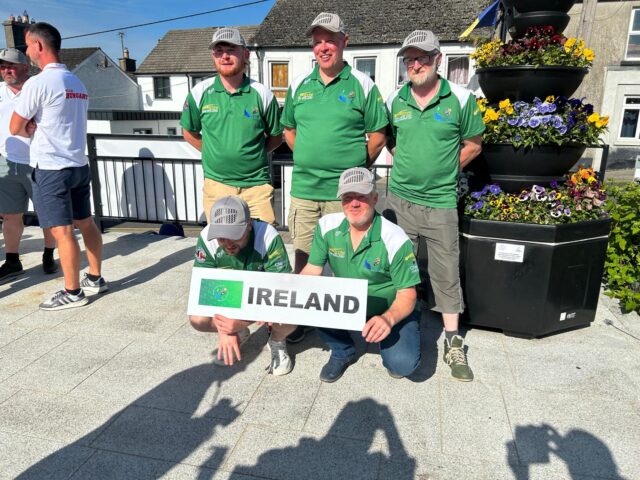
Meanwhile, Ireland continued to battle in front of home support, ultimately securing eighth place against one of the strongest fields assembled in recent European Championship history.
Italy Crowned European Champions
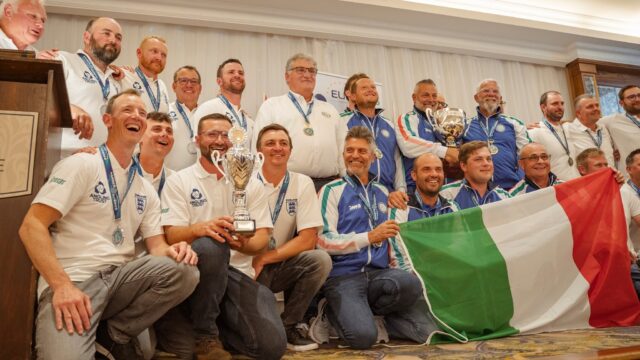
When the final whistle sounded, Italy’s remarkable consistency across both days had secured another European crown.
Their final total of just 31 penalty points, combined with an impressive aggregate weight of 44.380kg, earned a thoroughly deserved gold medal.
England claimed silver on 37 points after two disciplined team performances, while Germany completed the podium on 47 points.
Final Team Championship Standings:
Gold – Italy
31 points – 44.380kg
Silver – England
37 points – 37.270kg
Bronze – Germany
47 points – 32.420kg
Poland narrowly missed the medals in fourth, followed by France, Netherlands, Lithuania and hosts Ireland in eighth place.
Individual Honours
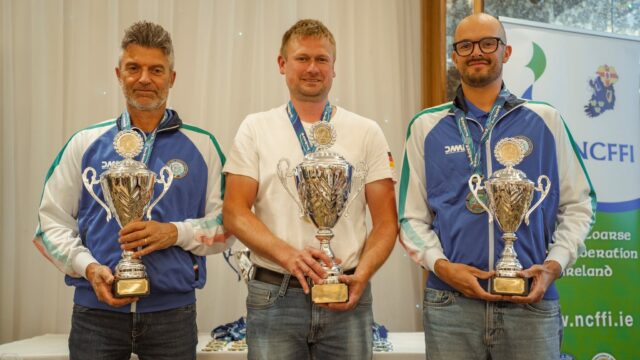
The individual championship produced an equally compelling contest.
Germany’s Johannes Böhm delivered two flawless section victories to finish on the minimum possible score of just two penalty points and claim the title of European Champion.
Italy secured both remaining podium places through Alessandro Bruni and Luca Armiraglio, underlining the remarkable depth of talent within the Italian squad.
Final Individual Championship:
Gold
Johannes Böhm (Germany) – 2 points – 8.140kg
Silver
Alessandro Bruni (Italy) – 2 points – 5.610kg
Bronze
Luca Armiraglio (Italy) – 4 points – 11.160kg
England’s William Raison narrowly missed the medals in fourth, while Andrea Aguzzoli completed another strong Italian showing in fifth.
Perhaps the most remarkable statistic belonged to Day One leader Andrea Giambrone. Despite recording the championship’s biggest individual catch of 17.880kg across the two days, a fifth-place finish on the final day left him seventh overall, demonstrating just how fiercely contested the championship had been.
Ireland’s Dean Murray finished an impressive 17th overall, highlighting the competitiveness of the home team against Europe’s elite.
A Lasting Legacy
Long after the flags have been lowered and the competitors have returned home, the legacy of the 30th FIPSed European Coarse Angling Championship will remain.
For over a week, County Cavan became the focal point of European coarse angling. Images of its beautiful lakelands, outstanding fisheries and warm hospitality have reached thousands of anglers across Europe through websites, magazines, livestreams and social media.
Many of those watching from afar will now have Killeshandra firmly on their list of future angling destinations.
That may prove to be the greatest prize of all.
Championships come and go, medals are won and lost, but the international exposure generated by staging an event of this calibre will continue to deliver benefits for years to come. It reinforces what Irish anglers have known for decades: the Cavan Lakelands are among the finest coarse fishing destinations anywhere in Europe.
Judging by the success of this championship, they have now earned the recognition they richly deserve.
Go Fishing…
sustsus