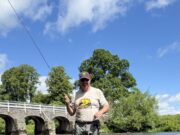

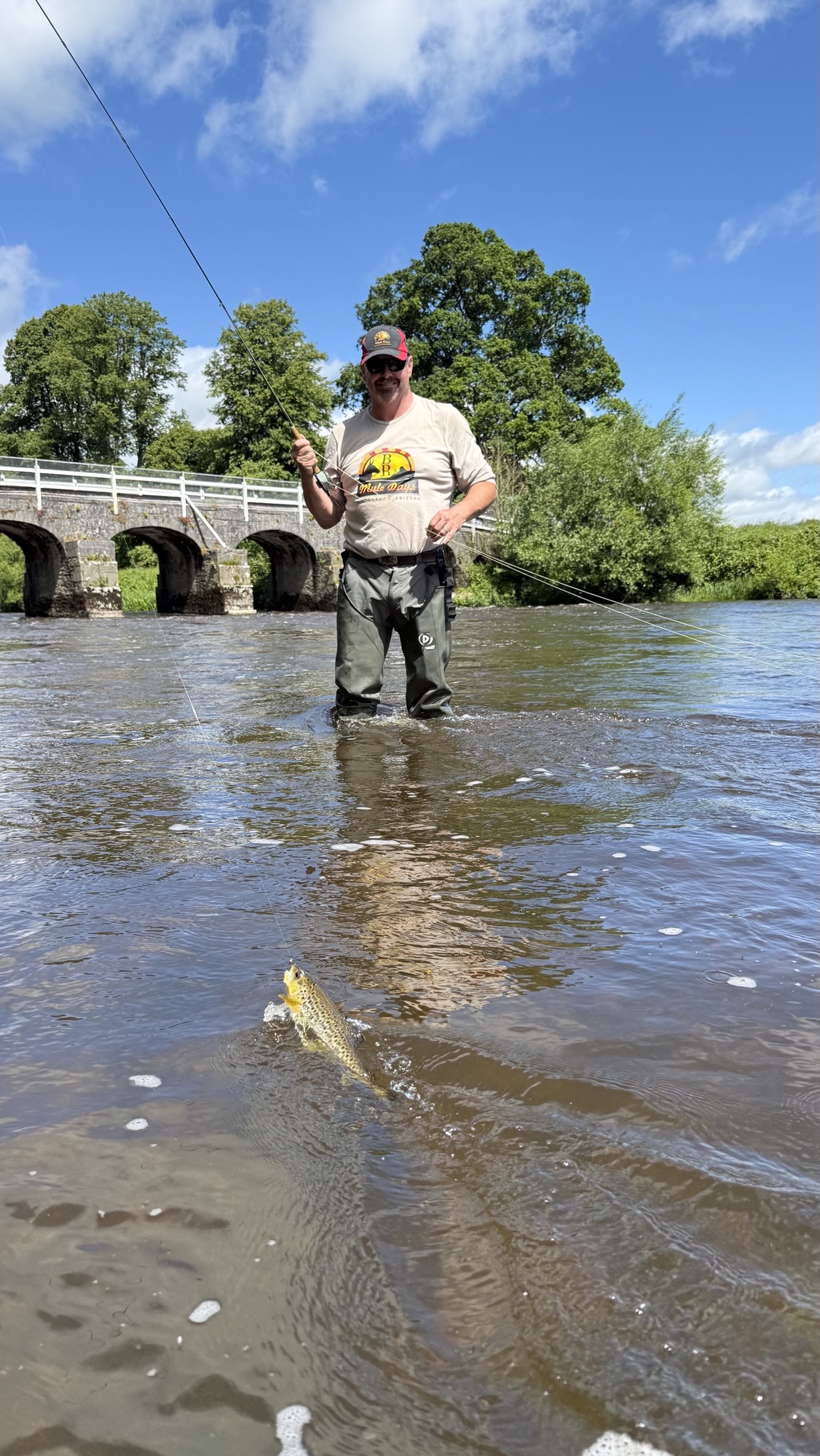
Dan O’Neill has been in touch again with an update from the River Nore and another episode of “Matching what’s hatching”…
Fishing on the River Nore
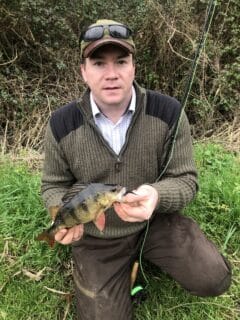
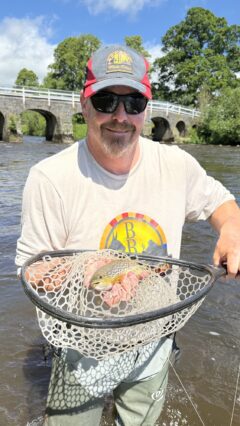
We had some mixed weather and water conditions over the past few days. It has finally settled now with only a whisper of colour on the river, which has resulted in the trout feeding more freely. Towards the end of the colour and higher water, I got quite a few trout on a very simple CDC pattern: an olive body with a brown CDC split wing. I find this season the stamp of trout that we are catching are super, hard-fighting fish. The average trout size is up also. We have had a few fish over 40cm this season, with many being over 30cm.
Facebook – https://www.facebook.com/share/1RDD9oHGmX/?mibextid=wwXIfr
Instagram – https://www.instagram.com/troutfishingireland?igsh=dDFraDh5M3E3ZjVq&utm_source=qr
Tik-Tok – https://www.tiktok.com/@trout.fishing.ire?_r=1&_t=ZN-96LwEhHtv78
I have had many conversations about patterns over the last few days with Kingsmill Fly Fishing pro Matthew Cooper. Here is a pattern that we both enjoyed:
Matchin’ What’s Hatchin’ – The Greenwell’s Glory
Today I’ll be covering a true classic in the world of trout fishing: the Greenwell’s Glory. It is a fly that has been putting trout in the net for well over 150 years, and one that proves you don’t always need the latest materials or the most complicated patterns to catch fish.
The Greenwell’s was originally tied in the 1800s by James Wright after he was tasked with creating a fly that better imitated olives. Personally, I enjoy fishing the Greenwell’s and other traditional flies, as there’s something more rewarding about catching a fish on traditional, subtle flies—no flash, no synthetics, just a great imitation.
Fishing the Greenwell’s dry fly is simple. A touch of floatant, de-greasing the last few feet of your tapered leader, and a drag-free drift is all you need. Keep a close eye on your fly, as trout can take it confidently with a splash or subtly sip it down, barely making themselves known.
The Greenwell’s Glory doesn’t just imitate olives; it’s got a buggy enough appearance that it can cover a range of insects, which is why it earns a place in my box.
There’s only one true Greenwell’s, which is the dry fly, but I’ve fished a lot of variants which can be effective also. The Greenwell’s can be a deadly fly when fished wet, and I’ll cover this below after we get the fly tied.
Materials list for the dry version: (my favourite dressing)
Hook – Dry fly hook, size 12–16
Tail – Greenwell’s hackle fibres
Thread – Olive dun 8/0 UNI
Rib – Fine gold wire
Wing – Mallard wing. I like mallard here as its colour works well and is a lot more forgiving than starling and other traditional winging feathers.
Hackle – Greenwell’s
The dry fly Greens wells can work well if you don’t bother with applying any floatant and let it sink below the surface in some faster water, letting it swing round in the current and just wait for the line to lock up. When fished wet this little fly can produce some cracking fish which are keyed in on emerging or drowned insects.
A true all-rounder fly when you just tweak your approach slightly.
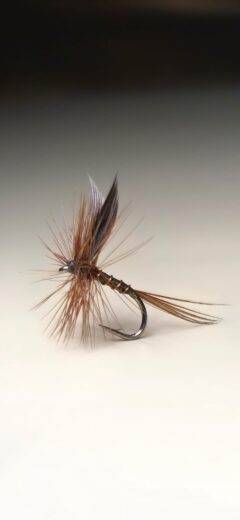 Matthew’s fly
@matthewcooperflies
Facebook – https://www.facebook.com/share/1QtPXx7L5h/?mibextid=wwXIfr
Instagram – https://www.instagram.com/matthew_cooper_flies?igsh=MTVqdXR2dmcwdGh5Zw==
Kindale fly fishing – https://share.google/d0TQHVQtatBFuk4gt
Fishing classes
Planning for winter already, in October i will be running some fishing classes covering some winter tactics for pike, perch and stocked trout fisheries. Learn about techniques to give yourselves the best chance of success.