Peter Driver of Piscari Fly is back with his weekly roundup of the fishing scene on the Nore and beyond:
How’s the Fishing
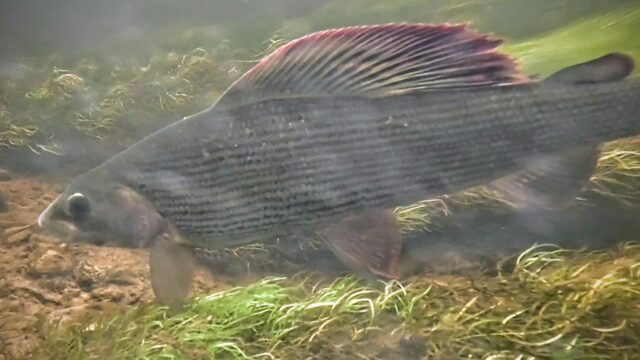
Grayling Fishing The Welsh Dee
As the trout season has closed now in Ireland for rivers and lakes. We now begin to turn our attention to some stocked rainbow fishing, re-filling fly boxes and getting across the pond to Wales for some fantastic Grayling fishing on the Famous Welsh Dee. As the colder months begin to set in the famous Lady Of The Stream come into full swing and begin feeding hard, offering some great fights when hooked.
With the Hanak Grayling Festival coming up at end of November for Mark & Peter and their team member Rob Redman from Wales. Mark made a trip over to Wales on Saturday morning. Taken the 6.30am flight from Dublin to Manchester with some of our fishing colleagues and other Irish Team members also taking part in the great competition. They rented a car and travelled an hour & 10 mins from airport to Llangollen. Purchased their permits online and began fishing the Llangollen Maelor Angling club water on the golf course beats and other beats by 10am. Fishing started off well for all the guys. Wind and rain picked up as the day went on making things bit more tricky, but all continued to catch, with smaller numbers as day went on. Nymphs working best was the pink Sacra and of course the Grayling Slayer.
1 of 2
Grayling had reported to be feeding in the tops of runs still up until 2 weeks ago, but with recent cold fronts from northern winds and cooler nights coming in. The Grayling have began to drop back in runs edging closer to their winter lies.
Mark the guys met with Chairman of CADAC Angling Club, Dylan Roberts for a catch up and nice meal on saturday evening with a few refreshing cold ones to chat about fishing. Before calling it a night after long day of travel, fishing, and gearing for the next day on Sunday.
Sunday saw the lads head up to the upper reaches of Welsh Dee close to Bala Angling Club waters. After breakfast, they drove to Bala and got permits. The guys began fishing at 10am. Conditions were more ideal with no winds & an overcast day. Nymphs were proving best to start with, then moving to bung on some deeper pools in late morning. With olive Upwing Dries in afternoon to a great hatch that came on with grayling showing themselves in big numbers in the tail ends of runs and flats feeding from the surface. Mark & Rob picked up some great sized Grayling during their day with some very good numbers of fish landed.
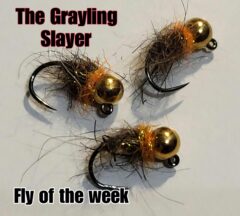
Top nymph for the weekend was our Piscari-fly Variation of the Grayling Slayer it’s worth having if your considering a trip across after Grayling but also a pattern not to be missed out on for Trout, and has proven to be a great pattern and has accounted for many a trout being caught.
For any information on Wales and fishing for Grayling. Get in touch with us here at Piscari-fly
1 of 2
Winter Tying-Fly of the Week
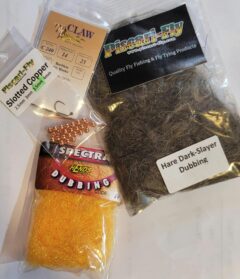
The Grayling Slayer. So considering we have had our first taste of grayling fishing for the season last weekend and with Peter and Mark heading back over to Wales in 2 weeks time. Stay tuned for lots more updates on how this winters fishing will fare out. We have been fishing the Grayling Slayer for a number of years now and not only is it an one of our best grayling flies but it is also a super trout nymph. It is one of Peter’s top nymphs as he has mentioned before, in coloured water. Definitely a fly to have in your box throughout the entire season. It is a real buggy fly, that is very simple to tie and will always get you a fish.
Below is a video on tying the fly and also one on fishing it in coloured water.
This line is superb for making Euro-nymphing leaders that we use in the construction of all our leaders. Very high elasticity, strong, straight and easy to work with. Easy to apply dyes and indicator waxes to for better visibility on the water for leader construction.
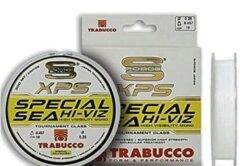
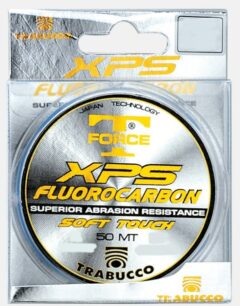
Also in now is a fabulous Flurocarbon by Trabucco. Available in 0.145mm 2.1kg, 0.164mm 2.575kg, 0.185mm 3.213kg, 0.201mm 3.85kg, 0.220mm 4.413kg and 0.240mm 5.313 kg
100% fluorocarbon. Invisible in water, perfect for making terminals. Great resistance to abrasion. Completely waterproof and an indifference to UV aggression. Natural color
Give us a bell here at Piscari-fly 0879787040 or [email protected] for any other information you need.
What’s Coming?
Launch of the Irish Spring Angling Fair 2025 happens this coming weekend in Ardaire Springss Angling Centre. Myself, Tom doc Sullivan, Jimmy Tyrell and a host of other flytyers and casters will be down for the launch. So if you are at nothing Sunday be sure to drop in and have a chat. See some flies and some casting and see what is planned for the Irish Spring Angling Fair 2025.
About us
Based on the River Nore just outside Thomastown, Co Kilkenny, Ireland. Piscari-Fly is a growing Fly Tying and Fly-Fishing business with a vast amount of experience and knowledge. If there is ever anything I can do to make my service better for you please feel free to suggest it to me and I’ll gladly try my best to accommodate your requests. Thanks again. Peter Driver.
As a small business we depend on the satisfaction of our customers and their word of mouth reference, google reviews are important to our online presence and we sure would appricate your review. Just head over to this link and give us a quick review.
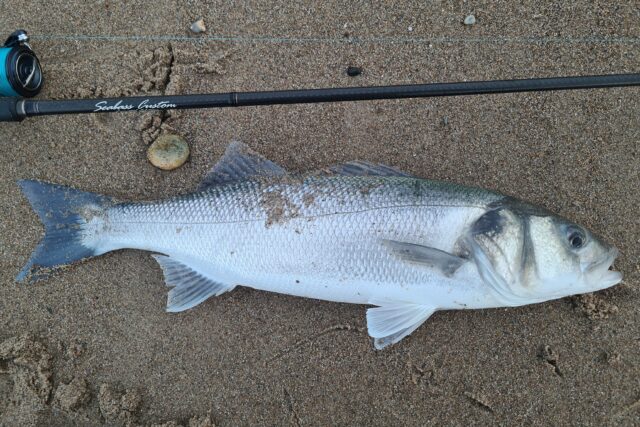
For Cormac Walsh, of the Lure Fishing Podcast, there is something special about this time of the year. The conditions are on a knife edge with the weather, tide and bait all coinciding to create a feeding frenzy, driving the bass onshore.
Cormac has spent many, many hours, weeks, months and even years trying to figure it all out when it comes to the bass and that means constant experimenting, trying new things, fishing different marks, different tides and different stages of the tide. It’s all trial and error, but when it all comes together it can be magical….
…and it doesn’t get any better than top-water fishing on the coast in a heavy chop with the bass blitzing all round! Bass heaven.
Cormac managed to get some nice fish on the top this week, and as the tides build in the coming days, he’ll be hoping for more frenzied action through the weekend. Don’t forget to check out and follow his Lure Fishing Podcast for great tips on lure fishing for bass and other predatory species.
The closing date for applications for Pike Master Ireland is fast approaching, so any interested teams should get their names down before the Friday deadline. This competition, which will be fished on Sunday, October 27th, is a one of a kind team competition fished from boats (with 2 anglers per boat). It is unique because teams can fish any water on the island of Ireland – so any lake or river in Ireland or Northern Ireland! Yes, you read right! All over Ireland and Northern Ireland, pick your favourite water!
The requirements to take part are that:
anglers have to fish from a boat as a team
teams must have a smartphone (android or IOS)
they must download an app (free on Play store [android] or app store [iPhone])
anglers must decide where they fish on the day and inform the organisers before the competition day.
at least one hard plastic measuring board must be used – NO roll up measuring mats.
anglers must wear lifejackets and have knowledge of the rules for safe boating in Ireland.
A WhatsApp group will be available to all registered anglers where all details explained and if you are interested in registering, you can make contact on email to [email protected]
The price is €70 per boat – top prizes are listed below (based on participation of 100 anglers/50 boats):
€1,300 First place + Trophy
€950 Second place + Trophy
€650 Third place + Trophy
€150 Longest Pike + Trophy
Prize giving location will be agreed with all official winners. Organisers can only accept pictures taken with the app! A selfie picture a few minutes before the competition with GPS location ON will be the first picture on the app with 0cm (organisers will ask that on WhatsApp group in the competition morning when you need to upload the selfie).
When your team catches a fish:
First picture has to be done with the fish in landing net with the lure clearly visible (on the app)
Second picture on the hard plastic measuring board where we need to see total length of the Pike, nose of the fish has to touch 0 mark on the measuring board. (On the app)
A card with team number has to be put somewhere that will be visible for any scoring fish. Card will be provided before competition
Short video few seconds with release (on the app calling the length of the Pike) Example “Pike 98cm going back”
For 2024, the event will use an application for getting the pictures in real time.
The app can be downloaded from app store or play store, it works on android or iPhone and is very easy to use once downloaded!
The app requires
– access to camera ON
– access to photo gallery (will save your pictures on the phone)
– mobile data ON
– GPS location On (no one can see the map except the developer)
Rules for this competition
Anglers fish in pairs on a boat max 2 anglers.
Pike only minimum 60cm length. Anglers catch as many as they can, but only the 5 biggest fish of the day will count
Boats must be in suitable condition and checked for any pollution discharge
All fish are measured, recorded and returned to the water immediately
Hooks on lures must not be baited in any way
Only artificial lures!
No Deadbait!
Ground baiting is prohibited
Fish finders may be used
Foul hooked fish may not be measured
Boats shall remain a minimum distance of 50 metres apart From another competitor boat and 100 m distance from other boats (local boats)
Pike minimum 60cm & Measurement will be in cm
Trolling is permitted
Each competitor must have a landing net and unhooking pliers/forceps.
Competitors may carry and assemble as many rods as they wish, but they are allowed to use only one rod at the time.
All fishing starting/finishing times must be strictly followed.
Anglers are not allowed to enter the water.
Fish played after the ending signal sounds don’t count even if it’s hooked before signal.
In the event of adverse weather conditions the competition must be cancelled or moved to a safer location. If deemed suitable then the anglers are responsible for their own personal safety.
Lifejackets must be worn by all onboard at all times
Only hard plastic measuring boards allowed in this competition, No roll up measuring mat. If a team has no measuring board, they will be provided with one.
All vessels should include a minimum of one experienced boatman.
All competitors must be made aware of the ‘14 steps to safe boating’ www.iws.ie
To protect our waterways and ensure the prevention of the spread of invasive species boats, trailers and equipment should be inspected and cleaned.
https://www.leavenotraceireland.org/…
At least one anger in the boat has to be over 18
If any of the teams don’t respect the rules above, their results will not be approved.
All complaints have to be raised with the organisers before the event is finished and backed up with evidence!
No refund after Friday 18th of October!
If you have any questions don’t hesitate to make contact:
Imagine the best weather day of the year was October 11th!
Mirror… but you can hear tuna and dolphins breaking
The frost was hopping off the boat in the morning but the day was dawning nicely… Paul and myself were watching the window and with such conditions we decided to head offshore – Back to the wreck that I had some fine ling recently.
…frosty start…
The plan was to work this wreck and a couple of others with lures and bait. We’d hunt for ling and we’d also try search out the other species that have been scarce.
Mackerel were tricky enough. The water in the harbour is quite coloured. We eventually got “enough”. So we headed off cruising at a comfortable 22knts. It was not like the previous morning, there was not as much life around.
I got some silver/lumi muppets from Dennetts… I’ll have to get more… does the muppet help the strike rate? My standard wecking trace – 120lb line, Owner 8/0 – A bit of bling. Ling like bling!
We hit our first wreck and more or less straight away we were into fish. I was on bait Paul was working lures. Bait was productive, lure not. Each short drift was yielding ling into double figures with the odd runt thrown in. Paul even got into the bait!
We had plenty decent fish. We took very few pictures as we were both very busy. A great sign.
Coming up to slack water I was in big-bait-big-fish mode. The drift was beautifully slow. I got a decent bite. I wound down and struck steadily into the fish. The rod, Abu Suveran 20lb, bent into the fish, for a moment I thought I was in the wreck as well. No, it was all fish so I knew it was a decent ling. I worked at getting it clear for the wreck, trading line at times and eventually boated my best ling in years – 23lb – delighted with a cracking fish.
23lbs – Thought it may be the magical 25 but not to be. Measured it first and decided to check the weight anyway
Paul was suffering a bit from tackle loss; I was faring a bit better. We really didn’t have much choice to stop bait fishing. The cooler was getting full. We worked the wreck with lures. I think we can safely say this wreck is not a star on lures!
We worked our way back. Heading for some new ground to try but were “interrupted” by a few pods of tuna. The conditions were incredible. This was “blue planet” fishing. For a lot of the afternoon the layers were off and we were t-shirt fishing; superb!
Back to Paddy’s Point and a tidy retrieve. A bit of time filleting and basking in the evening sunshine, taking stock of an incredible day.
This was the sort of day that gets me through the winter.
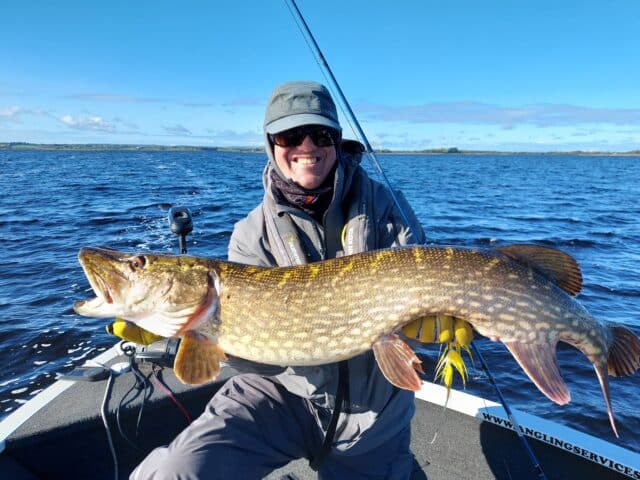
October usually ranks as one of the best months of the season amongst pike anglers. Austrian fly angler Gerald Schimetta who was fishing in the midlands and guided by Angling Services Ireland would probably agree…
But read Bodo Funke’s full report below…
Gerald has been a regular guest at Angling Services Ireland Fishing Lodge since 2018, with many successful trips with us since then. But this year topped all previous results. He managed to catch 49 pike from 5 different waters for his fishing week. Nine fish measured over the meter!
Top fish were 111,108,108,103,103,101,101,100, 100!
Over 35 fish measured over 80cm and of that 24 over 90cm!
The best part is that all fish were caught on the fly, which in Geralds case always means single barbless hooks!!! Not a single fish was harmed or injured and all fish went back without difficulty.
Thank you Gerald for always fishing barbless and meticulously crushing the barbs on all your flies before use. Future generations of big pike will also be thankful, I’m sure.
Go Fishing
Bodo Funke, Angling Services, Ireland
Pike, Game and Coarse fishing Guide
Notes: Angling Services Ireland are based in Boyle, Co. Roscommon, in the North-West of Ireland, an area with many superb angling opportunities.
The Proprietor Bodo Funke holds the Marine and Countryside Guiding Certificate (achieved with distinction) and his expertise and local knowledge will be to your avail when you go on a guided angling trip or angling holiday with Angling Services Ireland. Pike fishing, Fly-fishing for Pike, Game fishing for wild Brown Trout, Float- tubing, Coarse fishing. Salmon fishing and Sea-angling can be organised.
In this edition… As it’s the off season on the river we are going to go back to the beginning – before we ever owned a fishing rod. We will start by talking about the best rod for a beginner and where to start looking for one. Selecting flies can at times be a tricky business, let’s discuss making a plan. We speak to Darius Simkus and ask a few questions about his preferred method. Kevin O’Neill talks us through a nice simple pattern that works well for him. Coarse fishing is also well under way and something I enjoy over the winter with Anthony. We will be looking at different species in each edition and we’ll give some beginner tips.
Our first fly rod, how do we choose? First of all, what type of fishing would we like to try. Let’s take a look at my home river first which is the River Nore. My main choice of rod for a day’s guiding / fishing would be a 9ft 5wt rod – so nine feet long and suited to a five-weight fly line.
What rod to choose…
Why? The 9ft 5wt is what some call the “vanilla” of fly rods. This will cover most applications that you will come across when starting out on a river like the Nore. Another reason we may pick this rod weight is that it is versatile, so talking again about applications here, we can decide if we want to fish wet fly, dry fly, dry dropper or fish with light streamers. This opens up a world of options for us. I mostly start people out with wet fly. Others may have different techniques they start people out with, but my chosen discipline for a beginner is wet fly. As you progress on your journey, you can fine tune your rod weight and length to something that is more specialised to your chosen discipline, but for now let’s focus on finding our preferred discipline without having to own 5 or 6 different fly rods.
Is there more to know when choosing a rod and what is fly rod action? Mostly, you will come across medium to fast action rods when choosing your fly rod. Some are fast action and others ultra-fast action – but what does this mean and what should you choose? The actions go from slow through to fast/ultra-fast. Slow action fly rods are the most flexible and they will bend from the tip all the way to the handle. They are used mostly for smaller streams, delicate presentations and smaller fish species. Medium action rods bend from the tip to about halfway down the fly rod, these offer a good combination of action and power and can be more forgiving for a casting novice than a fast action rod. Fast action rods flex a lot less and bend closer to the tip, which generates high line speeds; this in turn decreases the time it can take for a loop to form on the casting stroke. A lot of rods today are fast action and we have even moved on to ultra-fast action. There are also a few in between styles that combine actions – like medium-fast or slow-medium. This column is for someone who is starting out in fly fishing, as you advance on your journey you can learn more about the actions, but for now, after considering the above, we are looking for a 9ft 5wt medium or medium-fast fly rod.
Where do we go to find such a rod? There are many tackle shops and some angling fairs around the country and most of the fair exhibitors and some shop owners will let you try before you buy. I myself work with Cadence fly fishing and spend my time at the fairs showing people the range of rods and talking to them about what might suit their application best. Go to these fairs or look up some brand ambassadors who will happily help you out and talk you through some options. In the next edition, we will speak about fly lines and how to choose what we need, until then look at some articles on fly rod actions and learn a little more about them.
Flies we will need, let’s keep it simple…
Ok, so we are starting out with an empty fly box, what now?
Let’s take a look at where we are going to fish. Again, I am going to head to my local river here, the River Nore. I have yet to discover a river that a Pheasant Tail nymph does not work in. It’s a very simple pattern but so effective. The Hare’s Ear is also a superb pattern. These two nymphs, with perhaps some hot spots added (i.e. a single spot of bright colour on a drab fly or nymph), work quite well on the river. Now, if we decide to wet fly fish let’s take a quick look at what hatches on our chosen river. I use a Greenwell’s Glory which replicates olives mostly and I find it great early in the season. There are of course more patterns that work well, and some variations, but let’s keep it simple – for we are only beginning we don’t need to fill our fly box. Keep it to perhaps 15 or 20 flies for now.
Trout nymphs
Don’t forget hatches will vary over the course of the season so you may find that one day the Greenwell’s pattern won’t work as well. So, pay attention to what’s hatching. Take a picture of the flies you’re seeing and take them to a fly tier or ask a friend. Also, keep a little diary of what flies work and when they were effective and then next season you will be a step ahead and may even find yourself writing a blog or helping others along the river bank. This is how you will build your collection and also your knowledge.
Trout nymphs
I will speak more in depth on each discipline and get a basic pattern for each for all those who are giving tying your own flies a go this winter. Keep an eye out in the next edition where we will go through the tying of some patterns that we speak about.
Tip: Check cobwebs around the riverbank or on bridges, they may hold the secret to what the fish may be taking.
Wading Aids
Ok, so some people reading this may have been there, I am writing it and have been there several times. We are wading on the river and stumble or catch the toe of our boot on a rock and bang, we are in. We must not forget the river can be strong and powerful, it’s very well to sit at home over a cup of tea and think about what you would do if the worst happened and you did fall in, let’s look at how we can minimise the chances of this happening. I use carbide tip studs in the bottom of my boots. My boots are felt sole also and this gives me better grip on slippery surfaces as the studs bite into slimy slippery rocks – although felt soles can transport organisms between waterways and should be dried or disinfected if moving from one river to another. The next thing is a wading staff, no need to spend huge money here, they are a support for you to feel around and to offer some support when moving and of course balance. The most important of all is a life vest/jacket, the one I use has a small canister in it and I pull a drawstring if I fall into the water and, as it inflates instantly, I will have the help I need. Be steady and be safe on the water, it’s much more enjoyable and of course safer.
Ask the Expert
This week’s expert is Darius Simkus. Darius has represented Ireland several times and also captained the Irish team. I asked Darius some questions about nymphing that a beginner may have. Let’s see what Darius had to say.
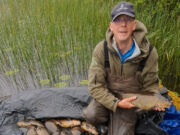
Darius with a trout
Can you tell us a bit about nymphing? – Nymphing, often known as fly fishing, is unquestionably one of the most popular types of fly fishing out there. Nymphing is the method of fishing using artificial flies that resemble young aquatic insects, larvae, or other sub-aquatic life forms such as worms and crustaceans that trout find attractive.
Speak to us about bead size and colour, what’s the most important thing to factor with nymph choice when we get to a river? – For me, most important is nymph size and then bead color. I like silver, gold, copper and metallic pink best for my nymphs. Most popular is size 16 and size 18 with 3.5mm and 3mm tungsten bead.
What do you look for when choosing a spot to nymph on the river? – I always start at the end of the pool and work my way upstream, closely looking at the seams of the river and for boulders or something that deflects the current.
How do we set up our rod when beginning to nymph, what size tippet should we begin with and length leader? – These days you have a lot different nymphing styles (Czech nymphing, polish nymphing, Spanish nymphing) all of them you can call euro nymphing. If you’re a competition angler, you have to follow a few rules for nymphing setups and leader lengths, but if you’re a pleasure angler, you can make nymphing leader: 0.20mm or 0.22mm mono line around 5m, then attach same size indicator material (blood knot) about 30 or 40 cm and make small perfection loop at the end. Add your tippet material and your nymphing leader is ready. Tippet size is from 8x to 4x and depends on what average size fish you planning to catch.
Rod and reel for a nymphing beginner, most people speak about a 2wt or 3wt – what would be better for a beginner and what is the main difference? – We can talk about rods all day long and this is a hard question to answer. Every angler is different and each likes a different length, weight and brand of rods. The most popular are 10ft 2# or 3# rods. I like 11ft rods more, but this is my personal opinion.
Beginner tip? – My best tip is to try to spend more time on the water or fish with somebody more experienced than you who can help to guide you on your journey.
Regards Darius aka Mr. Fishy
Beginner Patterns
Kevin O’Neill always has some interesting patterns, let’s see one of his favourites and how he ties it.
“As with all my nymphs I tend to use a dry fly hook as the slimmer wire tends to hook more fish in my experience. For the Pheasant Tail nymph, I like to use a hook with a slightly longer shaft. I typically use a size 16 or 18.
I begin by putting a gold-coloured tungsten bead between 2 and 3 mm on the hook. I tie in a couple of millimetres behind the bead and then dress the hook all the way back to where the barb would typically be. I pull approximately half a dozen fibres off the pheasant tail stem. The tail should be slightly shorter than the body of the fly. I tie these in with a couple of loose wraps and adjust the length and positioning if required.
Once happy, I lift the fibres and with tight wraps, I advance the thread back up towards the bead. I take the wire and tie it in all the way back to the tail. Sometimes I build up a taper with the thread, but this is very much optional. You could apply a very thin layer of superglue along the length of the thread body for extra durability, but this is something I rarely do. I then wrap the fibres away from me advancing up the hook shank. Try to keep the 6 or so fibres together as you do this. Slowly wiggling the bunch as you wrap forward tends to give you a more even distribution.
Also, having a rotary vice will make this stage much easier. Advance the wraps to all the way behind the bead and tie them off. As this version does not have a wing-case you can cut the remainder off. Counter wrap the wire, secure and helicopter it off. I tend to aim for around 4 or 5 wraps. At this point take three peacock herls and tie them in at by their butts beginning approximately 3 or 4 millimetres back from the bead. Wrap all the way forward. For extra durability I take my thread back through the herl and then then forward again before doing a whip finish and cutting away the remainder. I finish the fly by applying a drop of head cement. One little trick is to place it on the top of the bead and let the liquid slide down the back and into the thread wraps.
This fly is a staple in my box, and I fish it throughout the season. I have it in sizes 14 to 18 and vary the diameter and material (tungsten or brass) of the bead. I rarely tie it with a hotspot but if I do this will be achieved by applying a small drop of red or orange Wulff fluorescent UV resin to the top of the bead.
As I’m a big fan of the dry-dropper technique this is how I normally fish it, but I have also caught many a fish whilst dead-drifting or swinging it downstream as the point fly in a team of three wet flies.”
Beginning Coarse Fishing
This week we will be speaking about the mighty red eye and what we need to catch this beautiful fish. The humble roach inhabits quite a few of our waterways. My chosen river is the River Barrow. I grew up about 10 minutes from the river Barrow in Borris, Co. Carlow. I have fished most of the main river and canals along that stretch between Goresbridge and Borris. I took young Anthony back there and introduced him to coarse fishing, but today it’s all about the roach. So, what do we need to start off. I use a 12ft match rod made by Cadence.
What is a match rod? A match rod is used for float fishing, it has many line guides and is flexible or springy, this helps to protect lighter lines and also offers the best sport when we are targeting smaller fish like the roach. When choosing a reel then there is also a match reel, get one that balances the rod you choose. Reels come in different sizes to from 1000 to 12000 or even beyond. We will be looking at a 2000 or 3000-sized reel. There are half sizes to like 2500, for now let’s keep it simple and look for a 12ft match rod with a 3000 sized reel. When loading the reel with line I use Edge Tackle’s float mono in 3-pound breaking strain. Don’t forget we are using a flexible forgiving rod that will protect our 3-pound line.
Roach caught on a match rod
What does it mean that the rod protects the line? If I tie some 3-pound line to a door handle and yank it suddenly it will snap as the line took all the power I put into the yank. However, if this line was coming out of the rod tip and I yanked it then the rod would bend, so the rod tip absorbed me yanking on the line, thus not breaking the line or snapping it. So, when your fish is fighting or lunging away from you, the rod tip absorbs these movements protecting your line.
How do I set up a float on my line? There are some different floats and float types but let’s hone in on one – the waggler. A straight waggler float is the shape of a pencil, at one end it is a hi-vis color and the other end has a small hole for your line to feed through, when we have fed our line through we hold the float in place or depth by using line stops which are small pieces of rubber than slide onto your line, we need one above and one below your float. We can now slide our float up and down the line, let’s slide it up a bit and tie a hook on. Barbless hooks are best and safest for our friends in the river and of course ourselves.
How do we weight our float? We use things called split-shot or lead shots which are tiny leads that we squeeze on our line under the float to weight it properly so that the float sits vertically and the tip of the float is just above the water surface so we can see bites clearly. We now have a float, lead shots spaced out nicely and our barbless hook. Don’t squeeze the lead shots on too tight as you will pinch the line and it will weaken it and risk it snapping.
What depth do I fish? If we slide our float up the line, it allows the bait to be lower in the water and when we slide the float nearer to the hook, we lift the bait up higher in the water. I always start out on the bottom, so I ‘plumb the depth’ to find out how deep my fishing location, or ‘swim’, is.
What does plumb the depth mean? When we have chosen our swim, we want to start fishing on the bottom, we do this by attaching a lead that our float cannot support meaning it’s too heavy and will pull our float under the water. So, we slide our float up to what we think the depth is and then cast the float in with the heavier weight attached, if the float sinks we will reel in and slide the float further up the line to make it deeper, if the float sits high in the water or on its side when we cast in then we will reel in and move the float down the line closer to the hook as we were over depth.
How close should my lead shot be to the hook? This can vary, if we want the bait to fall naturally to spooky fish, we can keep the lead shot further away from the hook say 20cm for example, if we want to get past smaller fish that sit higher up in the water, we would set our lead shot closer to the hook to get the bait down to the bottom quick where we expect the bigger fish to be.
So, the above is for the beginner and we will look in more detail in the next edition.
Roach “The Mighty Red Eye”
As a child I would sit under the oak tree at the end of the canal at Clashganny. I would look into the water and every now and again 3 or 4 fish would move past almost military like, patrolling their canal in search of intruders (or white maggots in this case). My young mind would imagine the maggots to be intruders dive bombing into the water as I threw them in, trying to get to the bottom before being spotted by the patrolling soldiers – or in this case the roach.
The power of a child’s imagination! I remember my childhood fishing memories as if they were yesterday. However, I am here to help people start out roach fishing not speak of my crazy childhood imagination!!
The humble roach, what a pretty and delicate fish. Roach are shoal fish and can be found in most canals. I float fish for roach on the River Barrow, I mostly use maggots for them but catch some good fish also on breadflake, worms and hemp seed, but I find that stewed wheat can also be used and is very effective. Let’s take a look at the above baits, let’s mix some up and add perhaps 500grams of groundbait.
Roach
To get the roach feeding, I find that small amounts of ground bait work well, with some freebies thrown in also at a steady rate. I also find that using stewed wheat and hemp in my mixes tends to produce the larger roach. Of course, roach will take a worm as well, so I sometimes use a single worm on a size 14 Kamasan barbless hook and it is very effective. The mix I use mostly when targeting roach is the following, you can increase the mix by doubling the measurements below,
1kg brown crumb
2 cups breadcrumb
Some chopped worms
Half a cup of crumbly soil
Add water carefully and slowly to dampen the mix then roll into balls and introduce it to your fishing spot (ensuring it is damp throughout as if it’s not pieces will float sub surface and may even make the fish feed higher in the water).
You can make your own mix also and experiment with things and note your results. Roach tend to hang out in winter time at canal mouths or quite close to the bank. They don’t like to fight hard currents, instead in the winter months prefer to hold up in deeper slow-moving water. Fishing can be very exciting and fun once you get the shoal feeding and start to get through to the larger fish. The activity of the roach of course doesn’t go unnoticed by predators and usually it isn’t long before the pike or big perch come in and pay you a visit. This will spook the roach for a short while, but they should come back in to feed once the predator has their fill.
The Irish Fly Fair
The Irish Fly Fair looks to be even better than last year’s event. There is a great line up of fly casters and fly tyers, as well as lots of trade stands. I will be there with the Association of Professional Game Angling Instructors (APGAI) and Cadence.
Improve your casting at the Irish Fly Fair
On the day there are many exhibitors, but there will also be one on one casting tuition available and provided by APGAI and the Game Angling Instructors Association (GAIA), both in double and single-handed casting. There is also a kiddie’s casting area which was very well run by Ray McKeeman and his team last year. Hints, tips and fishing knowledge will be in abundance, make sure and stop by.
This week, Inland Fisheries Ireland is proud to sponsor the the 59th World Championship Boat Angling for Seniors, as teams from thirteen countries descend on Crosshaven in Cork hoping to be crowned champions of the world.
Team Ireland
Along with Team Ireland, anglers from France, Switzerland, England, Wales, Portugal, Spain, Montenegro, Luxembourg, Belgium, Croatia, Germany and Italy will all participate in the event.
After the official training day (which is today, Monday 14th) teams will fish from 9.30am to 3pm on Tuesday, Wednesday and Thursday, with Friday held in reserve in case of poor weather on one of the other competition days. The competition is fished on a catch and release basis, with points scored depending on species caught.
Getting ready
1 of 7
We’ll keep an eye on events during the week and post any updates on the Fishing in Ireland website. We would like to wish them all good luck this week, but better luck to Ireland! May the best team win…
eatherwise last week has been a typical autumn week with a mix of sunny intervals and showers, cool mornings and generally breezy conditions. Parts of the country saw some heavy rain last weekend which resulted in rising water levels in places but thankfully didn’t cause severe flooding which was forecast for several regions.
Now that the salmonid season has come to a close on most waters, the main angling focus lies on pike, coarse and sea angling with the coming weeks probably among some of the best for pike fishing in general. So it actually comes as a little surprise that we only received a handful of pike reports this week.
However, let’s start in Boyle where Bodo Funke of Angling Services Ireland has been out on the water again after a short break, this time guiding two Dutch lure anglers who both managed to land some metre pike with one of them a personal best.
Concluding our pike news for this week we would like to congratulate Team Ireland who finished third in the recently held World Predator Championships on Lower Lough Erne. The competition which took place over three days was fished by boat using artificial lures only for perch and pike with fish measurements turned into points. Team Lithuania came in as clear winners finishing in first place on each of the competition days, with Latvia in second overall.
While Irish predator teams were competing successfully at the World Championships in County Fermanagh, the Senior and U25 feeder teams were battling the world’s best at the World Feeder Fishing event in Hungary. And battle they did, as the U25 team secured the silver medal, second only to the host nation! This was truly an outstanding performance from John Browne, Brian Clark, Dominykas Kuklys and Charlie Richards who represented our U25 team in Hungary…well done lads!
On the sea angling front things were a little quieter as previously…probably due to the unsettled, breezy conditions of late. Having said that, some great fishing was had during the week by sea anglers around the coast. Starting in the east, Kit Dunne of Wicklow Boat Charters enjoyed top class fishing with a group of anglers from the Netherlands who had 40 sharks to the boat on their first day and 70 on their second. The Dutch anglers had new personal PBs broken on bullhuss, tope and spurdog with a specimen spur being the icing on the cake so far as their trip isn’t over yet. We believe, this combined result deserves to win this week’s Catch of the Week!
Concluding this week’s Angling Update, we have a look at Lough Currane one of the few remaining salmonid fisheries which are open until tomorrow. Vincent Appleby who has led us through the angling year in a profound and witty fashion reported on a few last sea trout for the Currane & Inny anglers…with just one day to go on Lough Currane, sea trout anglers already look forward to the start of the 2025 season.
An autumnal Lough Currane
We would like to take this opportunity to remind all salmon and sea trout anglers to return their angling logbooks (setting out their fishing and catch record) and any unused gill tags by 19 October 2024!
Finally, we would like to recommend the latest episode of the Ireland on the Fly podcast to our readers. In this week’s episode Darryl Mooney talks about his involvement as the fly manager of the upcoming Irish Fly Fair and some of the incredible fly tyers who will be jetting in from around the world. Plus Darryl tells Tom & Daire about an incredible trip to Bosnia for grayling that he had this summer and gives some interesting insights of the flyfishing industry.
Other news
Irish Fly Fair
The 12th annual Irish Fly Fair and International Angling Show is back in Fermanagh next month. This prestigious event will be held at the fabulous four-star Killyhevlin Hotel and grounds overlooking majestic Lough Erne. Dates are set for 16th and the 17th of November and doors open at 10am both days.
Specimen Fish
The deadline for submitting specimen claims is approaching fast. If you were lucky enough to catch a specimen fish this year and want to claim it, get your paperwork into the ISFC as soon as possible so that the ISFC can assess it. All specimen claims to be submitted by 31 October. Further information is available here.
And now the weather…
Tonight will be dry in many areas with clear spells in Leinster and Munster. Rain will develop In the northwest by midnight and will extend over much of Connacht and Ulster overnight, heavy in places. Lowest temperatures of 1 to 5 in the south and east and from 6 to 9 degrees elsewhere with light to moderate southwest winds, fresher near northwestern coasts.
Saturday will be a windy day along northwestern coasts with outbreaks of rain. The rain can turn heavy in places. Highest daytime temperatures will reach 8 to 10 degrees in Ulster and 11 to 13 degrees elsewhere. Saturday night will be cold and mostly dry with clear spells. Lowest temperatures of 1 to 5 degrees with light, variable breezes.
Sunday will see a mainly dry start with cloud gradually thickening from the Atlantic through the day. Patchy outbreaks of rain and drizzle look likely to affect coastal counties of the south and west from afternoon, with the rain turning heavier and more persistent during Sunday evening and spreading elsewhere.
Current indications suggest that mixed and changeable conditions will persist for most of next week.
The latest episode from Daire and Tom at the Ireland on the Fly podcast:
We’re into October, the nights are closing in, and for some of you, pike fishing awaits, or evenings fly tying at the vice.
But the off season also means the Irish Fly Fair in November and this week’s guest is Darryl Mooney who tells us about his involvement as the fly manager and some of the incredible fly tyers who will be jetting in from around the world.
And we have two tickets to give away to the event – just listen to the question we ask about the fair during the show and email your answer to [email protected].
Plus Darryl tells us about an incredible trip to Bosnia for grayling that he had this summer and with his years of being involved in the fly fishing tackle trade, he tells us why we maybe need to be looking more towards the carp industry for innovation and insights.
Longford angler Gintaras Vosylius has had some great success for pike on the River Inny in October in recent seasons, and this October has been no different. Gintaras has only had two short sessions with the deadbaits so far this season, but managed to land a cracking river pike on each visit. Fishing his favoured October method of deadbaiting, Gintaras landed one pike of 15lbs and another slightly bigger at 15.5lbs, with one of them an unusual – but not uncommon – snub nosed fish. Gintaras hopes to get out on the river as often as he can for the next few weeks, no doubts he will land some more super river pike.